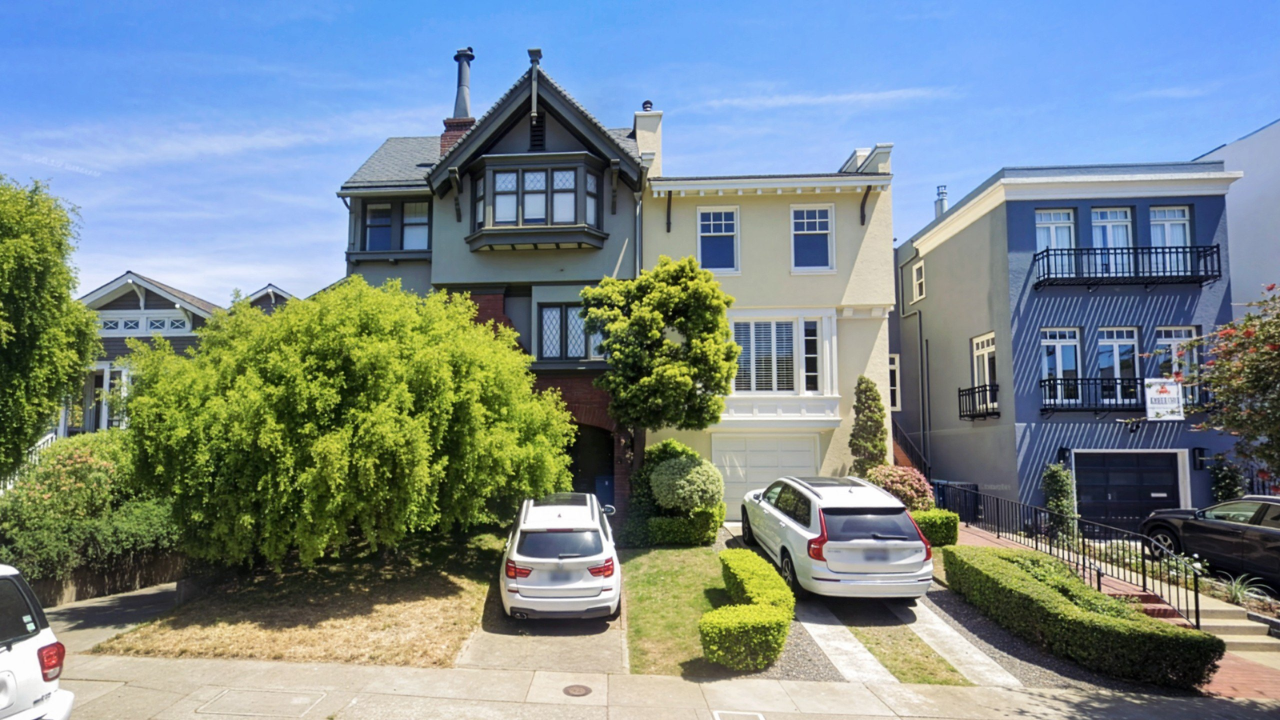
The local press in the Bay Area is throwing a parade over a single luxury real estate foreclosure. City officials just approved the tax-default auction of a $4.4 million vacant home burdened by $340,000 in unpaid taxes and alleged deed fraud, and the prevailing media narrative treats this like a triumphant victory for housing justice.
It is nothing of the sort. It is pure municipal theater designed to distract taxpayers from a broken property tax enforcement system and a severe housing supply crisis that City Hall itself engineered. You might also find this connected article interesting: What Liz Truss Got Wrong About UK Mars Missions By 2040.
When a municipality takes half a decade to foreclose on a blighted, tax-delinquent mansion in one of the most expensive zip codes on Earth, you do not applaud the bureaucracy for finally doing its bare minimum statutory duty. You ask why the system allows multimillion-dollar assets to rot in legal limbo while working families are priced out of the region entirely.
The Lazy Consensus Around Vacant Luxury Homes
Read any standard coverage of this auction and you will find the exact same predictable script. The villain is an absentee speculator or a shadowy fraudster sitting on an empty trophy property. The hero is the city treasurer stepping in to claw back $340,000 in unpaid property taxes and put a vacant structure back onto the market. As discussed in detailed reports by Al Jazeera, the effects are worth noting.
That framing feels emotionally satisfying. It fits neatly into the popular caricature of San Francisco’s housing crisis, where greedy hoarders keep thousands of homes empty while everyday residents struggle to afford a studio apartment.
Here is the problem with that narrative: it confuses a rare criminal anomaly with a systemic market driver.
I have spent years analyzing distressed municipal tax liens and coastal real estate portfolios, and I can tell you firsthand how city halls operate when real estate markets overheat. Politicians love high-profile enforcement actions against luxury deadbeats because those stories generate easy headlines without requiring a single painful vote on zoning reform, permitting speed, or construction costs.
Auctioning off one $4.4 million house does not move the needle on housing affordability. A property valued at $4.4 million is not going to be purchased by a schoolteacher, a nurse, or a mid-level software engineer. It will be bought at a courthouse steps auction—requiring massive liquid cash reserves—by a wealthy developer, a private equity syndicate, or an all-cash luxury buyer.
The city gets its $340,000 check. The press gets a feel-good story about fighting blight and fraud. Meanwhile, the structural choke points straddling the broader Bay Area housing market remain completely untouched.
How California Tax Default Law Actually Works
To understand why this celebratory coverage misses the mark, you have to look at the mechanics of California’s property tax collection statutes. Under the California Revenue and Taxation Code, a county tax collector does not simply swoop in and seize a house the moment an owner misses a payment.
The timeline is agonizingly slow by design:
- Year One of Delinquency: The property owner misses their December and April installments. Penalties of 10% attach, and the property is declared tax-defaulted on June 30.
- The Five-Year Redemption Period: Under California law, residential real estate generally cannot be sold at a public tax auction until it has been in default for five full years. During this window, the delinquent balance accrues redemption penalties at 1.5% per month—an annualized interest rate of 18%.
- Notice of Power to Sell: Only after five consecutive years of non-payment does the tax collector gain the legal authority to initiate a tax-defaulted land sale.
Think about what those numbers mean in the context of a $4.4 million San Francisco property. Under Proposition 13, California property taxes are capped at 1% of assessed value plus local voter-approved bonds, typically bringing the effective annual tax rate in San Francisco to roughly 1.18%.
On a $4.4 million valuation, the base annual property tax bill is around $52,000. Accumulating $340,000 in unpaid taxes, penalties, and interest does not happen overnight. It requires years of unchecked delinquency, compounded by layers of administrative notices, title searches, and bureaucratic paralysis.
When fraud enters the picture—such as forged grant deeds, clouding of title, or shell-company transfers—municipal legal departments routinely freeze enforcement rather than litigating aggressively to clear the title. Instead of acting like an assertive creditor protecting public revenue, the city sits on its hands while a physical asset deteriorates in a neighborhood starving for shelter.
The Vacancy Myth vs. The Permitting Reality
Whenever a vacant luxury home hits the news cycle, commentators immediately point to vacancy taxes as the ultimate cure-all. San Francisco voters even passed Proposition M in 2022, imposing a steep surcharge on owners who leave residential units empty for more than 182 days in a calendar year—a measure that immediately triggered constitutional takings lawsuits from property owners.
Blaming vacancies for high housing costs is the oldest sleight of hand in urban politics.
Look at the actual data from the U.S. Census Bureau’s American Community Survey and reports from the San Francisco Budget and Legislative Analyst. While headlines routinely scream about tens of thousands of "empty homes" in the city, stripping out units that are actively listed for sale, between tenants, undergoing legal probate, or uninhabitable due to pending renovation permits reduces the true number of long-term vacant, habitable units to a tiny fraction of the housing stock.
Why do properties actually sit empty for years in San Francisco? Ask anyone who has ever tried to pull a building permit at 49 South Van Ness Avenue.
It is rarely because a billionaire enjoys burning $50,000 a year in property taxes and $20,000 in insurance just to watch paint peel. Properties sit vacant because the regulatory friction required to renovate, subdivide, or rebuild them is financially paralyzing.
When it takes two to three years just to get discretionary review approval to remodel a dilapidated single-family home, carrying a vacant building becomes the unavoidable byproduct of municipal red tape. The city creates the conditions that stall property turnover, and then points the finger at property owners when buildings sit dark.
What Everyone Gets Wrong About Tax-Default Auctions
If you are watching this $4.4 million auction thinking it represents a blueprint for solving urban blight or snagging a bargain, you need a reality check on how distressed real estate actually trades.
Misconception 1: Tax Auctions Create Affordable Housing
A tax-default auction is a revenue-recovery mechanism for the county treasury, nothing more. The opening bid is set by statute to cover the defaulted taxes, accrued penalties, and administrative costs of the sale—in this case, starting around that $340,000 mark plus recording fees.
In a high-demand market like San Francisco, bidding does not stop near the opening price. Institutional distressed-asset buyers, hard-money lenders, and local developers bid the price up toward fair market value minus the estimated cost of clearing title defects, evicting holdover occupants, and repairing years of deferred maintenance. Even if the home sells at a 30% discount to its $4.4 million appraisal due to fraud clouds and structural neglect, a $3 million cash transaction does zero to help working-class residents.
Misconception 2: Clearing the Tax Lien Clears the Fraud
Many casual observers assume that buying a property at a government tax sale wipes the slate completely clean. While a valid tax deed extinguishes most junior liens and private mortgages, it does not magically erase every legal headache associated with deed fraud.
Title insurance companies routinely refuse to issue standard policies on tax-defaulted properties for at least one to two years after the sale, forcing the buyer to file a costly quiet title action in Superior Court. If the previous record owner was the victim of a forged deed and never received constitutionally adequate notice of the tax sale, the entire auction can be challenged and unwound in court years later. Only deeply capitalized investors with legal teams on retainer can afford to take on that kind of title risk.
Misconception 3: Aggressive Foreclosure Is Risk-Free for Cities
To be fair, there is a legitimate downside to rushing properties onto the auction block. Municipalities face strict due process standards set by the U.S. Supreme Court—most notably in Jones v. Flowers and more recently in Tyler v. Hennepin County.
In Tyler v. Hennepin County (2023), the Supreme Court ruled unanimously that local governments cannot pocket excess equity above the tax debt owed when they seize and sell a delinquent property. Any surplus proceeds from this $4.4 million auction above the $340,000 debt and sale costs must be returned to the rightful legal owner or valid lienholders. Because fraud clouds who the rightful owner actually is, the city will likely end up holding millions of dollars in disputed surplus proceeds in escrow for years while rival claimants sue each other over the windfall.
The Questions Taxpayers Should Actually Be Asking
Instead of celebrating the rare foreclosure of a single $4.4 million house, residents and journalists should be interrogating the systemic failures that allowed this situation to fester.
Why did fraud go undetected until $340,000 in debt piled up?
Real estate deed fraud thrives in jurisdictions where county recorder offices operate as passive document repositories rather than active verification gates. When forged quitclaim deeds can be recorded with minimal identity verification, criminals can hijack titles, extract fraudulent loans, and vanish long before the tax collector notices the bills are going unpaid. Mandatory owner-alert notification systems and stricter notary verification protocols cost pennies compared to the millions lost in clouded titles and blighted neighborhoods.
Where is the accountability for the other delinquent properties?
Every major California county carries a rolling list of tax-defaulted properties that drag on well past the five-year statutory mark because of administrative backlogs, environmental compliance disputes, or title complications. Highlighting one splashy multimillion-dollar luxury home lets officials look tough while hundreds of smaller, mid-tier residential lots and commercial storefronts remain trapped in bureaucratic limbo.
What happens to the neighborhood while the city waits?
A vacant house in a dense urban neighborhood is not a victimless financial quirk. Unmaintained structures attract squatters, copper wire strippers, water intrusion, and fire hazards—driving up insurance premiums and degrading safety for every taxpaying neighbor on the block.
How Real Estate Investors and Municipalities Should Fix This
If cities genuinely want to turn delinquent, fraud-tainted eyesores back into productive housing, they need to abandon performative headlines and fix the underlying plumbing.
For municipal leaders, the mandate is clear:
- Deploy automated title-fraud alerts immediately. Every county recorder should automatically notify property owners by mail and email the instant any deed, lien, or mortgage modification is recorded against their parcel number.
- Fast-track quiet title actions for tax-defaulted housing. Rather than dumping clouded titles onto the courthouse steps and hoping private speculators sort out the mess, cities should pair tax foreclosure with expedited judicial title clearance so conventional buyers can actually obtain mortgages and title insurance.
- Tie building permit expediting to distressed acquisitions. If a buyer acquires a long-vacant, tax-defaulted residential property, give them a guaranteed 90-day ministerial review track to bring the building up to code—provided they add housing density or restore habitability within 12 months.
For private buyers eyeing distressed municipal auctions, the lesson is equally blunt:
- Never bid without an independent chain-of-title audit. Municipal tax sale disclosures are strictly "buyer beware." If there is documented deed fraud in the chain of title, assume you will spend $25,000 to $50,000 in legal fees and 12 to 18 months in court before you can refinance or resell the asset.
- Price in the post-Tyler litigation drag. When millions of dollars in excess equity are at stake, previous owners, heirs, and fraudulent claimants will crawl out of the woodwork to challenge service of process. Your cash will be locked up until every notice defect is litigated.
San Francisco officials want a standing ovation for finally auctioning off a $4.4 million house after letting $340,000 in unpaid taxes and fraud rot on the books for years. Do not give it to them. Celebrating a five-year bureaucratic delay on a single luxury mansion does not build a single apartment, lower a single rent check, or fix the broken machinery that made the mess possible in the first place.