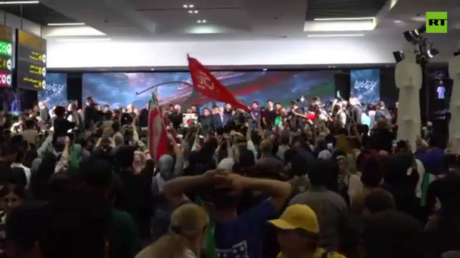
The police didn’t just walk into Milan’s city hall; they walked into the mid-century graveyard of Italian sports infrastructure.
The headlines are screaming "corruption," "fraud," and "illegal sale." They are obsessed with whether a few bureaucrats undervalued a patch of dirt or whether AC Milan and Inter Milan cut a backroom deal to bypass public tender laws. This is the lazy consensus. It treats the San Siro—the Giuseppe Meazza—as a sacred civic asset being looted by greedy private equity ghouls.
The reality is far more brutal. The San Siro is an architectural anchor dragging two of the world's most storied clubs into financial irrelevance. If this investigation forces a total collapse of the current redevelopment plan, it might be the only thing that saves Milanese football from becoming a permanent museum exhibit.
The Myth of the Sacred Stadium
Public sentiment treats the San Siro like the Duomo. It’s an icon. It’s "The Scala of Football." But nostalgia is a terrible investment strategy.
Currently, the stadium is owned by the Municipality of Milan. The clubs pay rent. They don’t own the skyboxes. They don’t own the concessions. They don't control the calendar. In the modern era of the $500 million annual matchday revenue (look at Tottenham or Real Madrid), the San Siro is a leaky bucket.
The investigation centers on the valuation of the land and the stadium. Critics argue the €197 million price tag is a "gift" to the clubs. I’ve spent two decades watching municipal governments try to value sports assets, and they always get it wrong because they value the bricks, not the utility.
A stadium that requires $100 million in structural repairs just to stay "safe" is not an asset; it’s a liability. By suing to stop the sale or crying foul over the price, the city of Milan isn't protecting the taxpayers. They are ensuring the taxpayers remain on the hook for a crumbling concrete shell that the primary tenants are desperate to flee.
Redefining the "Fraud"
Let’s look at what the prosecutors are actually hunting. They claim the "project finance" model used to justify the sale was a sham to avoid a public auction.
Standard procedure dictates that public land must be auctioned to the highest bidder. The "contrarian" truth? No one else wants that land. There is no secret billionaire waiting to buy a 75,000-seat stadium that is legally protected by heritage status and requires a billion euros in modernization.
The "competition" doesn't exist. This isn't a market; it's a hostage situation. The city needs the clubs to stay to keep the neighborhood alive, and the clubs need the city to get out of the way so they can actually compete with the state-backed clubs in Paris and Manchester.
If the "fraud" is that the city tried to make the deal easy for the clubs, then the city was actually acting with a rare flash of economic competence. They realized that a vacant San Siro is a disaster for Milan’s balance sheet.
The Revenue Gap is a Chasm
For those asking, "Why can't they just renovate it?"—you’re asking the wrong question.
Renovation is a trap.
- The Third Ring Problem: The famous third tier is structurally detached. To modernize it, you have to effectively demolish it.
- Matchday Disruption: A full renovation takes 5-8 years. Where do the clubs play? Moving to Monza or Reggio Emilia for five seasons would evaporate the clubs’ commercial value.
- The "Cathedral" vs. Reality: Populous (the architects) designed "The Cathedral" to be a revenue engine. The current San Siro is a logistical nightmare for corporate hospitality—which is where the real money lives.
$R = (T \times P) + (C \times S) + B$
In this basic revenue equation, where $R$ is matchday revenue, $T$ is tickets, $P$ is price, $C$ is hospitality capacity, $S$ is spend per head, and $B$ is ancillary business (museums, retail), the San Siro fails on $C$ and $B$.
AC Milan and Inter are currently fighting for scraps in the Champions League while their "home" prevents them from generating the capital needed to buy the players who win it. The investigation into the sale price is a distraction from the fact that the clubs are currently paying a "tradition tax" that is killing their competitiveness.
The Bureaucratic Death Loop
The real "crime" in Milan isn't the sale; it's the Lacci e Lacciuoli (knots and ties) of Italian bureaucracy.
Italy is where ambitious projects go to die. Since the 1990 World Cup, Italy has failed to build modern infrastructure. While Germany (2006) and England (continuous) transformed their stadiums into 365-day-a-year entertainment hubs, Italy stayed stuck in 1990.
The Soprintendenza (Heritage Authority) placing a "cultural interest" bond on the second tier of the San Siro is the height of absurdity. It’s a football pitch, not a Renaissance fresco. By treating a mid-century sports venue as an untouchable monument, the state has effectively banned the clubs from being successful businesses.
The raid on city hall is just the latest chapter in a long history of Italian authorities using the legal system to stall economic progress. If you want to know why the Premier League’s TV rights are worth billions and Serie A is struggling to sell its package, look at the stadium.
Stop Crying for the Taxpayer
The "People Also Ask" crowd loves to wonder: "Is the city being ripped off?"
Flip the script. The taxpayer is being ripped off every day the city owns the stadium. Maintenance costs, security, and the opportunity cost of not having a developed, tax-paying district in San Siro are massive.
If the clubs move to San Donato or Rozzano—which they are threatening to do—the city of Milan is left with a massive, empty concrete monument. They will have to pay to tear it down or pay millions a year to keep it from falling over.
The investigation isn't a "win" for transparency. It’s a signal to international investors (like RedBird or Oaktree) that Italy is a "No-Go Zone" for infrastructure. If you can’t buy a stadium in the most fashion-forward, business-centric city in the country without a police raid, why would you invest a single Euro in Naples, Rome, or Florence?
The Exit Strategy
The clubs should stop fighting the prosecutors and start packing.
The best thing that could happen to AC Milan and Inter is for this investigation to kill the San Siro deal entirely. It provides the "Force Majeure" they need to walk away from the city’s political games.
Build in the suburbs. Own the land 100%. Control every hot dog sold and every parking space rented. Leave the "Giuseppe Meazza" to the historians and the pigeons.
The investigation claims the sale price was too low. Fine. Walk away and let the city try to sell it to someone else for €200 million. They won’t find a buyer. They won't even find a tenant.
This isn't about a "raided" city hall. This is about the death of a business model that relies on the state to provide the tools of production. The era of the municipal stadium is over. The fact that it’s ending with a police search is just the poetic, chaotic Italian ending the San Siro deserves.
Stop mourning the stadium. Start mourning the decade the clubs wasted trying to save it.
Build the new gates. Burn the old ones.