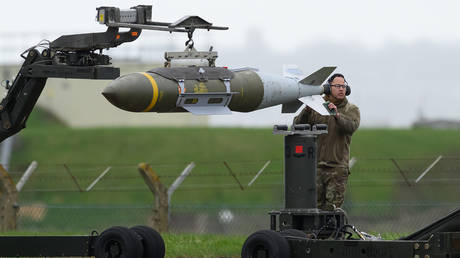
Prime Minister Sanae Takaichi is moving to dismantle the legal pillars that have defined Japan since 1947. This is not merely a bureaucratic adjustment or a symbolic nod to nationalist pride. It is a fundamental shift in the Pacific power dynamic. By pushing for the formal revision of Article 9 of the Constitution, Takaichi seeks to transform the Self-Defense Forces (SDF) into a conventional military with the legal mandate to strike first if necessary. The move aims to reconcile Japan’s de facto military strength with its de jure pacifist restrictions, a contradiction that has become unsustainable as regional threats mount.
The Ghost of 1947
For nearly eight decades, Article 9 has been the soul of the Japanese state. It explicitly renounces war as a sovereign right and forbids the maintenance of "land, sea, and air forces." Yet, Japan possesses one of the most technologically advanced militaries on earth. This "peace constitution" was authored by American occupation officials during a period of forced demilitarization. It was intended to ensure Japan could never again threaten its neighbors.
Takaichi argues that this document is a relic of a defeated nation. She views it as a straitjacket designed by foreigners that prevents Japan from acting as a "normal" country. Her push for revision is built on the premise that a nation cannot outsource its survival forever. The ambiguity of the current legal framework creates a strategic lag. Every time a North Korean missile overflies Hokkaido or a Chinese flotilla enters the waters around the Senkaku Islands, Tokyo must engage in a frantic internal debate over what the SDF is actually allowed to do. Takaichi wants those answers written into the supreme law of the land before the next crisis erupts.
Regional Realities and the China Factor
The geopolitical map of 2026 looks nothing like the world of 1947. The primary driver of Takaichi’s urgency is the rapid expansion of the People’s Liberation Army (PLA). Beijing has signaled that its patience regarding Taiwan is not infinite. If a conflict breaks out in the Taiwan Strait, Japan’s current constitutional constraints would likely paralyze its response. Under the existing "interpretation" of the constitution, Japan can only exercise collective self-defense in limited scenarios.
Takaichi wants more than just interpretation. She wants clarity.
A formal revision would allow for the procurement of long-range counterstrike capabilities without the need for linguistic gymnastics in the Diet. We are talking about Tomahawk missiles and indigenous hypersonic weapons. These are not defensive tools in the traditional sense. They are deterrents designed to hold enemy assets at risk. To Takaichi, the "pacifist" label is a luxury that Japan can no longer afford while its neighbors are rapidly modernizing their nuclear and conventional arsenals.
The Domestic Wall
Despite her parliamentary strength, Takaichi faces a skeptical public. The Japanese electorate is haunted by the memory of the mid-20th century. Pacifism is baked into the national identity of the post-war generations. Public opinion polls consistently show a deep divide. While many Japanese citizens acknowledge the worsening security environment, they fear that changing the constitution is a slippery slope back to militarism.
The legislative hurdle is equally steep. Revising the constitution requires a two-thirds majority in both houses of the Diet, followed by a simple majority in a national referendum. No Japanese leader has ever successfully cleared this bar. Takaichi is betting that she can frame the debate not as a move toward war, but as a necessary evolution for peace. She is positioning the revision as a way to protect Japanese lives, rather than as a tool for overseas intervention.
The Role of Komeito
The Liberal Democratic Party (LDP) does not rule alone. Its junior coalition partner, Komeito, is backed by the lay Buddhist organization Soka Gakkai. Komeito has long acted as a brake on the LDP’s more hawkish impulses. They prefer "adding to" the constitution rather than rewriting its core pacifist clauses. Takaichi’s success depends entirely on her ability to either coerce or convince Komeito to jump ship on their traditional stance. If she fails to secure their cooperation, the entire project could stall, leaving her vulnerable to internal party rivals who view her focus on the constitution as a distraction from economic pressures.
Economic Costs of Rearmament
National security is expensive. Japan has already committed to doubling its defense spending to 2% of GDP, bringing it in line with NATO standards. This is a massive injection of capital into a defense industry that has been stagnant for decades. Companies like Mitsubishi Heavy Industries and Kawasaki Heavy Industries are seeing a surge in orders.
However, this buildup comes at a time when Japan is grappling with a shrinking workforce and a massive national debt. Takaichi must explain to a taxpayer base struggling with inflation why billions are being diverted from social security and elder care into missile batteries and stealth fighters. The "guns versus butter" debate is no longer theoretical in Tokyo. It is the central tension of her administration.
The Industrial Complex
Japan’s defense industry is unique because it has been prohibited from exporting lethal equipment for most of the post-war era. Takaichi is also working to loosen these export restrictions. By allowing Japanese firms to sell weaponry to Southeast Asian nations and European partners, she hopes to create an economy of scale. If the SDF is the only customer for a Japanese tank, the per-unit cost is astronomical. If Japan can export that technology, the industry becomes self-sustaining. This is a cold-blooded business strategy disguised as a security policy.
Washington’s Quiet Approval
The United States has publicly maintained a neutral stance on constitutional revision, calling it an internal Japanese matter. Behind closed doors, the sentiment is different. Washington is overstretched. Between the ongoing tensions in Eastern Europe and the volatile situation in the Middle East, the U.S. Navy is spread thin in the Pacific.
A Japan that can defend itself—and actively participate in regional security—is a massive win for the Pentagon. The U.S.-Japan alliance is evolving from a "shield and spear" relationship, where Japan provided the defense and the U.S. provided the offense, into a more integrated partnership. Takaichi’s vision aligns perfectly with the American desire for "integrated deterrence."
The Nuclear Taboo
While Takaichi has focused on Article 9, the undercurrent of her policy involves the most sensitive topic in Japanese politics: nuclear weapons. As a staunch nationalist, she has previously hinted that Japan should not rule out any options for its defense. While a nuclear-armed Japan remains a political impossibility for now, her move to normalize the military is the first step in eroding the "Three Non-Nuclear Principles" (not possessing, not producing, and not permitting the introduction of nuclear weapons).
If the constitutional revision passes, the psychological barrier to discussing nuclear deterrence will likely vanish. This is what keeps planners in Beijing and Seoul awake at night. The revision is not just about words on a page; it is about the removal of the guardrails that have kept Japan’s military power in check.
The Strategy of Incrementalism
Takaichi is a master of the long game. She knows that a frontal assault on the constitution might trigger mass protests and a political backlash that could end her premiership. Instead, she is utilizing a strategy of incrementalism. She is pushing through "security legislation" that stretches the limits of the current constitution while simultaneously campaigning for the formal change.
By the time the referendum actually happens, she wants the reality on the ground to have changed so much that the constitution feels like an outdated map of a city that has been completely rebuilt. She is making the SDF’s expanded role a fait accompli.
A Reckoning for Asia
The reaction from Japan’s neighbors has been predictably sharp. Seoul, despite recent thaws in diplomatic relations, remains wary of any Japanese military expansion. For South Korea, the memory of colonial rule is not a distant history but a living political force. Beijing, meanwhile, uses the threat of "revived Japanese militarism" as a powerful domestic propaganda tool.
Takaichi’s move forces every capital in the region to recalibrate. If Japan becomes a conventional military power, the arms race in East Asia will accelerate. There is no version of this story where Japan’s neighbors sit idly by. We are entering an era of competitive rearmament where the margin for error is razor-thin.
The revision of Article 9 would be the final act of Japan’s post-war era. It would signal the definitive end of the "Yoshida Doctrine," which prioritized economic growth while relying on the United States for security. Takaichi is betting her legacy—and the future of her nation—on the idea that Japan can only be truly sovereign if it is prepared to fight. Whether the Japanese people are willing to follow her into that new reality remains the most consequential question in the Pacific.
The path she has chosen is fraught with risk, but for Takaichi, the risk of doing nothing is far greater. She is not just changing a law; she is attempting to change the national character of Japan. If she succeeds, the Pacific will have a new, unencumbered military giant at its center. If she fails, she may leave Japan in a strategic limbo, caught between a pacifist past it can no longer afford and a military future it is too afraid to embrace.
The decision now rests with the Japanese public, who must decide if they are ready to bury the ghost of 1947 once and for all.