Salt gets everywhere. It cakes the windshields of trucks idling at border crossings, it whitens the leather shoes of merchants walking the dockyards of Mumbai, and it settles into the quiet creases of old maps that bureaucrats haven't looked at in a decade.
For centuries, the map of Indian commerce followed a predictable, well-worn crease. You loaded the cargo. You pointed the bow west toward the Red Sea or south around the cape, keeping a wary eye on the choke points, the rising insurance rates, and the endless bureaucratic friction that turns a three-week voyage into a five-week endurance test. Everyone accepted it. Trade was hard because trade had always been hard.
Then came a quiet morning in Muscat.
To understand what is happening now, you have to picture a dockworker named Tariq standing on a slab of newly poured concrete in Duqm, looking out at a expanse of water so blue it hurts to squint against it. Ten years ago, this place was little more than wind, scrub brush, and a few nomadic fishermen who knew how to read the clouds. Today, it is a massive, deliberate anchor driven into the floor of the Arabian Sea.
Oman wants Indian businesses to look at that concrete and see an open door.
The official headlines call it a gateway. They talk about bilateral agreements, strategic corridors, and the smooth flow of goods. But boardroom terminology misses the human pulse of the shift. Trade is never just about containers and tariffs. It is about a manufacturer in Gujarat staring at a ledger at two in the morning, wondering why a single shipping delay just ate three months of profit. It is about risk. It is about the heavy, sinking feeling of watching your supply chain choke on its own complexity.
Oman is offering a different kind of geography.
Consider the geography of friction. When an Indian entrepreneur wants to push manufactured goods, machinery, or agricultural products into the Middle East, they are playing a high-stakes game of maritime chess. Every harbor has its own rhythm, its own congestion, its own customs backlog. By pitching specialized zones and dedicated port infrastructure specifically tailored to Indian capital and manufacturing, Oman is trying to rewrite the shortest distance between two economic ambitions.
They are saying: Stop fighting the traffic. Come through the side door.
This isn't an accident of diplomacy. It is the result of nations realizing that old alliances are only as strong as their logistical resilience. When global supply lines snap—and we have all watched them snap with terrifying regularity over the last few years—the winners are not necessarily the biggest economies. They are the ones with options.
Oman has quietly positioned itself as the calm, deep-water room at the back of the house. While other regional hubs hustle with frantic, neon-lit ambition, Oman plays the long game of stability. It is politically steady, geographically sheltered outside the immediate pressure cooker of the Strait of Hormuz, and desperately eager to transform its coastline into a modern industrial engine.
For Indian companies looking outward—seeking to escape domestic saturation and capture the booming consumer markets of the Gulf—this partnership offers something more valuable than tax incentives. It offers predictability.
Walk through a modern logistics park in Pune or Surat, and you will meet the people driving this expansion. They aren't geopolitical strategists. They are engineers with ink-stained fingers, second-generation textile owners, and tech founders who realize their physical hardware needs a reliable bridge to the West. They don't care about geopolitics until a missed delivery breaks a contract.
When you ask them about expanding into the Middle East, their eyes narrow slightly. They aren't dazzled by the romance of foreign markets. They want to know about transit times. They want to know about warehousing costs. They want to know if their containers will sit in the sun for three weeks waiting for a customs stamp.
Oman’s pitch to these operators is intimate and practical. It’s an invitation to plug into an ecosystem where land is cheaper, energy is stable, and the government is actively rolling out the red carpet for Indian enterprise. Special economic zones are being designed with the specific regulatory quirks of Indian exporters in mind. It is a tailor-made suit in a world of off-the-rack shipping lanes.
Yet, transformation is never frictionless.
Every new trade route births its own ghost stories. Skeptics point out that building a port is easy; filling it with organic, self-sustaining economic activity is an entirely different beast. You can pour all the concrete in the world, but if the local supply chains don't mature, if the financial backing stutters, if the cultural nuances of doing business across the Gulf are mishandled, the grand vision can easily curdle into an expensive ghost town.
History is littered with brilliant blueprints that died of loneliness on the coastline.
This is where the human element reclaims the narrative. Oman’s gamble isn't just financial; it is cultural. The ties between the western coast of India and the Sultanate go back millennia. Dhows have crossed these exact waters carrying spices, teak, and silver long before modern nation-states drew lines on parchment. Old families in Gujarat and Muscat still share business relationships built on nothing more than a handshake and a shared memory of the monsoon winds.
Modern trade treaties are just legal frameworks trying to catch up to ancient instincts.
When an Indian manufacturer sets up shop in a Omani logistics zone today, they are tapping into a lineage that survived empires, world wars, and digital disruption. The language of commerce here is older than the software used to track the containers.
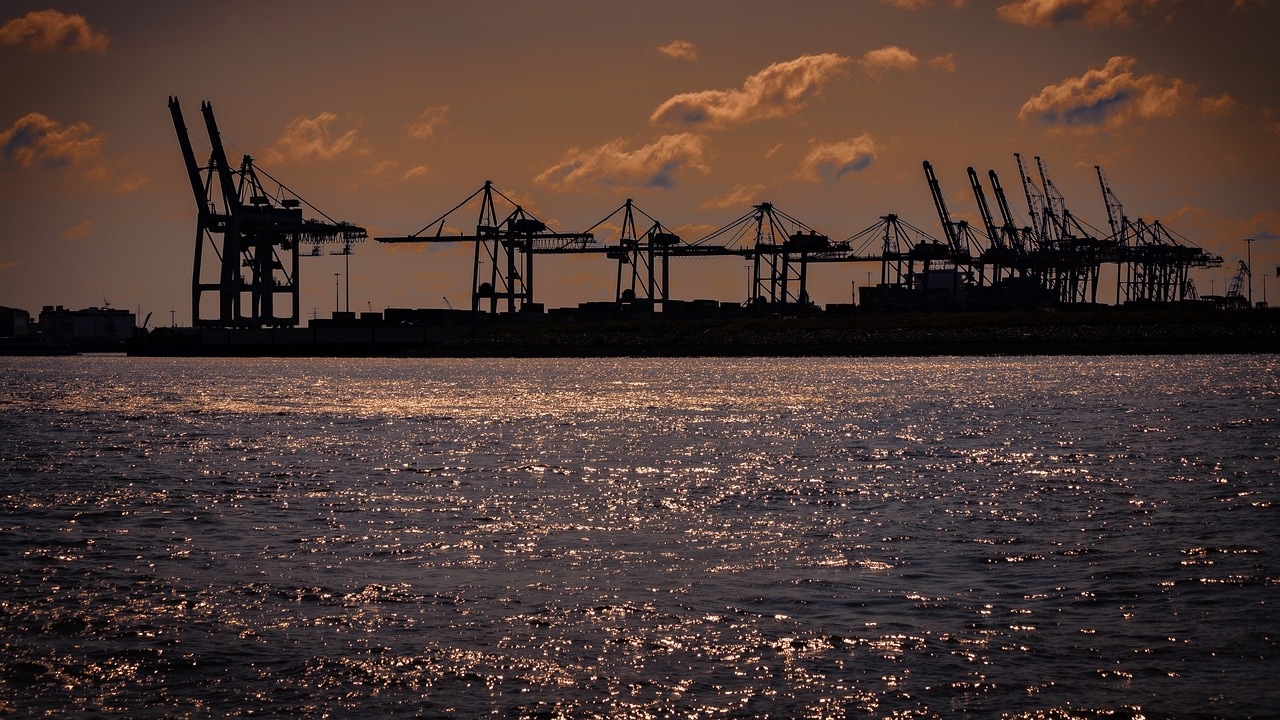
Imagine the dock at Duqm five years from now. The cranes will be humming. The trucks will be rolling off ro-ro vessels with license plates from Mumbai, Dubai, and Riyadh. A young logistics manager, born long after the old dhow trade faded into history, will check her tablet, sip her cardamom tea, and watch a steel box swing through the salty air.
She won't be thinking about geopolitics. She will be thinking about the deadline, the client in Riyadh, and the fact that the ship left on time.
That is what this expansion actually means. It is the quiet labor of making the world a little less stubborn, a little more reachable, one harbor at a time. The maps are changing, not because politicians demanded it, but because the weight of human ambition finally outgrew the old roads.