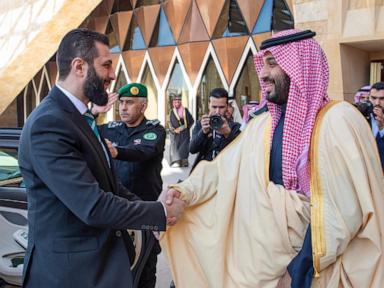
The prevailing narrative circulating through foreign policy circles right now is lazy, predictable, and fundamentally backwards.
Every mainstream outlet is running the same breathless headline: Saudi Arabia is turning to Syria for help as fighting with the Houthis escalates. They paint a picture of a desperate Riyadh, humbled by years of grueling asymmetric warfare in Yemen, crawling back to Damascus in search of military relief or a backchannel lifeline to Tehran.
They are looking at the map upside down.
If you actually understand how Gulf statecraft, Iranian proxy architecture, and post-war Syrian survival mechanics operate, you know that Riyadh is not asking Damascus for a favor. Saudi Arabia is putting Syria on a leash.
What the pundits are framing as a cry for help is actually a calculated, transactional squeeze play. Riyadh is weaponizing its massive checkbook and diplomatic legitimacy to force Damascus to police its own territory, choke off Houthi supply lines, and prove its worth outside the Iranian orbit.
The Lazy Consensus of Gulf Desperation
To understand why the standard media take is so flawed, look at the premise they are selling.
The conventional argument goes like this: Houthi missile and drone threats are heating up again, Red Sea shipping lanes remain volatile, and Saudi Crown Prince Mohammed bin Salman needs a buffer. Because Syria sits inside the Iranian-led "Axis of Resistance" alongside the Houthis and Hezbollah, Riyadh supposedly re-established ties with Damascus so Syria could act as a mediator or a pressure valve.
That reading assumes Syria holds the cards. It assumes Damascus has functional leverage over Sanaa.
It does not.
Syria is an economically hollowed-out state surviving on institutional life support. Its infrastructure is shattered, its currency is decimated, and its sovereignty is carved up among foreign militaries and local militias. Damascus cannot even fully secure its own border with Jordan against Captagon smuggling networks without external pressure, let alone dictate operational tempo to Houthi commanders thousands of miles away in the mountains of northern Yemen.
I have spent years watching Western analysts misread Middle Eastern rapprochements because they project Western diplomatic habits onto transactional autocracies. In Washington or Brussels, restoring diplomatic ties is treated as a concession—a reward for good behavior or an admission that containment failed. In Riyadh, normalization is a debt trap. You bring a bankrupt neighbor into the fold, offer them a lifeline of Arab League legitimacy and potential Gulf reconstruction capital, and immediately hand them a list of security deliverables.
Riyadh did not bring Syria back into the Arab fold out of weakness. It did so because an isolated Syria is an entirely owned subsidiary of Iran, whereas a Syria dangling on a Saudi financial hook has to think twice before letting its soil become a staging ground for anti-Saudi operations.
How the Houthi-Syria Logistics Pipeline Actually Works
If Damascus cannot tell the Houthis to stop firing ballistic missiles, why does Syria matter to the Yemen conflict at all?
Because of logistics, training, and gray-zone proliferation.
Over the past several years, intelligence assessments from regional security services and independent conflict monitors have repeatedly tracked the quiet movement of Houthi operatives into Syria. They do not go there for diplomatic summits. They go to Syrian territory to train alongside Islamic Revolutionary Guard Corps (IRGC) advisors and Hezbollah specialists on drone assembly, missile guidance systems, and asymmetric battlefield tactics.
Syria became an ideal rear-echelon workshop for the Axis of Resistance. Away from the constant coalition surveillance over northern Yemen, Houthi technicians could absorb advanced Iranian engineering and smuggling know-how. Even more critically, Syrian ports and porous overland routes have served as transit nodes for dual-use components, illicit financing, and weapons transfers flowing through the broader regional network.
This is the exact mechanism Riyadh is targeting.
When Saudi officials engage Damascus amid rising Houthi friction, they are not saying, "Please convince your friends in Yemen to leave us alone." They are saying, "Shut down the Houthi training camps in your backyard, expel their liaison offices, and stop letting your territory function as an IRGC logistics hub—or the diplomatic thaw freezes immediately."
Consider the asymmetry of that exchange. Riyadh is not asking Damascus to solve the Yemen war. Riyadh is demanding that Damascus stop subsidizing the war's supply chain.
Dismantling the "Iranian Backchannel" Myth
Whenever Saudi Arabia and Syria hold high-level security talks, commentators inevitably dust off the "backchannel to Tehran" cliché.
Let's dismantle that premise immediately.
Why on earth would Saudi Arabia use a weakened, cash-strapped intermediary in Damascus to talk to Iran when Riyadh already has direct, high-level diplomatic channels with Tehran?
Following the Beijing-brokered normalization agreement in 2023, Saudi and Iranian intelligence chiefs, foreign ministers, and military officials have spoken directly on a regular basis. Riyadh has Beijing on speed dial as a structural guarantor, and Oman remains the gold standard for quiet, discreet Gulf mediation. Using Damascus to pass notes to Tehran would be like using a broken telegraph when you already have a fiber-optic line.
The real audience for Saudi-Syrian security coordination is not Tehran. It is the Syrian regime itself, and by extension, the local security apparatus in Damascus that has grown accustomed to operating with impunity.
By forcing Syrian intelligence to sit across the table and answer for Houthi activity inside Syria, Riyadh creates internal friction within the Axis of Resistance. Every time Damascus cracks down on a Houthi liaison office or restricts IRGC movement to appease Saudi demands, it creates a quiet wedge between Damascus and Tehran. Iran wants Syria to remain an uncompromising frontline state. Saudi Arabia is offering Syria a path toward economic survival—provided Syria starts acting like a normal state that polices its own borders.
The Real Endgame in the Red Sea and Yemen
To see the full picture, you have to zoom out from the bilateral Saudi-Syrian headlines and look at Riyadh's broader strategic doctrine.
Saudi Arabia's primary obsession right now is Vision 2030. Every major geopolitical move Riyadh makes is subordinated to domestic economic transformation. You cannot attract trillions of dollars in foreign direct investment, build multi-billion-dollar Red Sea tourism megaprojects, or establish yourself as a global logistics hub while ballistic missiles are flying overhead and commercial shipping is being choked off at the Bab el-Mandeb Strait.
Riyadh learned a brutal lesson between 2015 and 2022: you cannot bomb the Houthis into submission from the air, and a prolonged ground war in Yemen is a bottomless pit for blood and treasure.
So Saudi strategy shifted from direct military attrition to network containment.
Instead of fighting the Houthis exclusively in the rugged terrain of Saada and Marib, Riyadh is systematically squeezing the regional ecosystem that keeps the Houthis armed, funded, and trained. That strategy has three distinct pillars:
- Financial Choke Points: Tightening banking compliance, currency controls, and remittance monitoring across the Gulf and Levant to starve Houthi networks of hard currency.
- Maritime and Overland Interdiction: Backing regional coast guards and border forces while pressuring transit states to halt the flow of Iranian drone components and missile fuel precursors.
- Diplomatic Leverage Over Enablers: Using economic incentives and regional reintegration to compel countries like Syria and Iraq to restrict how freely Iranian-backed proxies operate within their borders.
Look at how Syria fits into pillar number three. It is not a desperate rescue mission. It is basic supply-chain disruption applied to irregular warfare.
Answering the Questions Nobody Is Asking Properly
When news breaks of Saudi-Syrian security coordination, the public search queries follow a predictable script. Most of them are built on faulty assumptions. Let's fix them.
Is Saudi Arabia losing the war against the Houthis?
The conventional military campaign in Yemen ended in a stalemate years ago, and Riyadh openly pivoted toward an exit strategy. Calling the current dynamic "losing" misses the point. Riyadh realized that winning a counterinsurgency in Yemen is impossible for an external power, so it redefined victory as border security and economic insulation. The danger today is not that the Houthis will conquer Saudi territory; it is that Houthi escalation in the Red Sea will derail Saudi economic diversification.
Can Syria actually stop Houthi attacks?
No. Syria has zero operational command over Houthi missile batteries in Yemen. Even if Damascus severed every tie with Sanaa tomorrow, the Houthis possess domestic manufacturing capabilities, stockpiled Iranian weaponry, and independent funding streams through taxation and smuggling in Yemen. Anyone claiming Damascus holds a magic off-switch for the Red Sea crisis is selling fantasy.
Why would Syria betray its Iranian allies for Saudi Arabia?
It won't—not completely, and not overnight. Anyone expecting Damascus to suddenly break with Tehran and join a pro-Western bloc is delusional. Iran saved the Syrian government during the civil war, and Iranian militias remain deeply embedded in Syria's security architecture. Damascus is not choosing Riyadh over Tehran; it is playing both sides to extract maximum survival value. It takes Iranian military protection while using Saudi diplomatic engagement to pry open Arab markets and escape total economic suffocation.
The Flaw in Riyadh's Gamble
A sharp analysis does not pretend a contrarian strategy is foolproof. Saudi Arabia's transactional squeeze on Syria carries massive, built-in risks that could easily backfire.
The biggest flaw is assuming Damascus has the institutional capacity—or the genuine willingness—to enforce what it promises behind closed doors.
Throughout the past decade, Damascus has perfected the art of tactical compliance. It will arrest a few low-level operatives, shut down an empty warehouse for the cameras, and tell Saudi envoys that the Houthi presence has been neutralized. Meanwhile, the core IRGC-Houthi logistics pipeline simply moves two towns over or operates under a different front name.
We saw this exact playbook with the Captagon trade. Damascus promised Arab leaders it would dismantle the multi-billion-dollar synthetic drug networks flooding Jordan and the Gulf. A few token raids happened, headlines were generated, and the smuggling continued largely uninterrupted because elements of the Syrian security apparatus rely on that illicit revenue to stay solvent.
If Riyadh hands over diplomatic legitimacy and economic lifelines upfront without ironclad, verifiable benchmarks on the ground, Saudi Arabia will end up subsidizing the very network it is trying to dismantle. Leverage only works if you are willing to pull the plug when the other side cheats.
How to Read Middle East Geopolitics Without Getting Played
If you want to understand what happens next between Riyadh, Damascus, and Sanaa, stop reading press releases and start tracking hard indicators.
- Watch the money, not the handshakes. Diplomatic summits and warm handshakes at Arab League meetings cost nothing. Pay attention to whether Saudi sovereign wealth funds, major construction conglomerates, or commercial banks actually deploy capital into Syria. As long as the money stays parked in Riyadh, Damascus has not delivered on its security promises.
- Track specific expulsions and seizures. Real compliance leaves a physical trail. Look for verified intelligence leaks regarding the closure of Houthi offices in Damascus, the deportation of specific Houthi liaisons, or major maritime seizures of Yemen-bound cargo originating from Syrian ports like Latakia.
- Monitor Iranian pushback inside Syria. Tehran does not tolerate poaching in its sphere of influence. If Saudi pressure on Damascus actually starts biting into Houthi operations, you will see immediate retaliatory friction—whether through sudden IRGC troop movements, proxy clashes in eastern Syria, or sharp rhetorical warnings from hardline outlets in Tehran.
The next time a headline tells you that a wealthy regional superpower is begging a bankrupt, war-torn neighbor for military salvation, pause and check the balance sheet. Power in the Middle East rarely flows uphill from the destitute to the rich. Riyadh isn't looking for a savior in Damascus—it's auditing a debtor.


