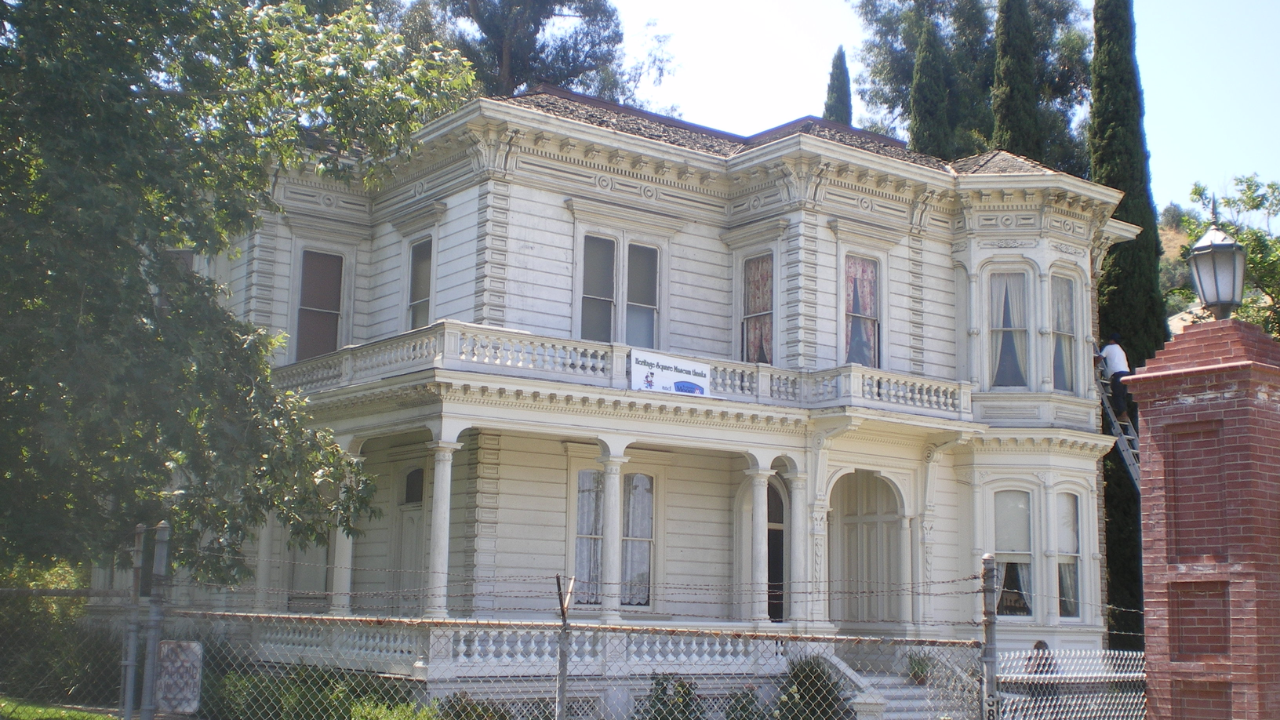
Romanticism is killing urban architecture. Every time a city council decides to hoist an 1870
Why Saving Historic Houses is Actually Destroying Cities
lifestyle
news
We love a good ghost story about old buildings. Mention that the Perry House went up in Los Angeles in 1876 and survived nearly a century before getting dragged across town to Heritage Square in 1975, and heritage preservationists lose their minds. They treat that relocation like a sacred resurrection. They clap for the rescue of Victorian architecture. They sigh over the endurance of old wood.
They are dead wrong.
Moving a house across a metropolitan grid after ninety-nine years is not a triumph of historic preservation. It is an expensive, performative funeral for a structure that has already lost its context, its function, and its reason for existing.
Look past the sentimental dust. When you rip a building out of its native soil and plant it in a museum park like a stuffed animal in a glass case, you kill the very thing you claim to save.
The Myth of Perpetual Preservation
The lazy consensus in heritage conservation is simple: old equals valuable, and keeping physical matter intact equals keeping history alive. This logic collapses the second you examine what a city actually is. A city is not a static warehouse for antique lumber. A city is a living, metabolic organism driven by density, friction, and economic gravity.
When the Perry House was built in downtown Los Angeles during the Gilded Age, it sat in a specific neighborhood serving specific human needs. By 1975, that neighborhood had evolved. The surrounding land demanded higher and better use to support a swelling population. The building stood in the way of progress, transit, and housing capacity.
Instead of letting it go—which is the natural, healthy lifecycle of architecture—city planners and preservationists engaged in monumental theater. They spent small fortunes hoisting a two-story wooden box onto a flatbed, hauling it away from its historical coordinate, and dropping it into Heritage Square Museum.
What did that actually achieve? It didn't preserve history. It taxidermied a corpse.
Stripped of its original streetscape, its neighborhood relationships, and its utility, the house became a prop. You cannot understand 1876 Los Angeles by looking at an isolated Victorian home parked next to a completely unrelated railway station and a church from a different zip code. You are looking at a theatrical stage set designed to comfort people who are terrified of change.
The Opportunity Cost of Nostalgia
Let us talk about the math that preservationists ignore. Real estate in a major metropolitan area is a finite resource. Every square foot dedicated to housing a relocated, unoccupied relic from the nineteenth century is a square foot stolen from actual human beings who need a place to live today.
Imagine a scenario where the land vacated by these displaced historical curiosities—or the destination land consumed by museum villages—was instead subjected to market-rate zoning reform. You would get mixed-use density. You would get housing supply. You would get affordability valves opening up in a housing crisis.
Instead, we maintain dead monuments. We pay maintenance costs, insurance, and administrative overhead to preserve siding and floorboards that possess zero functional value. We prioritize the aesthetic preferences of architectural hobbyists over the shelter requirements of a working-class populace.
This is not stewardship. It is hoarding with a plaque.
True historians understand a fundamental truth that museum curators try to hide: buildings die. They are meant to be built, utilized, worn out, and replaced. Trying to freeze urban fabric in amber creates a brittle, dysfunctional city that buckles under the weight of its own past.
The Architectural Fallacy of Authenticity
Preservationists love to talk about authenticity. They will point to the original crown molding of the Perry House or the hand-turned balusters on the porch as proof of uncompromised historical integrity.
This argument crumbles under basic scrutiny. Authenticity in architecture is not merely about the molecular makeup of the timber. It is about spatial context.
When you move a structure fifty miles or even five blocks, you erase its authenticity. A house is a machine for living, inextricably linked to the sun angles, the wind patterns, the dust, the neighboring lots, and the economic pressures of its original plot. Uproot it, and it becomes a fake. It is a three-dimensional photograph rather than a living building.
We do this because we suffer from chronological snobbery. We assume our generation is uniquely qualified to decide what future generations will find precious. We flatten the messy, organic evolution of a city into a curated highlight reel that satisfies our current romantic notions of the past.
What We Should Do Instead
If we want to honor history without strangling the present, we need to completely overhaul how we treat old structures.
Stop funding relocation projects. If a building cannot survive economically or functionally on its original site, let it go. Document it with high-resolution laser scans, architectural drawings, and deep archival research. Then, get out of the way and let the land do the job it was meant to do: house the living.
For the buildings that truly anchor a community's identity, practice adaptive reuse. Do not move them to a park; keep them in the mix. Force them to pay rent. Force them to house a coffee shop, a law office, or a modern apartment upstairs while keeping the facade intact. Make history pay its own way instead of living off public subsidies and guilt-tripping taxpayers.
Cities are for the future, not the archive. Tear down the museum villages. Build the housing. Let the dead buildings rest.