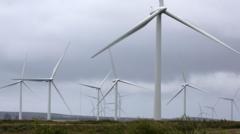
Scotland has quietly become a green industrial powerhouse, and the raw numbers finally prove it. Data from a major Confederation of British Industry (CBI) Economics and Energy and Climate Intelligence Unit (ECIU) study shows that the net zero economy contributes over £9.1 billion in Gross Value Added (GVA) directly to Scotland. When you factor in the broader supply chain ripple effects, that economic footprint comfortably clears £10.2 billion.
This isn't a speculative projection for a distant future. It's happening right now.
But if you only look at the headline cash figure, you're missing the real story. The true value of Scotland's green transition doesn't lie in a single massive spreadsheet entry. It's found in skyrocketing productivity rates, a massive regional employment boom, and structural advantages that are reshaping the workforce from Aberdeen to Glasgow.
The Hidden Power of Green Productivity
Let's look past the multi-billion-pound headline. The most startling detail hidden deep within the economic data is productivity.
Every full-time equivalent (FTE) job in the net zero sector generates roughly £105,500 in economic value. That is a massive 38% higher than the UK national average. In an economy that has struggled with stagnant productivity for more than a decade, these numbers are staggering.
High productivity translates directly into higher wages. The average salary for a worker in a net zero business sits around £43,076. Compare that to the standard UK average, and you find a significant wage premium. Green workers are earning thousands of pounds more each year than their peers in traditional sectors.
This wage premium isn't reserved for corporate executives or academic researchers sitting in city offices. The expansion relies heavily on practical, hands-on trades.
- Skilled Construction: Plumbers, heating installers, and insulation specialists are seeing surging demand as building systems upgrade.
- Engineering and Electrical Trades: High-voltage electricians, grid technicians, and industrial welders form the backbone of new infrastructure.
- Operations and Machinery: Plant operators and marine crew members are transitioning directly from fossil fuel roles into clean energy.
Why Scotland Holds a Structural Advantage
Many economic booms concentrate wealth inside London and the South East of England. The net zero transition does the opposite. Because green energy requires physical space, coastline, and industrial heritage, Scotland holds a natural geographical monopoly on the UK's greenest assets.
Net zero economic activity supports over 100,700 full-time jobs across Scotland. This marks a 19.5% increase in employment within the sector over a short two-year window, outpacing the employment growth rate of the rest of the UK.
The Real-Time Industrial Reality
Traditional official statistics often fail to track these shifts because they rely on outdated Standard Industrial Classification (SIC) codes written decades ago. To get accurate data, researchers used Real-Time Industrial Classifications (RTICs) to track actual business activity on the ground.
The results show intense regional concentration. Aberdeen has long been known as the oil and gas capital of Europe. Today, it's rapidly converting that exact same supply chain into a clean energy hub. In both Aberdeen North and Aberdeen South, net zero businesses now account for more than 10% of total local employment.
The skills required to run a North Sea oil rig—complex marine logistics, heavy structural engineering, high-pressure subsea operations—are precisely the skills needed to anchor massive floating offshore wind turbines or manage carbon capture pipelines. It's a natural pivot.
The Five Strategic Arenas Dominating the Market
Scotland's current economic defense relies on five specific sectors outlined in national industrial planning. These sectors attract the vast majority of inbound Foreign Direct Investment (FDI) and capital expenditure.
1. Offshore and Onshore Wind
The ScotWind leasing round represents the largest commercial offshore wind auction on earth. With major developers committed to massive long-term investments, early project phases are steering capital into port upgrades and fabrication yards. Major energy operators like Statkraft and Renewable Energy Systems (RES) have heavily scaled their Scottish footprints to anchor these grid networks.
2. Carbon Capture, Utilization, and Storage (CCUS)
The Acorn project in North East Scotland forms the bedrock of the country's carbon management strategy. By reusing legacy deep-sea pipelines, the project intends to capture industrial emissions from central Scotland's manufacturing belt and store them permanently in depleted gas reservoirs beneath the North Sea.
3. Hydrogen Production
With an abundance of secondary renewable electricity generated during peak wind periods, Scotland is positioning itself to become a major exporter of green hydrogen to mainland Europe. Ports are already redesigning infrastructure to handle hydrogen transport and processing.
4. Professional and Financial Services
Edinburgh's established financial sector has repositioned itself as a global hub for green bonds, ESG compliance, and renewable project financing. Clean energy projects require massive upfront capital, and the legal, analytical, and fund-management expertise remains centered in the capital.
5. Clean Energy-Intensive Industries
Traditional, heavy energy users like chemical plants, paper mills, and steel fabricators are upgrading to clean power sources to protect themselves from volatile global gas markets. Simultaneously, new data centers are moving north to tap directly into Scotland's cool climate and abundant renewable energy grid.
The Real Mistakes Holding Back Expansion
Despite the multi-billion-pound validation, the system isn't perfect. If you talk to businesses on the ground, they'll tell you that the biggest threat to this economic engine isn't a lack of capital or interest. It's structural friction.
"You can't have growth without green, but you also can't have green without grids and planning approvals."
The planning system remains a massive bottleneck. Getting a new onshore wind farm or an offshore transmission cable approved can take years of bureaucratic back-and-forth. These delays stall private investments, tie up capital, and force international developers to look at faster-moving markets like the US or mainland Europe.
The second critical failure point is the skills pipeline. While total employment is up, severe shortages exist in specialized trades. We don't have enough high-voltage electricians, marine engineers, or heat pump installers to match the speed of corporate investment. Without a serious overhaul of technical colleges and apprentice funding, growth will eventually hit a hard ceiling.
Actionable Next Steps for Scottish Businesses
If you run a business in Scotland, you shouldn't watch this transition from the sidelines. The scale of the net zero supply chain means that almost every sector can find an angle to participate.
- Audit Your Supply Chain Capabilities: You don't need to build wind turbines to profit. Wind farms need catering, marine transport, safety equipment, environmental consulting, and local civil engineering support. Identify how your current services translate to green projects.
- Target High-Growth Hotspots: Focus your business development efforts on regional hubs like Aberdeen, Inverness, and the industrial ports along the Firth of Forth where project infrastructure is concentrated.
- Invest heavily in Reskilling: If you run an engineering or construction firm, start retraining your workforce now. Use available transition grants to certify your staff in low-carbon technologies and renewable maintenance before the talent shortage worsens.
- Engage with Local Enterprise Networks: Tap into initiatives like the Low Carbon Infrastructure Transition Programme to find joint-venture opportunities and secure de-risking grant match-funding.
The shift toward a net zero economy isn't an ideological luxury or an environmental box-ticking exercise. The data shows it is the primary engine of modern Scottish economic growth, outperforming old industries by almost every metrics that matters. Businesses that adapt to this reality now will capture the lion's share of the next ten billion pounds. Businesses that wait will find themselves holding assets nobody wants to buy.