The smell hits you first. It is not just burnt rubber, though that bitter, chemical haze hangs thick enough to coat the back of your throat. It is the smell of raw, unchanneled adrenaline mixed with heat rising off asphalt that has barely had time to cool after a Los Angeles summer afternoon.
Then comes the sound.
A deafening symphony of modified V8 engines revving against their rev-limiters. Metal screaming against metal. The rhythmic, rhythmic thud of bass rattling the doors of surrounding apartment complexes. For those inside the circle, it is a spectacle. For everyone living in the shadow of the intersection, it is a nightmare unfolding in real time.
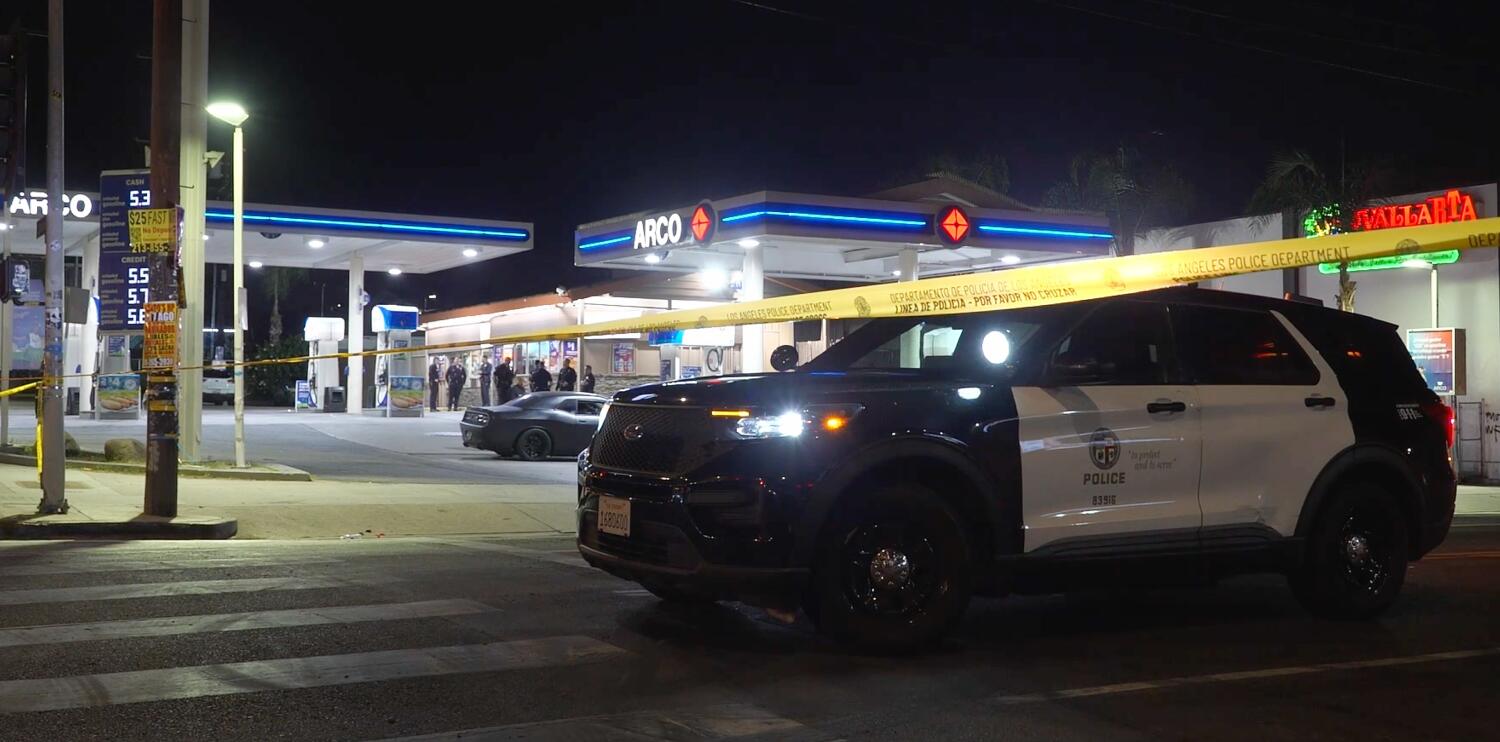
Late at night, at an intersection in Boyle Heights, the city streets belong to no one and everyone at once. A street takeover—a gathering where drivers block off entire city blocks to spin donuts, perform burnouts, and display customized cars—transforms a public thoroughfare into an improvised arena. Hundreds of spectators swarm the crosswalks. Phones hover in the air, glowing like fireflies, capturing the smoke and chaos for an audience watching through screens thousands of miles away.
Chaos, however, rarely stays contained inside the lines drawn by burning tires.
When the Smoke Clears
Amid the thunder of engines and the cheering crowd, the violent shift happened in an instant. Guns flared. The sharp, mechanical pop of gunfire pierced through the roar of superchargers.
Panic.
The crowd, seconds ago a single, swaying entity bound by excitement, shattered. People scrambled over hood covers, shoved past each other toward side streets, and dove behind parked sedans. When the crowd cleared, the smoke slowly drifted away into the cool night air.
Left behind on the cold pavement was a man, bleeding from a gunshot wound.
The shooter vanished into the dark, blending seamlessly into the fleeing horde. No suspects in custody. No immediate answers. Just an ambulance siren wailing in the distance, cutting through the sudden, eerie silence of a neighborhood left to pick up the pieces.
This is not an isolated story. It is a snapshot of an escalating crisis playing out on asphalt stages across urban centers. What begins as an underground subculture of car enthusiasts frequently devolves into a volatile powder keg where life can be rewritten in a split second.
The Invisible Stakes
To understand why a street takeover ends in gunfire, you have to look past the surface level of loud exhausts and reckless driving. You have to look at what these events represent to the people involved—and the communities trapped in their wake.
Consider a hypothetical resident living on that very corner in Boyle Heights. Let us call her Maria.
Maria works a twelve-hour shift at a local hospital. Her alarm is set for five in the morning. At 1:30 AM, her living room lights up with flashing headlights and red tire-smoke. Her windows rattle in their frames. Her children wake up crying, terrified by the sound of tires screeching like dying animals outside their bedroom.
Maria cannot call for help easily; police responses to massive takeovers are notoriously complex, requiring immense resources to disperse crowds that often outnumber responding officers tenfold. She sits in the dark, clutching her phone, hoping a stray bullet does not penetrate her stucco walls.
For Maria, the takeover is not entertainment. It is a invasion of her sanctuary.
On the other side of the asphalt circle stands another figure. Let us call him Leo, a nineteen-year-old who brought his modified coupe to the intersection. For Leo, the takeover represents community, identity, and prestige. In a city that often feels overwhelmingly vast and indifferent, the takeover offers visibility.
Yet, when hundreds of hyped-up individuals gather in an unregulated space without security, boundaries, or conflict resolution, small slights escalate rapidly. A bumped shoulder. A spilled drink. A dispute over a driving line. In an environment fueled by posturing and high adrenaline, simple disagreements carry catastrophic weight.
Someone pulls a weapon. A trigger is pulled. And a community is left with another statistic.
The Anarchy of the Intersection
Street takeovers are often confused with traditional street racing, but the mechanics are entirely different. Racing is about speed, straight lines, and reaching a finish line. A takeover is about occupation. It is about claiming space.
By locking down a major intersection, participants create a temporary vacuum of authority. Within that circle, normal rules cease to exist. Drivers spin heavy machinery inches away from unrestrained crowds. Spectators stand dangerously close to two-ton vehicles rotating out of control, risking catastrophic injury for a cinematic video clip.
The danger is not an accident; it is built into the design.
When you remove guardrails, both literal and metaphorical, violence becomes an inevitable passenger. The shooting in Boyle Heights was not an anomaly. It was the predictable outcome of an environment where lawlessness is celebrated as a feature, not a bug.
Police departments across the country struggle to combat the phenomenon. Traditional tactics fail because the events are hyper-mobile, organized via encrypted messaging apps, and capable of relocating within minutes. By the time law enforcement arrives, the crowd disperses, leaving behind skid marks, trash, and sometimes, blood.
The Real Cost
We often measure the toll of these events in property damage: ruined asphalt, knocked-over traffic lights, smashed storefronts. But the true cost cannot be calculated on an invoice.
The real cost is measured in the erosion of public safety and peace of mind. It is felt by the family members waiting in hospital waiting rooms, praying that a loved one survives a senseless gunshot wound. It is felt by the business owners whose shops are looted in the chaos following a dispersal. It is felt by an entire neighborhood that goes to sleep every weekend wondering if their intersection will be next.
The gunman from the Boyle Heights takeover remains at large. He melted back into the city, leaving behind a victim, a traumatized neighborhood, and a community searching for answers in a landscape marked by black tire tracks.
Until cities find a way to dismantle the incentives that fuel these dangerous gatherings, the cycle will repeat. The engines will rev again somewhere else tomorrow night. The crowds will gather. The smoke will rise. And everyone nearby will hold their breath, waiting for the next gunshot to ring out through the fumes.