The salt on the kitchen window does not wash away easily. You learn to live with the white crust, the permanent smear left by moisture blowing inland from the East China Sea. It is a quiet reminder that the ocean never truly stays in its place. Most days, it is a neighbor you wave to across the harbor. Other days, it rolls its shoulders, and the world stops.
Across the coastal provinces, the shift happened before the wind even screamed.
The Silence Before the Gale
Weather forecasts on television are usually just background noise while dinner simmers on the stove. But there is a specific pitch of urgency that changes how a room feels. When the meteorologist points to a swirling, bruised purple eye on the satellite map, the kitchen chatter dies down.
Typhoon Saudel did not arrive with a dramatic crash. It arrived as a subtraction.
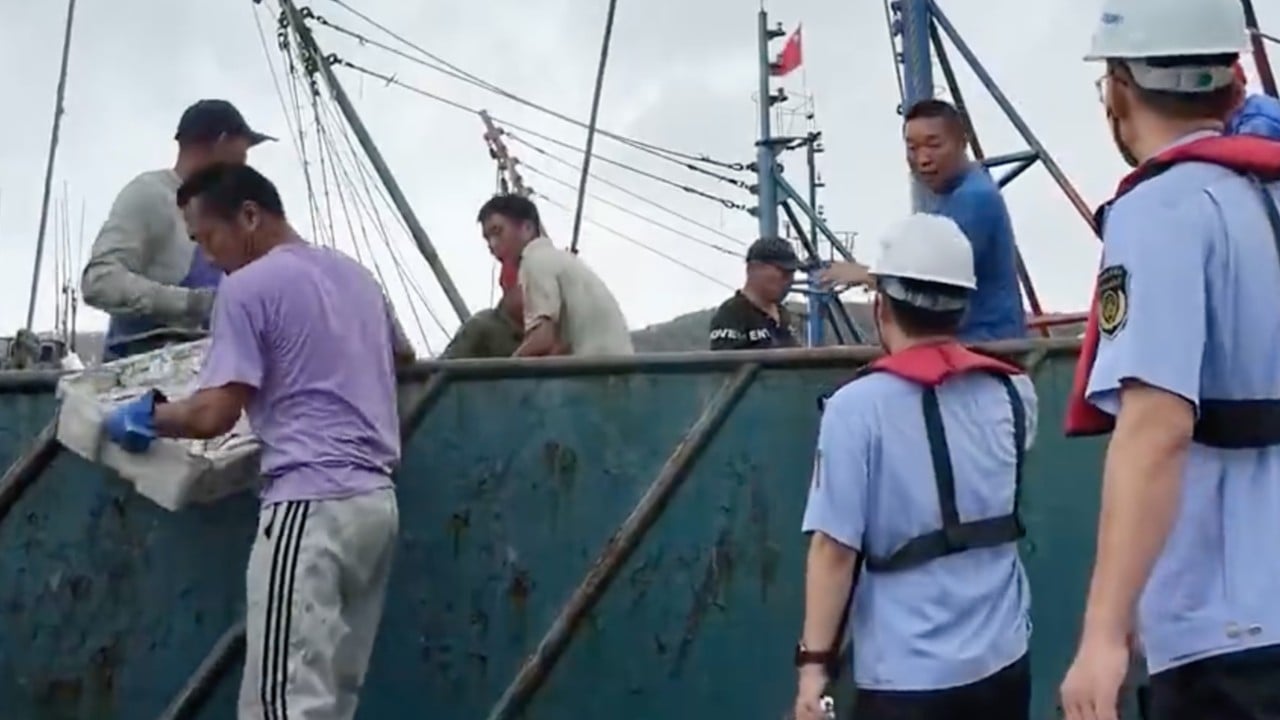
Flights were grounded. Ferries were tied off with extra hemp lines, their hulls grinding monotonously against the rubber-padded piers. In ports from Guangdong up toward Zhejiang, thousands of fishing vessels sat shoulder-to-shoulder, their colorful flags snapping wildly in the early gusts.
To understand what happens when a coastal region goes on high alert, you have to look past the satellite loops. You have to look at the logistics of sudden stillness.
Consider a hypothetical delivery driver named Chen, whose small electric truck was loaded with fresh produce destined for a morning market in Shenzhen. By noon, his route was canceled. The toll gates on the coastal highways blinked amber, then red. The government text messages arrived simultaneously on millions of phones—sharp, vibrating warnings flashing across screens with simple instructions: Stay indoors. Secure loose objects. Prepare.
These warnings are not bureaucratic suggestions. They are the hard-won lessons of history. Every coastal community carries generational memories of storms that clawed past sea walls and drowned the low-lying neighborhoods. When authorities halt transit networks, cancel hundreds of flights, and anchor the maritime fleet, they are trading short-term economic friction for survival.
The Anatomy of a Shutdown
Modern infrastructure is a fragile creature of speed and connection. We live in an era where a package ordered in Guangzhou arrives in Shanghai before the coffee cools. We take departures and arrivals for granted.
Then a storm arrives.
Airports like Shenzhen Baoan and various regional hubs across the southern coast turned into vast, echoing waiting rooms. Thousands of travelers found themselves stranded between destinations, staring at departure boards that flipped from delayed to canceled in a ruthless cascade of red lettering.
Behind those board changes lies an intricate choreography of safety. Planes cannot land in crosswinds that exceed structural limits. Ferries cannot navigate churning swells where visibility drops to zero.
It is easy to curse the delay when you are sitting on a hard plastic chair with a dead smartphone battery. But step outside for a moment. Feel the barometric pressure drop until your ears pop. Watch the palm trees bend at impossible angles as the first sheets of horizontal rain arrive.
The air smells of ozone and crushed green leaves. The ocean is no longer blue; it is the color of wet slate, churned up from the shallow continental shelf, throwing heavy gray foam against the concrete promenades.
In these moments, the abstract statistics—hundreds of flights suspended, dozens of ports closed, millions of residents sheltering in place—become intensely personal. They translate to a grandmother waiting out the gale in a high-rise apartment, listening to the windows flex under the pressure, or a dockworker double-checking the moorings on a million-dollar vessel, soaked to the skin, doing work that keeps a harbor from becoming a graveyard of ships.
The Morning After
Storms pass. They always do.
The wind eventually loses its sharp edge, dropping from a howling shriek to a steady, tired groan. The clouds break, revealing patches of washed-blue sky that look impossibly pure after hours of turbulence.
When the all-clear sounds, the frantic machinery of life cranks back into motion. Crews sweep debris from the tarmac. Tugs guide the first brave ferries out of the harbor. Flight schedules slowly untangle themselves, creating a backlog that will take days to clear.
People step out onto balconies to inspect the damage. A knocked-over flower pot here, a snapped branch there. In the grand scheme of things, these are minor losses. They are the price of admission for living at the edge of a great, restless body of water.
The salt on the kitchen window remains. You wipe it away with a damp cloth, watching the view clear just as the distant hum of an airplane engine returns to the sky.