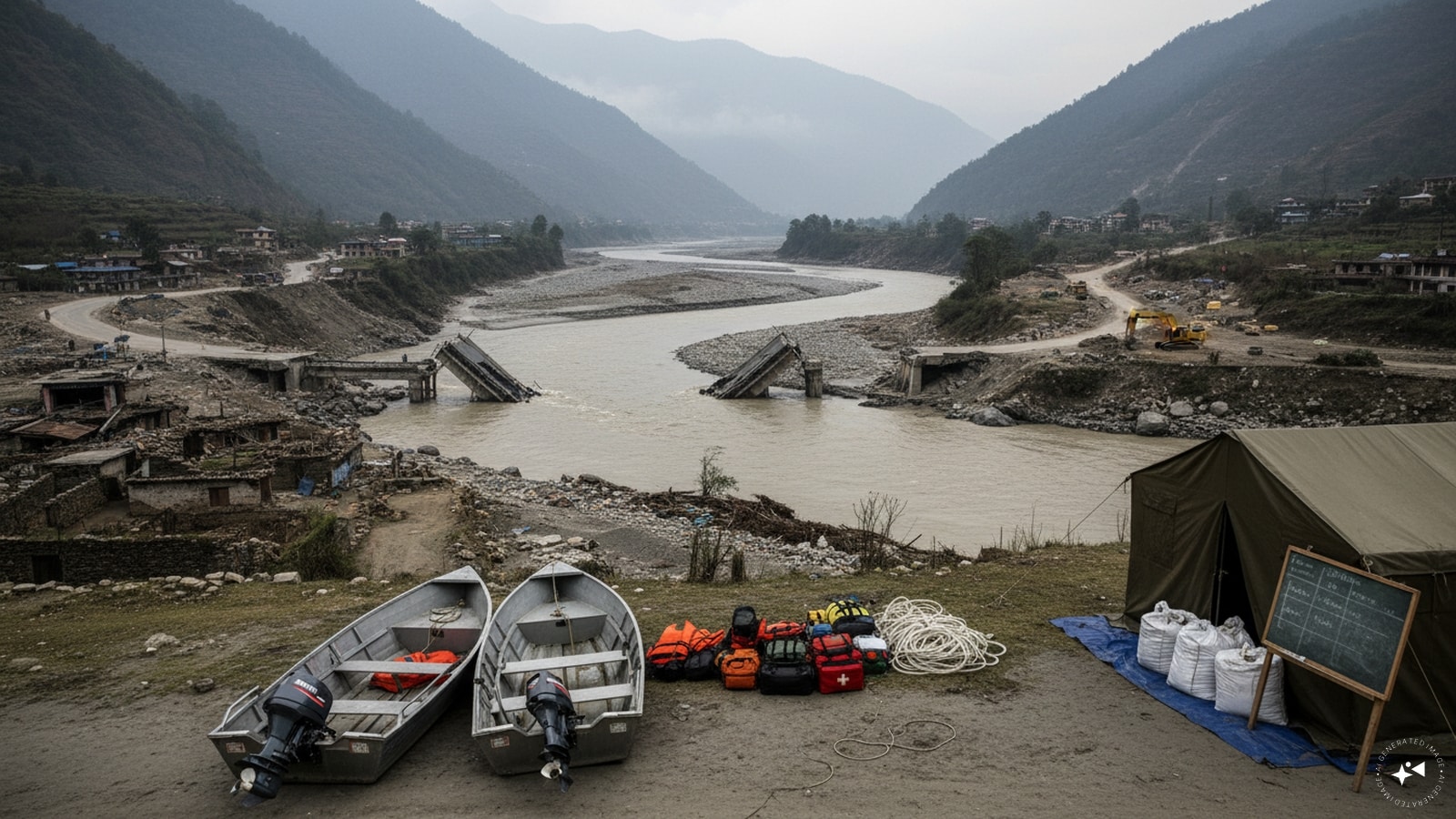
The decision arrived not with the thunder of falling earth, but with the quiet finality of a bureaucratic memorandum. Nepal announced the official halt to search operations for thousands of individuals still missing following the catastrophic monsoon floods and landslides that tore through the Himalayan nation. For families across the valleys, the announcement cuts two ways. Some feel a cold wave of relief, a permission slip to finally stop scanning every receding riverbank for a familiar piece of cloth. Others experience a raw, unyielding fury, viewing the cessation of rescue efforts as an institutional abandonment of their missing kin.
This moment exposes a brutal truth about disaster response in developing nations prone to extreme weather. Governments possess finite resources, constrained budgets, and political horizons that inevitably force a transition from rescue to recovery, and then to silence. But when thousands remain unaccounted for, silence feels less like closure and more like erasure. You might also find this connected article interesting: The Handshake Across the Cold Water.
The Anatomy of a Himalayan Catastrophe
Monsoon rains are a predictable cycle in South Asia, yet the scale of the recent devastation far exceeded historical parameters. Deforestation, unmitigated road construction along fragile mountain slopes, and shifting weather patterns driven by global climate instability have transformed seasonal rains into kinetic sledgehammers. When the hillsides gave way, entire settlements vanished beneath tons of mud and debris. Rivers shifted their courses overnight, swallowing homes, livestock, and human lives without leaving a trace.
In the immediate aftermath, state agencies mobilized alongside international volunteers and local residents. Hands clawed through wet earth using rudimentary tools. Helicopters thrashed against unpredictable winds to drop emergency supplies into cut-off hamlets. Yet, logistics in high-altitude terrain dictate the limits of human endurance. Search and rescue operations require specialized canine units, heavy excavation machinery, and forensic DNA profiling teams. Nepal possesses pockets of these capabilities, but the sheer geographic dispersion of the disaster overwhelmed local infrastructure within the first forty-eight hours. As highlighted in latest coverage by TIME, the results are notable.
As weeks bled into months, the recovery rate plummeted. The torrential rivers carried bodies across international borders into India, or buried them beneath deep layers of silt that hardened into concrete under the post-monsoon sun. Officials faced an impossible ledger. Every day of continued searching drained funds earmarked for rebuilding schools, bridges, and agricultural terraces for the survivors who still needed to eat.
The Geography of Grief and Bureaucracy
The cessation of search efforts triggers a profound psychological fracture within affected communities. In legal terms, a missing person cannot be declared dead without a body or a prolonged bureaucratic waiting period. This limbo creates a secondary crisis for families. Without a death certificate, surviving spouses cannot claim land titles, access government compensation packages, or settle inheritance disputes. They remain trapped in a legal vacuum where they are neither officially bereaved nor financially supported.
Relief, where it exists among some relatives, stems from exhaustion. The physical toll of combing through debris fields day after day breaks the human spirit. For months, villagers walked riverbanks from dawn until dusk, driven by adrenaline and the desperate hope of finding a grave to tend. Stopping the official search validates what their bodies already knew. The mountains have kept their secrets. Accepting that reality, while agonizing, offers a bitter release from the endless loop of searching and false alarms.
Conversely, anger burns fiercely among those who believe the state simply gave up too soon. Critics point out that forensic identification protocols remain rudimentary in rural districts. Without widespread DNA testing and systematic cataloging of personal belongings recovered from disaster zones, closure remains an impossible luxury. Families accuse authorities of prioritizing economic optics, sweeping the scale of the tragedy under the rug to restore a semblance of normalcy for the vital tourist season.
The Long Shadow of Structural Vulnerability
Nepal stands as a textbook case study in compounding vulnerabilities. The country contributes a negligible fraction of global carbon emissions, yet it absorbs the violent shockwaves of a warming planet. Glacial lake outburst floods, erratic rainfall, and prolonged dry spells followed by cloudbursts create a volatile environmental baseline.
Yet, pointing solely to climate change obscures the domestic policy failures that amplify these disasters. Unregulated urban expansion in Kathmandu and regional hubs has choked natural drainage basins. Road expansion projects in the hills often bypass environmental impact assessments, dumping loose spoil earth directly onto slopes that wash away during the first heavy downpour. When disaster strikes, the poorest communities invariably occupy the most hazardous terrain—the toe of unstable slopes or the active floodplains of mountain rivers.
When the government ends its search for the missing, it closes a chapter on an acute crisis, but it leaves the underlying architecture of risk entirely untouched. Rebuilding homes in the exact same vulnerable river valleys without enforced zoning laws guarantees that the next heavy monsoon will script a nearly identical tragedy.
The anger pulsing through the affected valleys is not merely about abandoned search parties. It is a recognition that the system is designed to respond to catastrophes rather than prevent them, and to turn the page as soon as the international news cameras pack up their lenses.
For the families left behind, the river continues to flow past empty doorframes. The state has moved on to the recovery phase. The mountains remain steep, the rain remains unpredictable, and the missing remain uncounted, footnotes in a ledger that the world has already begun to close.


