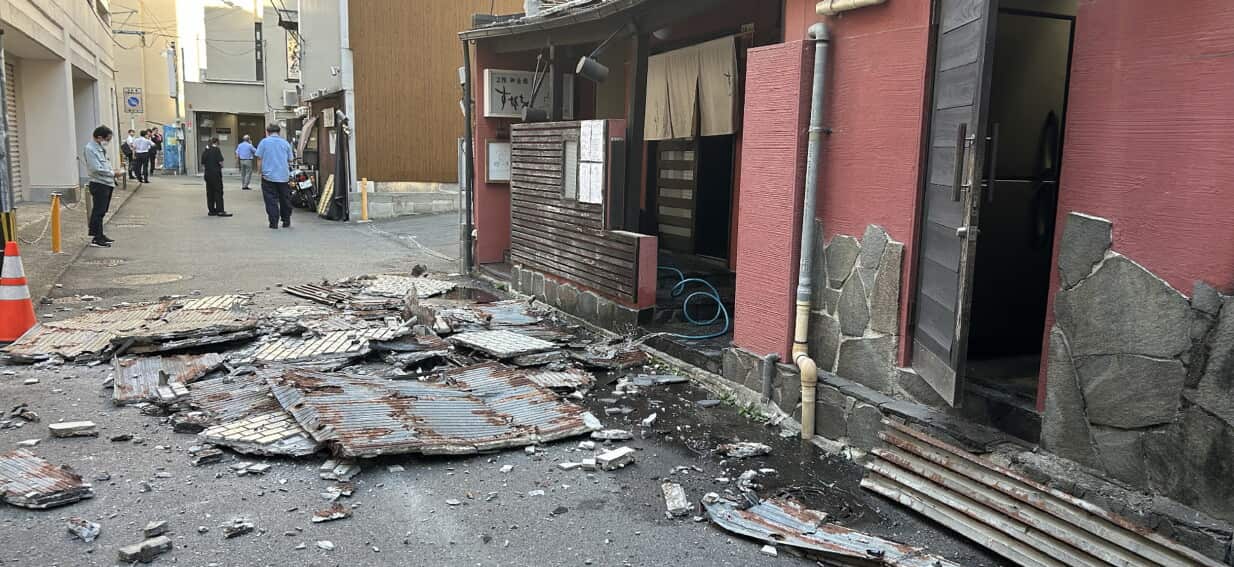
The morning air in Miyazaki tasted of salt and the heavy, metallic promise of rain.
Outside, the cicadas had stopped. That was the first sign. Not the shaking, not the sudden lurch of the floorboards, but the abrupt, unnatural silence that swallowed the coastal towns of southern Japan. Nature knows when the bones of the world are shifting. We, standing on the surface with our coffee cups and our morning routines, are often the last to realize.
Then came the roar.
It did not sound like thunder. Thunder rolls through the sky, distant and theatrical. This was deep, subterranean, and angry. It was the sound of a million tons of ancient rock grinding against its neighbor, a violent correction millions of years in the making. The floor beneath my feet turned liquid. Books tumbled from shelves. Glass shattered with the sharp crack of winter ice.
Seventy miles offshore, deep beneath the Pacific floor, two tectonic plates had finally locked, slipped, and violently rewritten the geography of the seabed.
Seconds. That is all the warning modern instrumentation allows when the earth decides to stretch.
Sirens wailed across the coastline almost immediately, a piercing, mechanical scream that cut through the dust and panic. Evacuate. The word was not spoken; it was weaponized by survival instinct. In neighborhoods like Nichinan and Hyuga, parents grabbed children by the wrists. Shopkeepers slammed metal shutters down with frantic metallic clatters. Everyone knew the geography. Everyone knew the clock was ticking.
An earthquake is a terrifying event, but it is finite. It shakes, it breaks, and then it stops. The real terror begins when the shaking ends.
Because when the seabed heaves vertically, water has nowhere to go. It rises.
Consider what happens next: a wall of the Pacific Ocean, driven by colossal kinetic energy, begins a silent, invisible march toward the shore. Out in the deep ocean, a tsunami wave is barely a ripple, a gentle swell passing beneath a fishing boat that might not even notice it. But as that wave approaches shallow coastal waters, it compresses. It slows down, and it piles upward.
It becomes a moving mountain of water.
In coastal Kyushu, the memory of past disasters is carved into stone. High on the hillsides, century-old tsunami stones stand like silent guardians, inscribed with simple, brutal warnings from ancestors: Do not build below this line. Those markers are not history. They are blueprints for survival.
As the emergency broadcast alerts pinged relentlessly on every mobile phone within a hundred-mile radius, the evacuation routes up the steep coastal hills became arteries of resilience. There was no room for hesitation. Elderly residents, leaning on the arms of teenagers, climbed stairs carved into cliff faces. Cars idled in long, orderly lines, drivers keeping their cool despite the adrenaline hammering in their chests.
Japan's early warning system is an engineering marvel, sending automated earthquake alerts milliseconds after primary waves are detected, halting bullet trains and locking gas valves before the destructive secondary waves arrive. But technology cannot hold back the ocean. Technology can only buy seconds. The rest belongs to human discipline.
Standing on higher ground, looking back down toward the harbor, the ocean looked deceptively calm. Yet, meteorologists and seismologists monitoring the gauges knew the numbers. Waves of up to a meter were predicted, small by historic catastrophes, but powerful enough to sweep a car off a coastal road like a dry leaf, strong enough to crush anyone caught lingering in the harbor zones.
A meter of water moving at forty miles per hour is not a wave. It is a battering ram.
The first surge hit the shore with a dull, heavy thud, breaching seawalls in low-lying inlets and turning streets into brown, churning rivers. Debris bobbed in the currents—fishing crates, timber, overturned skiffs. The sea had reached inland, tasting the pavement, claiming territory that humans had spent decades trying to tame.
Then came the eerie part. The water receded.
It pulled back with a hungry, sucking sound, dragging mud and wreckage back into the deep channel, exposing the wet, naked ocean floor. Anyone who has studied the sea knows that withdrawal is the ultimate warning sign. It is the ocean drawing a deep breath before the next strike.
People stayed put on the heights. No one rushed back down for wallets, pets, or phones. The discipline forged through generations of seismic trauma held firm.
Hours passed. The advisory warnings remained active, a pulsing red banner on television screens across the nation, reminding millions that the earth was still adjusting, coughing up aftershocks that rattled teacups and frayed already thin nerves.
Night fell over Kyushu without the comforting hum of coastal traffic. Power was cut in vulnerable zones. Flashlights swept beams across evacuated streets.
We measure earthquakes in magnitudes and tsunamis in centimeters of displacement, as if numbers can capture the reality of a shifting world. But the true measure of such a day is found in the quiet spaces between the sirens. It is found in the trembling hand of a grandmother pouring tea in an evacuation center. It is found in the stranger who offered a shoulder to cry on. It is found in the profound, humbling reminder that we are tenants on a restless planet, guests in a house built on moving plates.
The ocean settled back into its basin, dark and indifferent under the stars. The earth stopped breathing for the night. We waited for the dawn, knowing the ground beneath us is never truly still.