We spend our lives measuring the unmeasurable. We take the infinite rush of the universe and try to pin it down with numbers, grids, and footnotes.
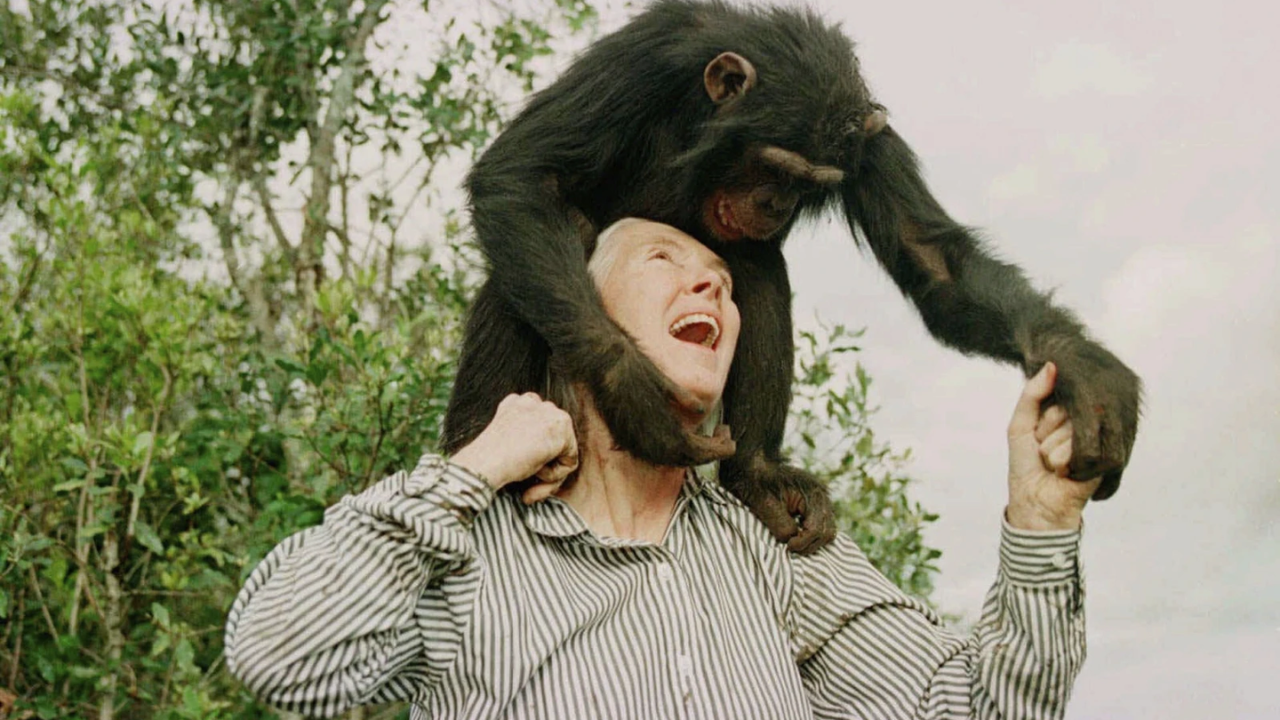
I remember standing on the edge of a ridge in Gombe, the air thick with the scent of wet earth and damp fur, watching a chimpanzee named David Greybeard carefully select a blade of grass, strip its leaves, and insert it into a termite mound. It was a simple act. Yet, in that quiet moment, the entire architecture of human arrogance cracked. We were not alone in our capacity for tool-making, for strategy, for culture.
Jane Goodall spent decades sitting silently in the African mud, learning that truth. But what fascinated her just as much as the behavior of her primate subjects was the internal landscape of the minds that observed them. Specifically, she often returned to a seemingly contradictory figure: Albert Einstein.
Here was the man who mapped the curvature of spacetime, who rewrote the rules of gravity, and who spent his final decades chasing a grand unified theory of everything. He was the ultimate architect of cold, hard physics. And yet, Einstein sustained a deeply mystical outlook on life.
How do those two things live in the same skull? How does the master of equations bow before a sense of sacred mystery?
Consider what happens when we look at the world purely as a machine.
To the hyper-rationalist, a tree is just cellulose, water transport, and a biological solar panel. An animal is a bundle of instincts governed by evolutionary pressures. A human being is a complex biochemical reaction doomed to extinction.
Einstein rejected that flat, gray worldview. He wrote that the most beautiful thing we can experience is the mysterious. It is the source of all true art and science. He who can no longer pause to wonder and stand wrapt in awe is as good as dead.
Think about that for a second. A man who spent his days solving tensor calculus insisted that the ultimate fuel for his intellect was not certainty. It was mystery.
Most of us do the exact opposite. We trade wonder for efficiency. We walk down city streets staring at rectangular screens, translating the vibrant chaos of existence into calendar invites and unread notifications. We want answers. We want predictability. We want the world stripped of its shadows so we can navigate it without stubbing our toes.
In doing so, we kill the very engine that drives true discovery.
Walk into any modern laboratory or corporate boardroom, and you will find a quiet panic. Everyone is terrified of not knowing.
We demand metrics. We want three-step frameworks. If a problem cannot be immediately quantified, managed, and monetized, we dismiss it as noise.
Goodall and Einstein understood a deeper, more frightening truth. The frontier of human knowledge always begins in the dark.
When Goodall first arrived in Tanzania in 1960 with a notebook, a pair of binoculars, and zero formal training in zoology, the academic establishment scoffed. Senior scientists told her she was doing everything wrong. She gave chimpanzees human names instead of tracking numbers. She assumed they had personalities, emotions, and minds. She approached them with empathy rather than clinical detachment.
She was laughed out of lecture halls.
Yet her "naive" approach saw what decades of rigid, detached methodology missed. Because she was willing to wonder, because she respected the mystery of an animal's inner life, she shattered the boundary that separated humanity from the rest of the animal kingdom.
Humility is the price of admission to reality.
If you approach the world believing you already hold the master key, you stop paying attention. You fit every new observation into your pre-existing boxes. Einstein warned against this intellectual arrogance. He noted that our conventional education systems often train us to look at the world through a narrow lens, choking out the wild, unformatted curiosity that children possess naturally.
We live in a culture that worships the expert. But true expertise, at its highest tier, always circles back to a profound sense of ignorance.
The more you learn, the larger the perimeter of your darkness becomes.
Imagine a circle drawn on a blank piece of paper. Everything inside the circle is what you know. Everything outside is what you do not know. As your knowledge grows, the circle expands. And with that expansion, the length of the border touching the unknown grows longer.
Einstein felt that border acutely. His equations were not monuments to his own cleverness; they were humble attempts to translate a symphony he could barely hear.
When Goodall speaks of Einstein and her own lifelong crusade for conservation, she is pointing toward a unified theory of human flourishing. Wonder and humility are not soft, decorative traits you tack on when the real work is done. They are the scaffolding of sanity.
Without wonder, our intelligence becomes a weapon of destruction. We optimize our supply chains, our algorithms, and our weapons systems with terrifying precision, completely losing sight of why we are here in the first place. We pave over the ancient forests. We pollute the oceans. We turn human relationships into transactional data points.
We become very smart, and very blind.
Step outside tonight. Look up at the stars.
Most of them are dead. Their light is just an ancient ghost traveling across the vacuum of space, finally crashing into your retina millions of years after the source has vanished.
It is a terrifying thought. It is an overwhelming thought.
It is also the exact antidote to the petty anxieties that consume your Tuesday afternoon.
When we cultivate a mystical outlook—not in the sense of superstition or crystal-worship, but in the sense of radical, jaw-dropping appreciation for the sheer improbability of existence—the ground shifts beneath our feet. We stop trying to control every variable. We stop taking our own temporary grievances so terribly seriously.
We begin to look at our fellow human beings, and the creatures we share this fragile blue marble with, not as obstacles or resources, but as fellow travelers in an incomprehensible cosmic accident.
Jane Goodall is in her nineties now. Her hands shake slightly, but her eyes retain that exact same piercing, gentle curiosity that she carried into the Tanzanian forests over sixty years ago. Einstein is long gone, his ashes scattered to the winds of New Jersey.
Yet their message remains, burning quietly in the dark.
Stay curious. Bow before the mystery. And never, ever let the world become ordinary.