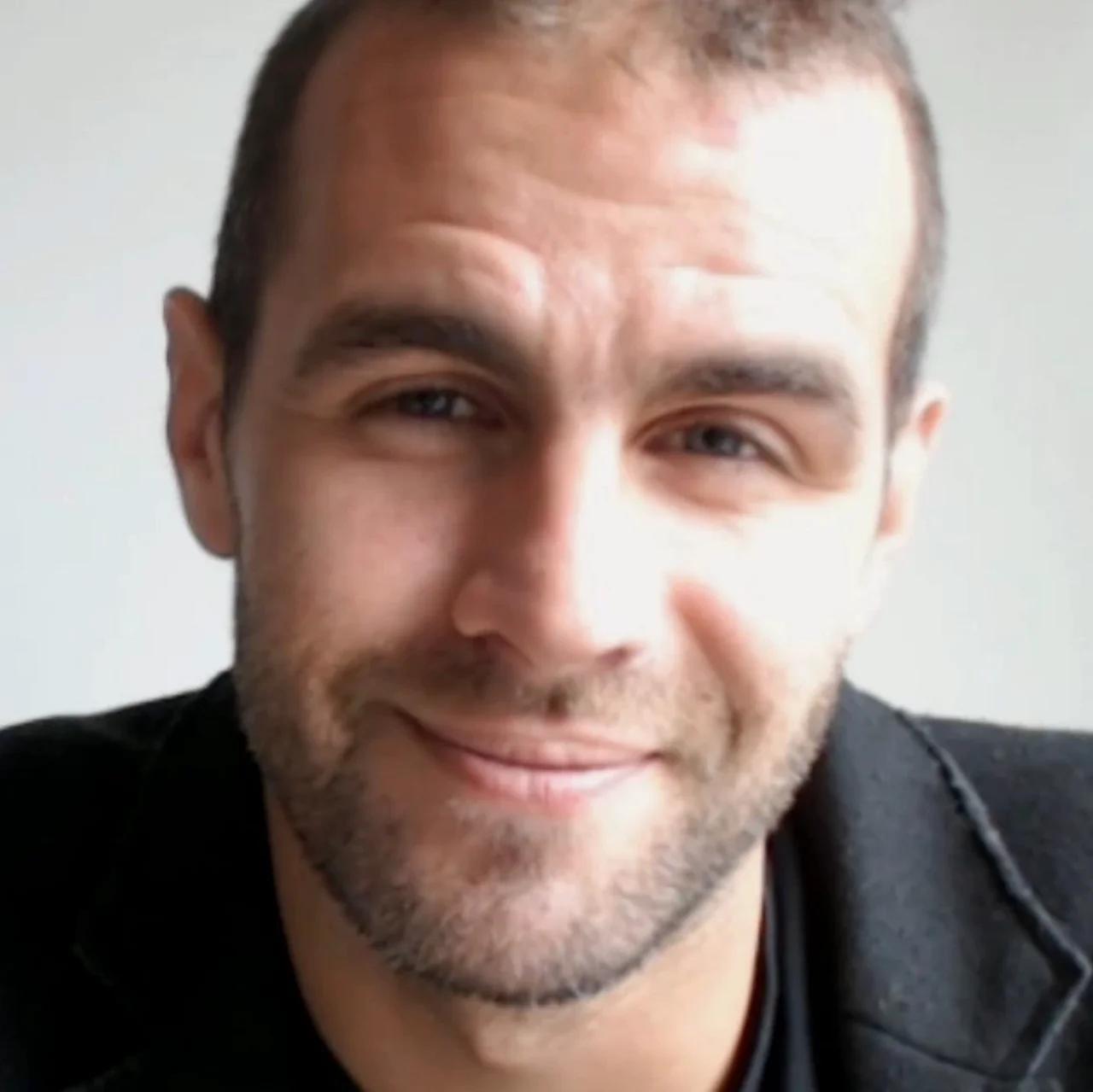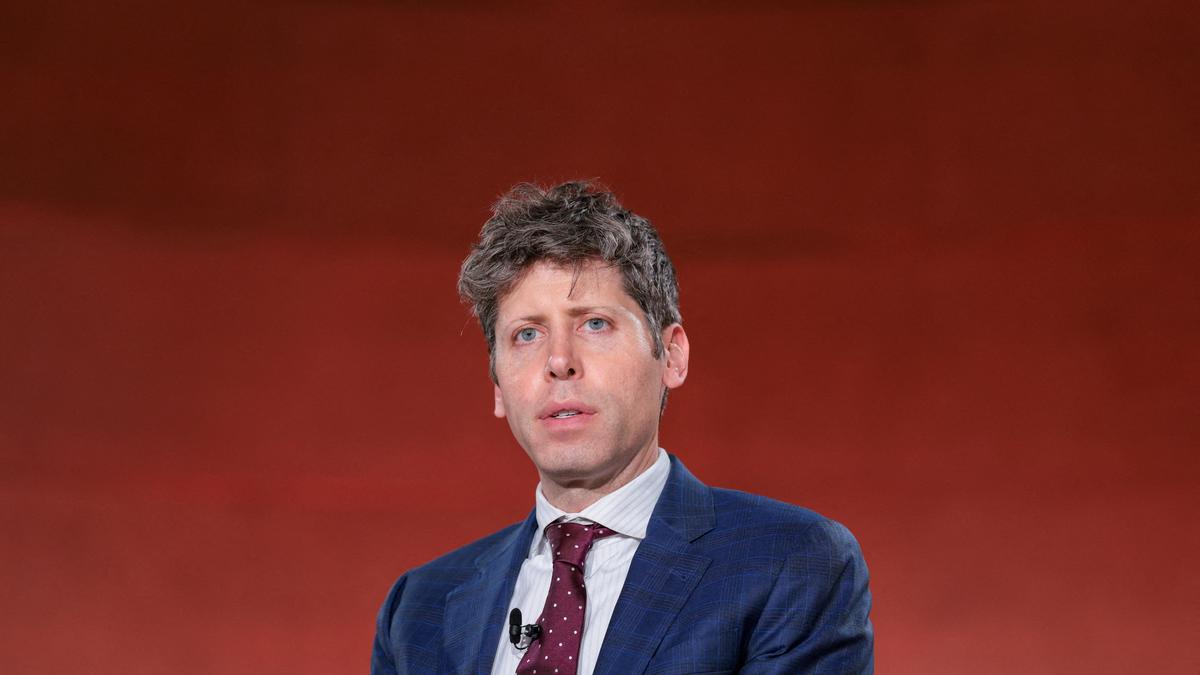
On a quiet residential street in San Francisco, the abstract fears of the artificial intelligence boom recently materialized into a literal firebomb. The arrest of a 35-year-old man for allegedly tossing a Molotov cocktail at the home of OpenAI CEO Sam Altman marks a violent escalation in the tension between the architects of the future and a public increasingly unsettled by the pace of change. While the device failed to cause significant structural damage or injury, the singed pavement serves as a grim marker for a new era of executive risk. This was not a random act of property damage. It was a targeted strike against the face of a movement that many see as an existential threat to their livelihoods and their sense of reality.
The suspect, currently being held on charges of attempted arson and possession of an explosive device, reportedly told investigators he was driven by a desire to "stop the machines." This narrative, while seemingly ripped from a pulp science-fiction novel, reflects a genuine and growing volatility surrounding the tech sector. For years, the masters of the valley operated in a bubble of relative anonymity, protected by the dense foliage of Woodside or the nondescript glass of South of Market offices. That bubble has burst. As AI moves from a niche research interest to a ubiquitous force reshaping every industry from film to finance, the people behind the code have become lightning rods for societal anxiety.
The Physical Cost of Digital Disruption
Executive protection is no longer a luxury for the Silicon Valley elite; it is a foundational business expense. In the wake of the attack, internal memos at major tech firms suggest a rapid re-evaluation of off-site security protocols. It is one thing to have a badge reader and a bored guard at the corporate headquarters. It is quite another to secure a private residence in an urban environment where the perimeter is often nothing more than a sidewalk.
The math of modern notoriety is brutal. When a platform or a tool affects hundreds of millions of people, even a fractional percentage of radicalization results in thousands of potential threats. We are seeing a shift from "fan" behavior to "adversarial" engagement. In the past, a disgruntled user might send an angry email or post a manifesto on a forum. Now, the ease of finding personal information through the very tools these executives built has closed the gap between online vitriol and physical confrontation.
Security consultants are now advising high-profile tech leaders to treat their daily movements with the same level of operational security typically reserved for heads of state. This includes armored transport, decoy routes, and the deployment of advanced surveillance tech that monitors social media for "geospatial triggers"—keywords associated with the executive's physical location. The irony of using AI to protect against people who hate AI is lost on no one in the industry.
Why the Backlash is Getting Physical
To understand the Molotov cocktail, one must understand the perceived stakes. For the average worker, the arrival of Large Language Models is not an academic milestone. It is a threat to the mortgage. When a CEO stands on a stage and speaks about "the end of work" or "the transition to a post-human economy," they often do so with a detached, messianic optimism. They see the long-term benefit of a more efficient species. The person who just lost their technical writing job or their graphic design contract sees a thief.
This resentment is being funneled into a new kind of Luddism. Unlike the 19th-century textile workers who smashed looms to save their trades, modern anti-tech sentiment is fueled by a global, interconnected network of grievances. The grievances range from:
- Economic Displacement: The direct loss of income as automation replaces human labor.
- Data Sovereignty: The feeling that personal creativity and history have been "scraped" without consent to train the very tools that will replace the creator.
- Existential Dread: A broader, more philosophical fear that humanity is losing its agency to algorithms.
When these factors collide, the CEO becomes the avatar for the algorithm. Attacking the house is an attempt to punch the cloud. It is a desperate, violent expression of powerlessness. The suspect in the Altman case represents the extreme edge of this spectrum, but the sentiment that fueled him is present in mainstream discourse. It is the same energy that leads to the vandalism of self-driving taxis in the streets of San Francisco or the organized strikes of Hollywood actors and writers.
The Failure of Corporate Diplomacy
The tech industry has a history of ignoring the social friction its products create until that friction produces a fire. For a decade, social media giants argued they were mere "utilities" while their algorithms tore at the social fabric. The AI industry is repeating this mistake by focusing almost exclusively on "alignment"—the technical challenge of making sure an AI doesn't turn into a monster—while ignoring the "alignment" of the industry with the public it serves.
Sam Altman has been more proactive than most, frequently visiting Washington D.C. to call for regulation. Yet, there is a disconnect between the public-facing call for guardrails and the private-sector race to deploy these tools as fast as possible to capture market share. This perceived hypocrisy fuels the fire. To the radicalized observer, the call for regulation looks like a "regulatory capture" play—an attempt to pull the ladder up behind them—rather than a genuine concern for safety.
Behind the Security Gates
The reality of living under constant threat changes how these companies operate. It creates a "bunker mentality" where executives only interact with other executives or hand-picked sycophants. This isolation further disconnects them from the reality of the people their tools are displacing. When you have to enter your home through a secure garage and live behind bullet-resistant glass, the "common man" becomes a data point or a security risk rather than a customer with valid concerns.
The cost of this security is also becoming a point of contention for shareholders. SEC filings show that companies are spending tens of millions of dollars annually on "personal security for the CEO." These are no longer just travel expenses. They are bills for residential upgrades, private intelligence teams, and cyber-security sweeps of family members' devices. This creates a visible class divide that further agitates the public.
Security Spending by Major Tech Firms (Estimated Annual)
| Executive | Company | Estimated Security Spend | Nature of Primary Threat |
|---|---|---|---|
| Mark Zuckerberg | Meta | $25M+ | Political polarization and platform scale |
| Sam Altman | OpenAI | Unlisted (Rising) | AI existential dread and labor displacement |
| Sundar Pichai | Alphabet | $5M+ | Privacy concerns and misinformation |
| Jensen Huang | NVIDIA | $1M+ | Geopolitical tensions and supply chain value |
The Investigation and the Aftermath
Police are currently combing through the suspect's digital history to determine if he acted alone or as part of an organized cell. Early indications suggest a "lone wolf" scenario, which is often harder for security teams to predict. Unlike an organized group, a single individual acting on a personal grievance doesn't leave a large digital footprint of planning and communication. They simply snap.
The San Francisco Police Department has increased patrols in the neighborhoods home to several high-profile tech leaders, but the city's unique geography makes total security an impossibility. The hills and narrow streets provide too many vantage points and escape routes. For the tech elite, the solution may eventually be a mass exodus to more controlled environments—private enclaves in the desert or fortified estates in the Pacific Northwest. This "secession of the successful" only serves to deepen the divide that caused the violence in the first place.
A Systemic Vulnerability
The Molotov cocktail at Altman's home is a symptom of a systemic vulnerability in the Silicon Valley model. These companies rely on "openness" to recruit talent and "disruption" to generate profit. But you cannot disrupt the world and remain an open, accessible part of it. The more successful these companies are at changing the way we live, the more they will be blamed for everything that goes wrong.
The industry is now facing a choice. It can continue to build higher walls and hire more guards, or it can begin to address the underlying economic and social anxieties that make a man think a firebomb is a valid form of protest. The current trajectory suggests the former. We are entering a period where the pioneers of the most advanced technology in human history will live like medieval lords, sequestered in their castles while the peasantry rages at the gates.
This is not a problem that can be solved with a better algorithm or a more "aligned" model. It is a human problem of trust, equity, and the terrifying speed of change. Until the people building the future find a way to include the rest of the world in the benefits of that future, the smell of gasoline on the driveway will become a recurring feature of the Silicon Valley landscape.
The fire was put out quickly, but the heat remains. If the industry continues to prioritize velocity over social stability, this arrest will not be an isolated incident. It will be the opening bell for a decade of domestic unrest centered on the very neighborhoods that claim to be making the world a better place. The most dangerous hallucination in the valley isn't one produced by a chatbot; it's the belief that you can change the world without the world fighting back.