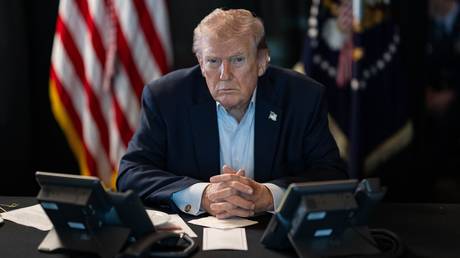
Congress just sent a direct warning shot to the White House. For months, the executive branch acted like Capitol Hill didn't exist when it came to military action in the Middle East. That changed on Tuesday.
The Senate voted 50-47 to advance a war powers resolution targeting the presidency's military overreach in Iran. It's a massive shift. Democrats failed seven times before to move similar measures. On the eighth try, the floor gave way.
Don't mistake this for a sudden outbreak of bipartisan harmony. This is about self-preservation, primary election revenge, and a growing panic over skyrocketing gas prices. The legislative branch is finally trying to reassert its constitutional right to declare war.
The Shocking Defection That Tipped the Scales
You can't understand this vote without looking at the raw politics behind it. The math worked out in favor of the resolution because four Republicans broke ranks. Three of them were predictable. Susan Collins of Maine, Lisa Murkowski of Alaska, and Rand Paul of Kentucky have historically pushed back on executive military overreach.
The real shocker was Senator Bill Cassidy of Louisiana.
Cassidy had never supported a war powers resolution regarding this conflict. He flipped. Why now? Look at the calendar. Just days ago, Cassidy failed to secure enough votes to advance to a runoff in the Louisiana Republican Senate primary. Trump had actively endorsed one of Cassidy's opponents.
With his primary loss locked in, Cassidy suddenly found his constitutional conscience. He took to social media to explain that while he wants to dismantle Iran's nuclear program, the administration left Congress completely in the dark on Operation Epic Fury. He noted that even Trump supporters in Louisiana are getting deeply worried about an unchecked war.
[Image of the US Capitol building]
Demolishing the White House Loophole
The conflict began in February, and the White House has spent the last eighty days dodging statutory deadlines. Under federal law, the executive branch has a 60-day window to get congressional authorization once hostilities start. If Congress doesn't approve it, the troops are supposed to come home.
Administration lawyers came up with a convenient excuse to ignore the law. They claimed that because a fragile ceasefire is currently in place, the 60-day clock paused.
Lawmakers and constitutional scholars called foul. Senator Tim Kaine of Virginia, who introduced the resolution, pointed out that the administration won't even let the Senate Armed Services Committee see the official legal rationale from the Office of Legal Counsel.
The resolution itself is incredibly straightforward. It directs the president to remove American forces from hostilities against Iran unless Congress explicitly declares war or passes a specific military authorization.
Gas Prices and Grim Realities on the Ground
While politicians argue about constitutional text, regular Americans are watching their bank accounts drain. The timing of this vote matters. Memorial Day is right around the corner. Drivers are looking at gas prices that are vastly higher than last year.
The economic toll of Operation Epic Fury is hitting home, and voters are blaming the administration. Kaine noted before the vote that public opposition to the war is hardening quickly.
There's also the reality of what a ceasefire actually means in the region. The administration claims the fighting stopped. Yet, American forces are still enforcing a strict blockade of Iranian ports and taking fire. On Monday, the president publicly stated he was just an hour away from ordering brand-new strikes before deciding to hold off. That isn't peace. It's a tinderbox.
What Happens on the Senate Floor Next
Don't expect the troops to pack their bags tomorrow. This vote was a procedural hurdle called a motion to discharge. It simply yanks the resolution out of committee and forces it onto the Senate floor for an open, public debate.
Here is exactly how the math broke down on the Senate floor:
- The Yes Votes (50): Every single Democrat except one, joined by Republicans Cassidy, Collins, Murkowski, and Paul.
- The No Votes (47): The vast majority of the Republican conference, along with Democratic Senator John Fetterman of Pennsylvania, who broke with his party to oppose the limits.
- The Absentees (3): Republican Senators John Cornyn of Texas, Tommy Tuberville of Alabama, and Thom Tillis of North Carolina didn't cast votes, which ultimately lowered the threshold needed for Democrats to win.
The resolution now faces a full floor vote in the Senate. If it passes, it heads to the House.
Let's be totally honest about the end game. Even if both chambers pass this thing, the president will absolutely veto it. Overriding a veto requires a two-thirds majority in both houses, and the numbers simply aren't there.
But passing it still matters. It forces every lawmaker to get on the record. It strips away the comfort of silence. For the first time since February, the administration knows it can no longer treat congressional approval as a minor formality.
Keep a close eye on the upcoming floor debate. Watch whether the remaining Senate leadership tries to use amendments to water down the language, or if more vulnerable Republicans decide that high gas prices make defending an unauthorized war too risky for their reelection campaigns.