Lose at least seven Senate seats in a single midterm cycle, watch your party's majority evaporate overnight, and you'd normally expect heads to roll at the top of the ticket. That didn't happen on Capitol Hill.
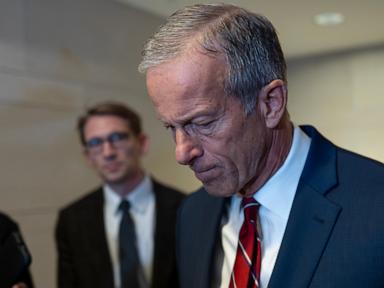
When Senate Republicans locked themselves behind closed doors on November 10, 2026, to decide whether South Dakota Sen. John Thune should keep his job as Senate Republican leader, the atmosphere was tense. Several conservative senators wanted to hit pause. They argued the conference needed a real autopsy before locking in the exact same leadership slate for the next two years. Yet within hours, the effort to delay collapsed on a 31-15 vote, and Thune—running completely unopposed—secured another term to lead Senate Republicans into the minority in January 2027. You might also find this related story insightful: When the Engines Roar in the Dark Over Suffolk.
If you're looking at Washington from the outside, keeping the captain after the ship hits an iceberg looks strange. Inside the Senate GOP conference, though, the math makes total sense. Here is why Senate Republicans stuck with John Thune, what the conservative rebellion was actually about, and how this leadership decision shapes the final weeks of Republican control.
What Happened Inside the Senate GOP Leadership Vote
Let's cut through the noise first. The November 10 leadership election wasn't a referendum on whether Republicans were happy with the 2026 midterm results. Nobody in that room was happy. Going from a 53-seat majority down toward the mid-40s—with Democrats sweeping key battlegrounds—is a brutal political wipeout by any measure. As reported in latest articles by Al Jazeera, the effects are notable.
Instead, the closed-door fight was over timing and leverage.
Wisconsin Sen. Ron Johnson led a push to postpone the leadership elections, collecting signatures from a handful of conservative colleagues. Missouri Sen. Josh Hawley backed the delay too, telling reporters that if Republicans didn't think losing a minimum of seven Senate seats required changing course, he didn't know what planet they were on. Hawley's point wasn't necessarily that he had a rival candidate ready to challenge Thune. He openly admitted he wasn't aware of anyone else running, though he suggested someone might step forward if the conference waited a week or two.
The majority of the conference didn't buy it. Senators voted 31-15 to move forward immediately. Ron Johnson walked out of the room once the delay motion failed. With no challenger on the ballot, Thune won reelection easily alongside Wyoming Sen. John Barrasso, who stayed on as Republican whip, and West Virginia Sen. Shelley Moore Capito, who kept her role as GOP policy chair.
Why No One Ran Against John Thune
In Senate politics, you can't beat somebody with nobody. Even senators who publicly questioned the party's direction recognized two hard realities about Thune's position.
First, nobody blamed Thune personally for the midterm wave. West Virginia Sen. Jim Justice summed up the mood accurately when he noted there was a legitimate argument for asking why the party would keep the same leadership after losing so badly, while immediately adding that current GOP leaders didn't cause the problem and actually do a good job. Capito echoed that sentiment, stating bluntly that the losses weren't the fault of Senate leadership. Midterms are almost always a referendum on the party holding the White House and the broader economic mood—specifically the cost of living, which Thune himself identified afterward as the top issue driving voters.
Second, leading the Senate minority is a grueling, thankless job. Oklahoma Sen. James Lankford put it plainly to reporters: managing the Senate Republican conference is a complicated role, and nobody else actually wanted the job.
Think about what the Senate minority leader does day to day. You spend endless hours managing procedural floor fights, pacifying competing factions within your own caucus, fundraising across the country, and negotiating with a Democratic majority leader who controls the floor calendar. Thune spent years learning those exact mechanics as Mitch McConnell's No. 2 before winning the top spot in a three-way race against John Cornyn and Rick Scott in November 2024. Two years later, neither Cornyn nor Scott mounted a challenge.
The Institutionalist vs. Populist Divide
Underneath the procedural vote sits a real ideological fault line that isn't going away anytime soon.
Hawley's critique after the midterms targeted the heart of how the GOP governed during its brief majority. He argued that Republicans acted as though winning in 2024 meant they could do whatever they wanted without putting concrete bills on the floor to lower gasoline and healthcare costs. Ohio Sen. Bernie Moreno struck a similar warning note, saying Republicans had to commit to never disappointing voters again if they want to compete in 2028.
Thune represents the traditional, institutional wing of the Senate GOP. Over the past two years, he has worked to balance President Donald Trump's agenda with the slow, consensus-driven realities of the upper chamber. While populist conservatives want sharper confrontation and immediate policy wins, most Republican senators still value predictable floor management—especially when they're about to lose the gavel.
What Conservative Critics Actually Wanted From the Delay
If conservative senators knew Thune was going to win anyway, why pick a public fight over postponing the vote?
Leverage. Pure and simple.
Before the leadership vote happened, conservative members pressed Thune for ironclad commitments on how Republicans would use their final weeks in power during the November-December lame-duck session. Florida Sen. Rick Scott demanded a clear plan to pass the Republican agenda before January, while Utah Sen. Mike Lee pushed on X for every leadership candidate to commit to passing the SAVE Act—legislation targeting voter registration and proof-of-citizenship rules—before the clock runs out.
By trying to delay the leadership election, conservatives hoped to keep Thune on the hook until he guaranteed floor time for their top priorities. Even though the delay failed, they got a significant consolation prize: before voting on Thune, the conference adopted a resolution pledging to maximize every remaining day in the majority to confirm every approved judicial and executive branch nominee.
The Lame-Duck Sprint Before January 2027
Thune's reelection immediately shifts the spotlight from internal party drama to a high-stakes legislative sprint. Once the new Congress convenes on January 3, 2027, Democrats take over the Senate floor. That gives Thune a narrow window—roughly seven weeks from the leadership vote—to lock in lifetime appointments and prevent a government shutdown.
Here is what is actually on Thune's immediate checklist:
- Confirming federal judges: Lifetime judicial appointments are the single most durable legacy any Senate majority can leave behind. Senate Republicans are pushing to confirm roughly two dozen federal judges before January. Unlike executive branch officials, federal judges cannot be bundled into a single confirmation package—each one requires separate floor votes and procedural cloture steps, meaning late-night sessions and weekend votes are firmly on the table.
- Clearing executive branch nominees: More than 100 administration nominees are waiting in the pipeline. Missouri Sen. Eric Schmitt noted that Democrats won't confirm President Trump's picks once they take the majority, making November and December the final chance to staff federal agencies.
- Averting a December 11 government shutdown: Current federal funding expires on December 11. Thune has already acknowledged that Republicans and Democrats must negotiate a short-term spending deal before that deadline. Passing a funding bill requires Democratic votes to clear the 60-vote filibuster threshold, which forces Thune to negotiate with outgoing Senate Minority Leader Chuck Schumer's caucus even while fighting them over judicial confirmations.
Thune was blunt with reporters about what this calendar means: Republicans will extend their days, hours, and vote totals through December to squeeze every ounce of value out of their remaining majority.
How Thune's Role Changes in the Minority
Starting in January 2027, John Thune trades the Majority Leader's suite for the Minority Leader's desk. That shift changes his job completely.
In the majority, your main headache is keeping 50+ senators united enough to pass bills and confirm nominees. In the minority, your primary weapon is the Senate's 60-vote filibuster rule. With Democrats holding the gavel in the Senate, Republicans can no longer set the floor schedule—but they can block virtually any major partisan legislation unless Democrats make concessions.
Thune signaled right after his reelection that Republicans won't simply obstruct for the sake of obstruction, noting they'll work with Democrats where possible while drawing a hard line against what he called "socialist government and leftist fantasies". More practically, Thune has to keep a smaller, frustrated GOP conference unified ahead of the 2028 presidential and Senate map.
If you want to track how effectively Thune manages this transition over the next few months, watch three concrete indicators rather than cable news punditry:
- Check the Senate floor calendar through December 20: Count how many lifetime federal judges actually receive final confirmation votes before the holiday recess. Every vacant seat left unfilled on January 3 becomes a nomination for a Democratic Senate majority.
- Watch the December 11 funding fight: See whether Thune can pass a clean continuing resolution without triggering a conservative revolt or a holiday government shutdown.
- Monitor early 2027 committee assignments and messaging: Pay attention to whether Thune gives populist critics like Hawley and Moreno high-profile committee roles or floor time on cost-of-living legislation.
Senate Republicans didn't reelect John Thune because they think 2026 went well. They kept him because surviving in the Senate minority requires an institutional operator who knows the rules cold—and right now, nobody else in the conference is eager to take the wheel.
For further perspective on the leadership vote and Senate floor reaction, watch Senate Republicans vote to keep leader after midterm losses, which covers the conference vote and the push to delay the election.