Two years of street blockades and faculty sit-ins in Serbia did not succeed merely through moral outrage; they broke a fourteen-year incumbent machine by shifting non-voters above a critical turnout threshold in the October 25, 2026 parliamentary election. When the Student List captured roughly 53 percent of the vote and around 140 of the 250 seats in the National Assembly on nearly 69 percent turnout, observers treating the event as a standard protest-to-ballot story missed the underlying mechanics. The real shift occurred inside voter apathy, institutional credibility, and incumbent cadence control.
Standard coverage of Serbia's political upheaval tends to flatten two years of friction into a simple binary: heroic students versus an entrenched strongman. That framing understates why earlier opposition waves stalled and why the 2024–2026 cycle ended with Aleksandar Vučić's resignation as president in September 2026, his defeat at the head of the Serbian Progressive Party (SNS) list in October, and his concession on election night. To understand what actually changed, analysts must examine the structural triggers, the political economy of incumbent dominance, and the operational risks now facing the victors.
How Two Years of Protests Rewired Voter Behavior
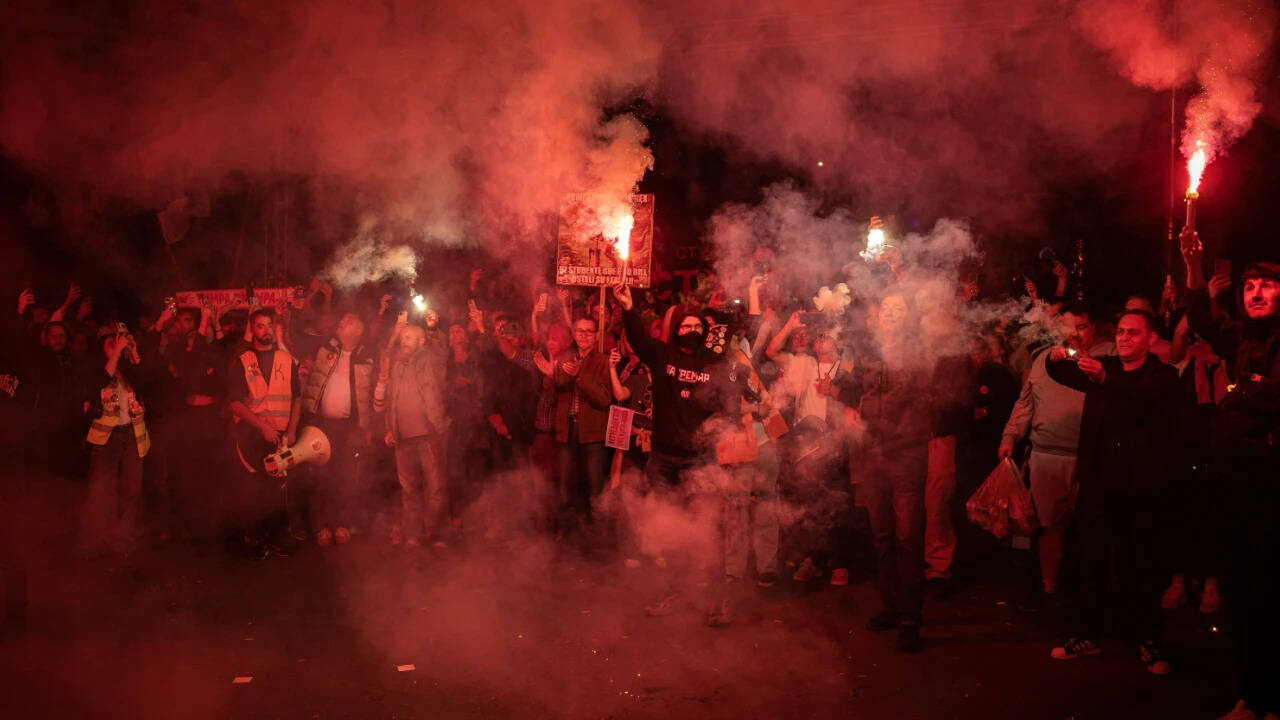
The movement began on November 1, 2024, when the concrete canopy at Novi Sad railway station collapsed, killing 16 people. A structural failure became a political catalyst because citizens read the collapse not as an isolated engineering error, but as a symptom of state patronage, opaque contracting, and eroded accountability. Students escalated from 15-minute silent vigils to faculty blockades and broad street mobilization, pairing demands for document transparency and legal accountability with mass rallies such as the gathering in Belgrade on March 15, 2025, which drew hundreds of thousands of participants.
A useful way to analyze why these protests altered electoral math is through The Three Pillars of Mobilization Conversion:
- Moral Salience Without Partisan Baggage: Starting around a physical tragedy and public-safety demands allowed students to build cross-cutting legitimacy before party labels fractured the room. Many citizens who distrusted established opposition parties felt comfortable standing behind student demands for rule-of-law enforcement and institutional accountability.
- Cadence Disruption: For over a decade, SNS dominance relied partly on controlling political pacing and calling frequent early elections on its own terms. Sustained protest pressure, faculty occupations, prime ministerial turnover—including Miloš Vučević stepping down in early 2025 before Đuro Macut later headed a government—and street tension forced the political calendar onto contested ground until parliament dissolved in September 2026 ahead of the October 25 vote.
- Turnout Math Over Persuasion: In entrenched dominant-party systems, trying to convert hardline partisan loyalists is often lower-yield than activating abstainers. As political analysts and organizers noted after the vote, SNS held a durable base, while the decisive swing sat among skeptical citizens who had stopped voting because they believed every ballot outcome was predetermined. Raising turnout by roughly ten percentage points compared with 2023—to nearly 69 percent—overcame an uneven media and institutional playing field.
Notice the cause-and-effect sequence that surface reporting often reverses. Street protests did not automatically produce votes; rather, prolonged civic endurance reduced fear of confrontation after tense flashpoints like March 15, 2025, and gave cynical non-voters a plausible vehicle—the Student List—to express dissent without endorsing legacy opposition figures they viewed as compromised.
Consider a stylized example of how turnout shifts alter outcomes in a polarized system. Suppose a baseline electorate has 100 eligible voters, a ruling machine commands 35 reliable votes, and 65 voters split between lukewarm opposition leaners and habitual non-voters. At 50 percent turnout, if the ruling bloc turns out 35 and the rest of the electorate splits 15 to non-opposition options, the machine wins 35 to 15. Push turnout to 70 percent with the same 35 ruling votes, and the remaining 35 ballots go overwhelmingly to the challenger bloc, flipping a minority share into a landslide. While actual Serbian figures reflect millions of citizens across 250 parliamentary seats, the arithmetic logic matches why crossing the roughly 65 percent turnout threshold proved decisive.
Inside the Fourteen-Year Incumbency Model
To evaluate what the October 2026 result dismantled, it helps to separate known facts from analytical hypotheses about how fourteen years of SNS-led rule functioned. Known facts include the party's continuous presence at the center of Serbian government since 2012, Vučić's premiership from 2014 to 2017 followed by his presidency from 2017 until his September 2026 resignation, international criticism over institutional capture and media imbalance, and multi-vector foreign policy balancing involving the European Union, Russia, and China. Analytical hypotheses concern how those levers reinforced one another: specifically, that centralized executive control, public-sector patronage, and asymmetrical media reach raised the perceived cost of defection for local officials and business actors while depressing opposition optimism.
Foreign policy ambiguity added another layer to that durability. For years, Belgrade managed ties with Moscow, cultivated major economic and defense links with Beijing, and maintained formal EU accession aspirations while Western capitals often prioritized regional stability or transactional cooperation over democratic backsliding. Yet domestic grievances—corrupt procurement, safety failures, state capture, and selective justice—eventually overrode external balancing acts. Voters punished what they experienced at home rather than treating geopolitical positioning as a substitute for domestic competence.
Even after losing its parliamentary majority, SNS did not evaporate overnight. Winning roughly 39 percent of the vote and over 100 seats means the party retains substantial organizational muscle, municipal networks, and loyal voters. Its structural vulnerability, however, lies in personalization and transactional loyalty: coalitions built primarily around state access and a dominant leader face acute strain once power shifts and legal accountability moves closer.
The Post-Election Cost Function of Governing
Winning an election as a protest-born coalition solves an exit and mobilization problem, not a state-capacity problem. The Student List drew strength from anti-corruption unity, civic energy, and high-profile figures from academia, public life, and civil society—with current students barred from standing on the list and figures such as Ilija Srdanović leading it—while several opposition parties stepped aside to avoid vote splitting. Governing requires a different operating system.
Analysts can map the post-election challenge through The Cost Function of Institutional Repair, where short-term political friction rises alongside the speed and depth of reform:
- Expectation Asymmetry: Voters who marched for two years and turned out in record numbers often expect rapid indictments, immediate institutional cleanup, and visible fairness. Yet judicial reform, prosecutorial independence, procurement auditing, and public broadcaster restructuring operate on slow legal and administrative timelines. A gap between rapid symbolic wins and slow systemic fixes invites early disillusionment.
- Coalition Heterogeneity: A broad anti-incumbent wave naturally bundles divergent policy priorities—economic modernization, environmental protection, labor grievances, regional integration, and institutional overhaul. Without clear decision rules, internal factions can stall legislation or fracture ahead of subsequent presidential and local contests.
- Administrative Continuity vs. Purge Risk: Replacing captured leadership in state media, public enterprises, and security agencies is essential for democratic accountability, but wholesale disruption without technical competence risks service bottlenecks in energy, transport, healthcare, and education. Every administrative firing carries an operational trade-off between legitimacy gain and execution risk.
This framework comes with clear limitations. First, exact post-election governance outcomes depend on court rulings, coalition negotiations, and upcoming electoral stages—including the presidential vote triggered by Vučić's resignation—none of which are guaranteed to unfold smoothly. Second, external shocks—ranging from shifts in EU accession conditionality to Russian energy leverage or Chinese investment disputes—can constrain domestic policy space regardless of domestic goodwill. Third, no institutional reform model is a silver bullet against entrenched informal networks that adapt quickly to new power centers.
Tactical Playbook for the New Majority
To convert electoral victory into durable democratic consolidation rather than a brief pendulum swing, the governing majority should execute a disciplined four-part sequence:
- Publish a 100-Day Institutional Triage Charter: Separate immediate transparency and governance actions (public procurement registries, conflict-of-interest rules, public broadcaster governance standards) from multi-year legal and economic reforms, stating realistic timelines upfront so citizens can judge progress against honest benchmarks rather than inflated promises.
- Insulate Prosecutions and Oversight From Partisan Optics: Ensure investigations into infrastructure failures, corruption, and abuse of public resources follow strict evidentiary and procedural standards. Selective or hurried proceedings hand former incumbents a narrative of political vengeance; rigorous, transparent process builds durable institutional authority.
- Establish Joint Cabinet-Civil Society Delivery Trackers: Pair ministry leads with technical specialists and independent monitoring groups on high-visibility files—infrastructure safety, healthcare/education budgets, and electoral administration—so reform delivery stays measurable between election cycles.
- Anchor Foreign Policy in Predictable Rules: Clarify alignment with EU rule-of-law and market standards while managing existing economic and security relationships transparently. Predictability reduces external leverage and signals to domestic investors and citizens that state decisions rest on law rather than backroom bargains.
The decisive strategic move now is to institutionalize accountability before mobilization fatigue sets in: lock in transparent rules, independent oversight bodies, and credible electoral safeguards early, while public mandate is highest, so the system survives even after street energy inevitably cools.