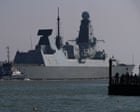
The North Sea does not forgive mistakes. When Russian naval units transit British waters, they are not simply moving from point A to point B. They are mapping reaction times, testing communication bottlenecks, and probing the operational limits of a surface fleet that has shrunk dramatically over the past three decades. Recent operations where the Royal Navy spent three days tracking Russian vessels underscore a grim operational reality. Britain's maritime approaches have become a permanent zone of friction.
The Anatomy of a Maritime Shadowing Operation
Tracking a modern warship or intelligence gathering vessel is an exercise in agonizing patience and acute tactical calculation. It is rarely a Hollywood-style pursuit with roaring engines and dramatic close passes. Instead, it involves slow speed cat and mouse maneuvers conducted in freezing swells, often fifty miles off the coast of Scotland or within the English Channel. If you found value in this article, you might want to read: this related article.
When a Russian task group approaches the UK Exclusive Economic Zone, the Ministry of Defence triggers a pre-planned response. Frigates and destroyers detach from port, or intercept the target mid transit. But the arithmetic of these encounters favors the intruder.
Consider the numbers. The Royal Navy surface combatant fleet stands at a fraction of its Cold War size. Every time a Type 23 frigate or a Type 45 destroyer is pulled off escort duty to shadow a Russian intelligence vessel moving down the North Sea, that ship is diverted from training, maintenance cycles, or allied integration exercises. For another look on this story, see the recent coverage from TIME.
Russia knows this. By sending aging but capable surface combatants or specialized spy ships past British shores, Moscow imposes a continuous operational cost on London without firing a single shot. It is an asymmetric strategy of exhaustion. The Royal Navy burns fuel, wears down engineering plants, and exhausts crews to monitor ships that might simply be making a routine transit between the Baltic and the Northern Fleet headquarters in Severomorsk.
Strategic Signaling Beneath the Surface
Surface ships are only the visible tip of the spear. What happens beneath the surface dictates the true anxiety within naval headquarters. Subsurface activity in the Greenland-Iceland-UK gap has intensified to levels not seen since the collapse of the Soviet Union.
Moscow views the maritime approaches to the British Isles as a vital chokepoint. If a major European conflict were to erupt, reinforcing North Atlantic sea lanes would determine the outcome of the campaign. By operating surface assets close to UK waters, the Russian Navy gathers acoustic data, tests radar interception thresholds, and maps the electronic signatures of British warships.
Every radar ping from a Type 45 destroyer is recorded. Every communication burst between the warship and maritime patrol aircraft is analyzed. These encounters serve as live fire laboratories for electronic warfare officers sitting in Saint Petersburg or Kaliningrad.
The Royal Navy understands this dynamic intimately. Veteran commanders know that these tracking missions are data collection exercises for both sides. The British forces collect intelligence on Russian capabilities, yes, but the inverse is equally true. It is a continuous, high stakes calibration of military readiness where neither side blinks, yet both sides learn.
The Fleet Capacity Crisis
The fundamental vulnerability of the UK posture does not lie in the bravery or skill of British sailors. It rests entirely on sheer hull numbers.
A navy requires mass to sustain persistent presence. When you have six guided missile destroyers and a dwindling number of frigates to cover global commitments, anti submarine warfare, carrier strike group protection, and domestic waters, choices must be made. Those choices usually involve accepting calculated risks closer to home.
For years, critics have pointed out that the surface fleet is too small to absorb unexpected maintenance delays. When a ship enters dry dock for a refit that runs over schedule, the ripple effects hit every other operational schedule. The three day tracking operations frequently highlighted in the news cycle look impressive on television screens, but they mask an underlying strain on personnel and logistics.
Engineers work around the clock in salt spray and freezing temperatures to keep propulsion systems running. Crews face extended deployments that stretch morale thin. The invisible attrition of constant readiness alerts eats away at retention rates across the service.
The Politics of Deterrence
Public perception of these naval encounters often swings between alarmism and apathy. Headlines blaring about foreign warships off the coast tend to provoke knee jerk political reactions, while routine updates cause the public to tune out entirely.
Neither extreme serves the national interest. These incursions are legal under international law regarding freedom of navigation, provided the vessels are engaged in innocent passage or operating within international waters. Russia operates within the letter of maritime conventions while aggressively probing the spirit of regional stability.
Responding effectively requires a quiet, unrelenting display of competence. The Royal Navy delivers this competence daily, matching every movement with professional seamanship and unyielding presence. Yet, professional excellence cannot permanently compensate for chronic underinvestment in ship numbers.
As geopolitical fault lines harden across Europe and the Arctic, the maritime approaches to Britain will only grow more contested. The shadow games played out in the grey swells of the North Sea are not anomalies. They are the baseline condition of modern maritime security, where sovereignty is measured one nautical mile at a time.


