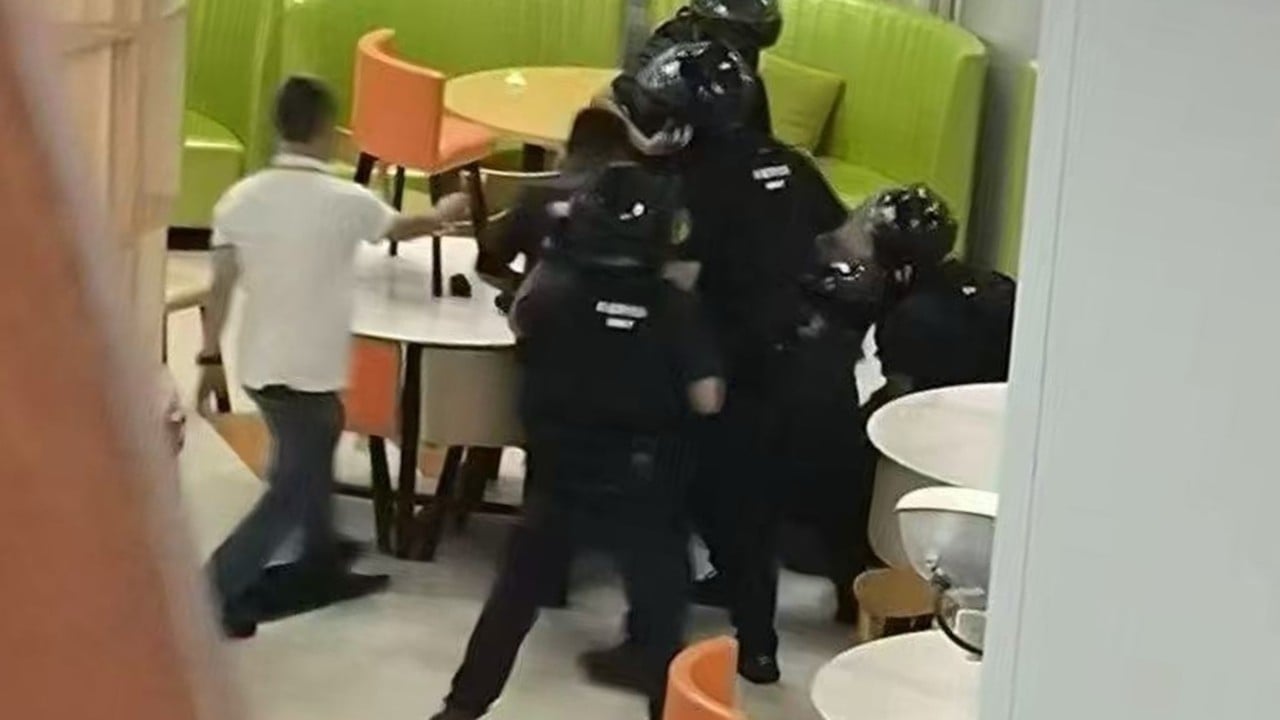
On September 14, 2026, the quiet rhythm of Guangzhou's Panyu district was violently punctured. A 35-year-old man identified by local authorities only by his surname, Li, brandished a knife inside the GOGO New Times commercial complex on Xiaoguwei Island, an educational hub housing several major institutions including Sun Yat-sen University and the South China University of Technology. Passersby captured the unfolding chaos on smartphones, uploading footage that quickly bypassed domestic internet filters to circulate across global platforms. Multiple victims suffered knife wounds, some targeted specifically around the face and eyes, leaving pools of blood on polished mall floors and shattering the illusion of absolute safety that modern urban centers strive to project. While police apprehended the suspect swiftly and reported no fatalities, the incident forces a sobering examination of an unsettling pattern of public violence across China.
The Geography of Vulnerability on Xiaoguwei Island
To understand the weight of what happened on Xiaoguwei Island, one must look beyond the immediate police blotter and examine the geography of vulnerability inherent in modern Chinese urbanization. University towns are designed as sprawling, open ecosystems meant to encourage community interaction, academic exchange, and vibrant consumer activity. Commercial zones like the GOGO complex draw thousands of students and residents daily, functioning as the social beating heart of these districts. Yet, open architectures that welcome masses of people also create fertile ground for sudden, unpredictable security breaches. An assailant armed with an ordinary blade requires no specialized smuggling network or sophisticated weaponry to inflict mass terror in a crowded public thoroughfare. The physical layout of these spaces, optimized for convenience and openness, inherently resists total fortification, leaving civilian populations exposed to impulsive acts of malice. For a closer look into similar topics, we recommend: this related article.
Urban planners and municipal security experts face an intractable dilemma when designing these environments. Creating secure zones requires controlled access points, bag checks, and perimeter fences, measures that directly contradict the open, welcoming ethos of university districts and commercial retail hubs. When a violent actor strikes without warning in a bustling marketplace, the sheer density of human traffic becomes an amplifier of panic rather than a shield. Witnesses scatter, narrow corridors become bottlenecks, and individuals find themselves trapped before security personnel can deploy. This structural reality means that high-traffic public spaces will perpetually remain soft targets unless society addresses the root causes of why individuals choose these exact locations to enact their private despairs upon the public.
The Anatomy of Social Retaliation Crimes
Criminologists and sociologists tracking public security trends in East Asia have long grappled with the phenomenon of retaliatory attacks against society. These incidents typically involve economically or socially marginalized individuals who choose public, highly visible arenas to vent their personal grievances through indiscriminate violence. Unlike organized crime or ideologically motivated terrorism, these perpetrators operate in absolute isolation. They harbor profound grievances against society, their employers, educational institutions, or family units, yet lack the means or inclination to confront specific targets. For broader information on this issue, extensive coverage can be read at BBC News.
The choice of victims in Guangzhou, where assailants frequently target vulnerable body parts or defenseless shoppers and students, underscores a deliberate intent to maximize psychological trauma and visible horror rather than secure material gain. This behavioral pattern reflects a profound sense of disenfranchisement. In an era marked by intense economic competition, mounting youth unemployment pressures, and rapid social stratification, individuals who slip through the cracks of social support systems occasionally experience complete psychological detachment. When personal failure or perceived injustice collides with a lack of institutional avenues for grievance redress, the threshold for explosive, destructive acts lowers significantly. The attacker seeks not financial enrichment or political negotiation, but eternal notoriety or a final, catastrophic expression of rage against a world that ignored them.
The Information Ecosystem and Censorship Friction
The containment and dissemination of information regarding these incidents highlight a persistent friction between official information control and the unstoppable tide of digital connectivity. In China, state media and public security organs exercise rigorous oversight over crime reporting to maintain social stability and prevent copycat contagion. However, the ubiquity of pocket cameras and encrypted communication channels renders total information blackouts impossible. Within minutes of the attack, graphic video clips showing bloodstained victims crying for help and the suspect surrounded by police were transmitted across borders.
This dynamic creates a distinct information vacuum for local residents. While domestic news services offer sparse, carefully sanitized bulletins emphasizing that injuries are non-life-threatening and the suspect is in custody, word-of-mouth networks and overseas feeds amplify panic. The resulting environment breeds rumor, heightens anxiety, and tests public trust in official institutional transparency. When citizens must rely on fragmented overseas clips to understand an event occurring in their own neighborhood, the credibility gap widens. State authorities walk a delicate tightrope between suppressing sensationalist panic and providing enough timely context to reassure a concerned public, a challenge that grows more complex with every viral video upload.
Policing Limits and Surveillance Realities
China's urban areas boast some of the most sophisticated security apparatuses on earth. Millions of closed-circuit television cameras equipped with facial recognition capabilities blanket commercial districts, transit hubs, and educational campuses, backed by rapid-response police patrols designed to neutralize threats within minutes. Despite this technological blanket, a knife-wielding assailant can inflict devastating trauma in the critical window before law enforcement arrives. Technology acts as a powerful deterrent and an invaluable tool for post-incident apprehension, but it cannot read a troubled mind or predict an impulsive snap.
The Guangzhou incident demonstrates the stark limitations of preventive surveillance when confronted with an individual willing to sacrifice their own liberty or life to commit an act of sudden violence. Police can catch the perpetrator within minutes, but they cannot rewind the clock to protect the first victim who crosses paths with an attacker. Closed-circuit monitoring records tragedy; it rarely intercepts it in real-time when the weapon is an ordinary kitchen knife drawn instantaneously in a crowded food court or hallway. This technological ceiling forces security agencies to recognize that hardware upgrades alone cannot substitute for human-centric intelligence and early intervention programs capable of identifying distressed individuals before they reach the breaking point.
The Ripple Effect on Daily Life and Collective Psychology
The psychological fallout of such events extends far beyond the physical injuries sustained by the immediate victims. When a routine afternoon trip to a dining complex or a bookstore turns into a battlefield, the unwritten social contract governing public life begins to fray. Students and residents who frequent these spaces develop an acute, lingering hyper-vigilance. Every crowded corridor, every sudden movement, and every unidentified stranger carrying a bag becomes a potential threat.
This subtle shift in collective psychology alters the character of urban life. People retreat inward, communal trust erodes, and the vibrant public sphere that cities are meant to cultivate becomes overshadowed by underlying unease. The physical wounds sustained on Xiaoguwei Island will heal within weeks, but the collective psychological scar lingers much longer, reshaping how a community interacts with its own environment. Parents look at campus security with renewed apprehension, students walk through commercial malls with heightened wariness, and the casual spontaneity of urban existence absorbs a permanent layer of caution.
Confronting Systemic Vulnerabilities
Addressing the root causes of these recurring outbursts requires moving beyond reactive security enhancements and confronting systemic social vulnerabilities. Mental health infrastructure across urban and regional areas remains severely strained, burdened by persistent social stigmas, a shortage of trained clinical professionals, and inadequate institutional safety nets for individuals experiencing acute psychological distress. Economic pressures, fierce competition in the job market, housing affordability crises, and social isolation compound these pressures, creating invisible boiling points for vulnerable populations.
When individuals experience total alienation and feel they have no legitimate recourse or support system, the risk of explosive, self-destructive violence increases. Law enforcement and physical barricades can manage the immediate threat, but true public safety remains elusive until societies find effective ways to identify, support, and heal the fractured minds walking silently among us. Without structural investments in psychological health and social safety nets, cities will continue to cycle through brief moments of shock, temporary crackdowns, and inevitable repetitions of sudden public violence.



