Dawn does not arrive softly in the highlands of Yemen. It breaks with the dry, rasping cough of heavy artillery echoing through stone canyons, a brutal reminder that the mountains here do not belong to the people who walk upon them, but to the war that consumes them.
High above a fractured valley, smoke curls lazily from a jagged crest of earth and grey rock. This is the strategic hill—a barren mound of dirt and shale that commands the horizon for miles in every direction. For months, it has traded hands like a bloodstained coin in a high-stakes poker game. Today, government forces hold it again. Boots scrape against loose gravel, wet with morning dew and old residue. Exhausted soldiers slump against trenches carved into the limestone, their fingers white-knuckled around rifle straps, listening for the whine of a returning drone or the distant, sickening thump of incoming mortar fire.
To read a standard news bulletin is to see this event reduced to sterile numbers and coordinates. A headline flashes across a screen: government troops capture strategic heights; incoming aerial strikes intercepted near the border. It sounds neat. Clinical. Almost bloodless. But numbers do not capture the taste of sulfur in a child’s mouth, nor do they measure the hollow ache in a mother's chest as she counts the days since her son left for the front line and never returned.
To understand what is happening in Yemen right now, we have to look past the maps and the geopolitical chess pieces. We have to step into the dust.
The Geography of Desperation
Imagine standing on a ridge where the wind strips the breath right out of your lungs. Every direction you look, the earth is folded into brutal, jagged wrinkles. There are no smooth plains here, no easy roads. Every village is a fortress; every valley is a kill zone.
In this terrain, control of a single hilltop dictates everything. Whoever sits on the crest sees the supply lines before they move. They dictate where water flows, where aid trucks can pass, and whose door the night will swallow. When government forces push up these steep inclines under heavy fire, they are not just taking coordinates on a military grid. They are clawing upward against gravity, against entrenched fighters who know every shadow of the mountain, against an unrelenting tide of attrition.
The Houthi movement, deeply rooted in these northern highlands, has spent years fortifying these very crags. They dig deep into the rock, turning natural caves into bunkers that can withstand a barrage of steel. To dislodge them requires a terrifying mixture of patience, brute force, and staggering sacrifice. When a unit of government soldiers finally breaches the summit, hoisting a tattered flag amid the whistling wind, they are standing on a graveyard of broken hopes. They have won a pile of dirt. And tomorrow, the counterattack will begin.
The Ripple Effect Beyond the Crags
While the infantrymen bleed in the dirt of the high country, the conflict refuses to stay confined to the mountains. Yemen has never been an island. Its trauma bleeds outward, spilling across borders into the sprawling plains and gleaming cities of its wealthy northern neighbor, Saudi Arabia.
Consider what happens when a missile or a delta-winged drone lifts off from a hidden ramp in the Yemeni desert. It hums through the upper atmosphere, guided by crude electronics and fierce ideological fury, tracing an invisible arc toward civilian infrastructure, oil facilities, or quiet border towns across the frontier.
This is where the invisible stakes of the war become glaringly apparent. A night sky over a Saudi oil refinery or an air base suddenly erupts into brilliant, terrifying chrysanthemums of light as surface-to-air defense batteries roar into action. Patriot missiles streak upward, intercepting threats seconds before impact. To the executives in distant boardrooms or travelers booking flights, these intercepted attacks are brief news alerts scrolled past on a phone screen. But to the families sleeping beneath those flight paths, every muffled explosion overhead is a jolt of raw terror.
The war in Yemen is a theater of proxy ambitions and local grievances, where a skirmish over a rocky hill in the interior can trigger alarms in international oil markets, shift diplomatic postures in Washington and Riyadh, and alter the price of fuel for a commuter halfway across the globe. Nothing here happens in a vacuum. Every bullet fired in the highlands reverberates through the global economy.
The Faces Behind the Bulletins
Step away from the strategic analysis and look closer at the human actors who populate this tragedy.
Meet Tariq. He is nineteen years old, though his eyes carry the heavy, flat stare of a man three times his age. Before the war reached his village, Tariq dreamed of studying engineering, of sketching bridges and laying asphalt across the vast expanses of the Arabian Peninsula. Now, his only architecture is the sandbag wall he builds every evening before dusk, stacking heavy sacks of dirt while bullets crack against the rocks fifty yards away.
Tariq does not care about regional hegemony or sectarian grand strategy. He cares about whether the truck carrying fresh water and flour will make it through the mountain pass before the next roadblock is sealed. He cares about whether his younger brother, coughing from dust and malnutrition in a basement two hundred miles away, has enough medicine to survive the week.
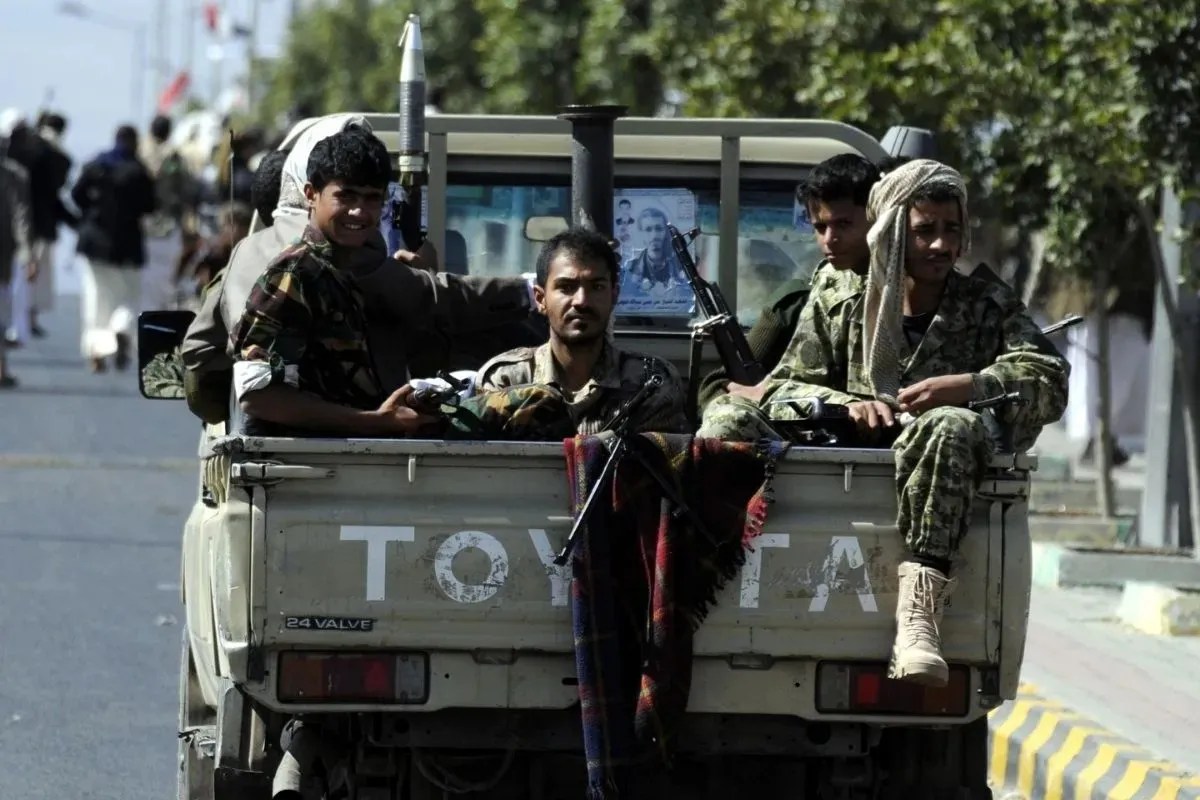
On the opposing side of the valley are fighters cut from the exact same cloth. Young men raised on the same harsh soil, fed the same rhetoric of survival and righteousness, wearing mismatched fatigues and cheap plastic sandals as they scramble up the shale slopes under the roar of jet engines. They are separated by lines drawn on maps by foreign diplomats long dead, yet they slaughter one another with the intimate cruelty of neighbors settling an ancient grudge.
This is the central tragedy of the front lines. The war persists not because the combatants are monsters, but because they have been trapped inside a machine of violence so massive, so momentum-driven, that stepping out of it means certain death or starvation.
The Weight of an Endless Stalemate
Years bleed into one another in Yemen. A decade of war does not end with a sudden cinematic peace treaty; it settles into the bones of a society like chronic arthritis.
When government forces recapture a strategic hill, it makes for a triumphant paragraph in a briefing note. It allows commanders to claim momentum. It gives political leaders in temporary capitals a talking point to reassure their foreign backers that progress is being made. But down in the alleys of Sanaa, Taiz, and Hodeidah, the bakery queues grow longer. The currency loses another fraction of its vanishing value. Clean water becomes a luxury item traded like precious metal.
The psychological toll is heavier than any artillery shell. People learn to live with the hum of surveillance drones overhead like an incessant migraine. Children grow up identifying the distinct whistle of incoming mortar rounds the way children elsewhere learn nursery rhymes. They sketch tanks and barricades in their school notebooks instead of trees and houses.
And yet, humanity stubbornly refuses to vanish. In the middle of the ruins, shopkeepers sweep broken glass from their thresholds every morning at dawn. Farmers venture out into mine-laced terraces to coax green shoots from the dry earth. Musicians play quiet melodies behind thick shutters, refusing to let the silence of total despair claim their souls.
The Unending Horizon
The sun begins to dip behind the jagged western peaks, casting long, bruised shadows across the valley where the government troops secured their hard-won hill. The wind picks up, howling through the canyons like an ancient voice refusing to be silenced.
On the summit, a young soldier lights a small fire behind a windbreak of rocks, boiling murky water in a dented tin can. He stares out into the gathering darkness, watching the distant lights twinkle across enemy lines. He does not know if he will be alive to see tomorrow's sunrise. He does not know if the hill he bled to capture will still be under his flag by noon.
All he knows is the cold stone beneath his boots, the weight of his rifle, and the long, agonizing wait for a peace that remains stubbornly, cruelly out of reach. Out there in the dark, the war breathes, restless and waiting for dawn.