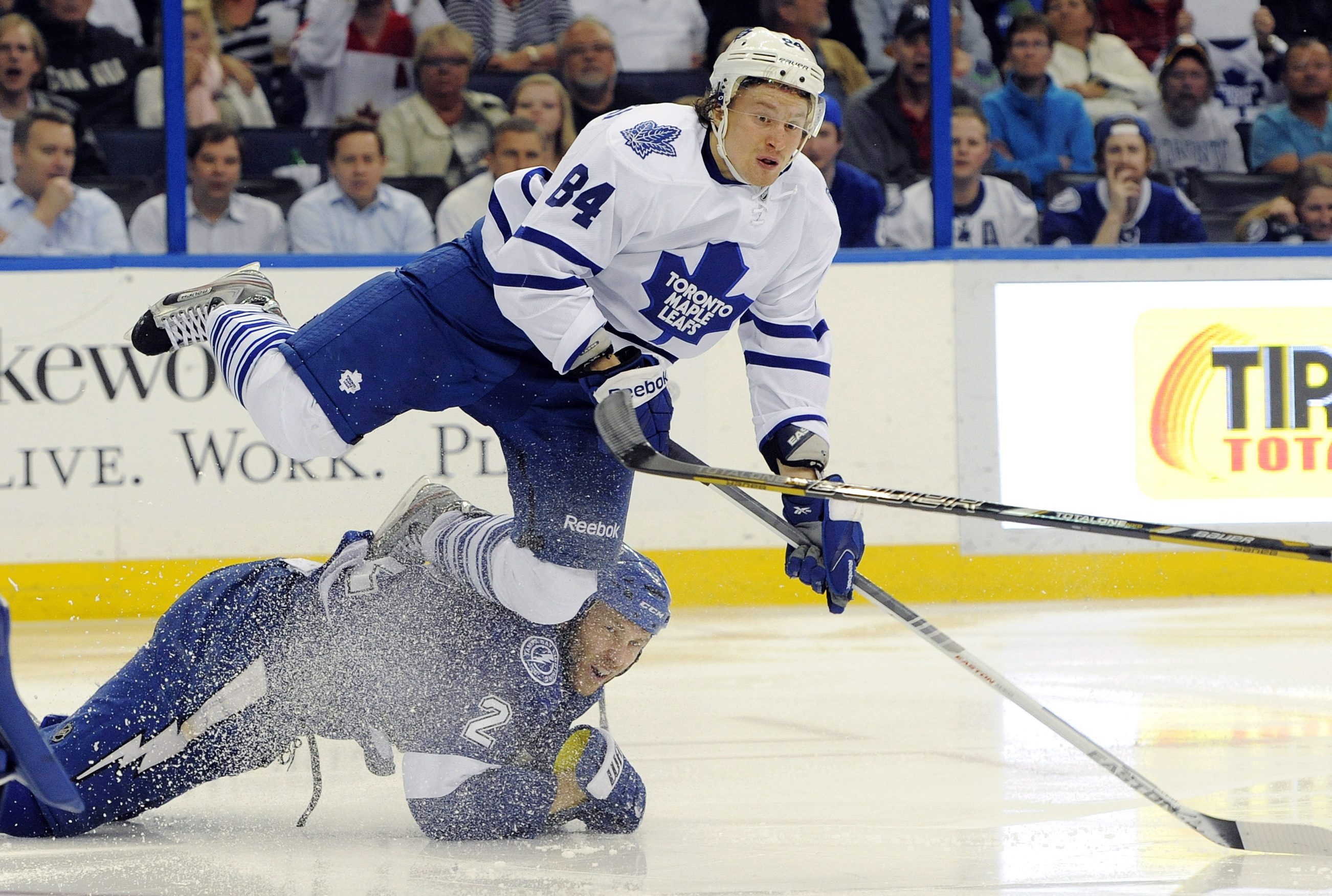
The ice at the Scotiabank Arena has a way of erasing everything outside the glass. When Mikhail Grabovski wore the blue and white of the Toronto Maple Leafs, he was a creature of kinetic energy, a whirlwind of 5-foot-11 grit that refused to be intimidated by the giants of the NHL. Fans remember the "Grabo" who would take a hit that should have ended his night, only to pop back up, shake his head, and chase the puck with a frantic, beautiful desperation. In those moments, life is simple. There is a scoreboard, a clock, and a clear set of rules.
But the clock eventually stops. The skates are hung up. The roar of 19,000 people fades into the hum of a suburban evening in Markham, Ontario. This is where the rules get blurry.
On a Tuesday that started like any other, the headlines didn't carry news of a highlight-reel goal or a gritty assist. Instead, they carried the weight of a York Regional Police report. Mikhail Grabovski, now 42, found himself far from the bright lights of the crease, facing a charge of assault.
The transition from professional athlete to private citizen is often described as a "retirement," but that word is too soft. It is a shedding of skin. For over a decade, Grabovski’s identity was forged in the heat of competition—322 points over 534 games, a career that spanned from Montreal to Toronto, Washington to New York. He was the man who once bit an opponent to escape a scrum, a player defined by an almost frantic refusal to back down.
When that competitive fire no longer has a net to aim for, where does the heat go?
The Incident in the Quiet
Markham is a city of manicured lawns and high expectations, a place where the chaos of a professional hockey career is supposed to settle into the quiet rhythms of family life and community stature. According to the police, the incident occurred in late March. The details are sparse, as they often are in the early stages of legal proceedings, but the charge is clear: assault.
The news hit the Toronto sports world like a cold snap. For a fan base that holds its former players in a state of permanent adolescence—remembering them forever as they were in their prime—it is jarring to see a mugshot-style reality replace the trading card image. We want our heroes to remain frozen in time, eternally celebrating a game-winner against the Bruins. We don't want to think about them in a police station in York Region, navigating the rigid, unyielding machinery of the Canadian justice system.
Consider the contrast. On the ice, a shove is a two-minute minor. A fight is a five-minute rest on a wooden bench. In the real world, these same actions are governed by the Criminal Code. There is no referee to blow a whistle and reset the play. There is only a court date and the slow, agonizing process of public scrutiny.
The Invisible Stakes of a Post-Game Life
We often talk about the physical toll of hockey—the concussions that ended Grabovski's playing days prematurely, the lingering aches in the joints, the scars across the bridge of the nose. We talk less about the psychological vertigo of the "after."
Imagine spending twenty years being told exactly who you are by the back of a jersey. You are a "Leaf." You are a "Point Producer." You are a "Warrior." Then, suddenly, you are just a man in a driveway. The adrenaline that used to be a professional requirement becomes a liability. The hair-trigger intensity that made you a fan favorite in the playoffs can become a wall between you and a peaceful domestic life.
This isn't an excuse for violence. It is an exploration of the context. While the legal system focuses on the "what"—the alleged assault—the human story is always about the "why" and the "how." How does a man who was once the heartbeat of a city’s sporting hopes find himself in a situation where the police are called?
The invisible stakes are the reputations built over a lifetime. For Grabovski, who has spent recent years involved in coaching and mentoring younger players back in Belarus and within the hockey community, a charge like this isn't just a legal hurdle. It is a crack in the foundation of his second act.
The Geography of a Charge
York Regional Police are known for their procedural discipline. When they announce a charge against a high-profile individual, it isn't done with fanfare. It is a clinical release of information. They confirmed the arrest, noted that the victim's identity is protected, and stated that the former NHLer was released on an undertaking.
This means Grabovski is back in the community, but the shadow follows him. Every trip to the grocery store, every appearance at a local rink, every conversation with a neighbor is now filtered through the lens of that one word: Assault.
It is a heavy word. It suggests a loss of control. For a player whose career ended because of the devastating effects of concussions—injuries specifically tied to the loss of physical and emotional regulation—the irony is bitter and inescapable. We have seen this pattern before, a tragic loop where the game gives a man everything, then takes back his health, leaving him to navigate a complicated world with a compromised compass.
Whether this specific incident is tied to the trauma of the game or a momentary lapse in judgment is something the courts will have to weigh. But for the observer, the pain is in the fall.
The Weight of the Blue and White
In Toronto, you are never truly an ex-Maple Leaf. You are part of a permanent ledger. When Grabovski signed that five-year, $27.5 million contract back in 2012, he wasn't just signing for the money; he was signing for the immortality that comes with playing in the center of the hockey universe.
That immortality has a price. When you stumble, you don't fall in private. You fall in front of the millions of people who used to wear your name on their backs. The disappointment felt by the fans isn't just about the law; it's a sense of personal betrayal. They invested their emotional energy in the idea of the "Grabo" who fought for every inch of ice. Seeing that same aggression allegedly turned inward, toward a community or a home, feels like a loss for everyone involved.
The legal process is famously slow. There will be mentions, hearings, and perhaps a trial. The facts will be parsed. Witnesses will speak. Lawyers will argue the nuances of intent and provocation. But the court of public opinion has already convened.
We live in an era where we are quick to discard people once they no longer serve our entertainment needs. We cheer the hit, then turn away when the player staggers. We celebrate the "warrior" mentality, then act surprised when that warrior struggles to find peace in a world that doesn't value combat.
Grabovski’s journey from the Minsk hockey schools to the pinnacle of the NHL was a story of defiance. He defied his size. He defied the odds. Now, he faces a different kind of opponent, one that can’t be outskated or beaten with a quick wrist shot.
The silence coming from the Grabovski camp is expected. There are no post-game interviews here. No locker room scrums to explain what went wrong in the third period. There is only the wait.
As the sun sets over Markham, the houses look the same. The streets are quiet. Somewhere inside one of those homes, a man who once had the world at his feet is sitting in the stillness, reckoning with the fact that the hardest battle of his life isn't happening on the ice, but in the sterile, unforgiving reality of a courtroom.
The cheering has stopped. The lights are out. The game is over, but the consequences are just beginning to lace up their skates.