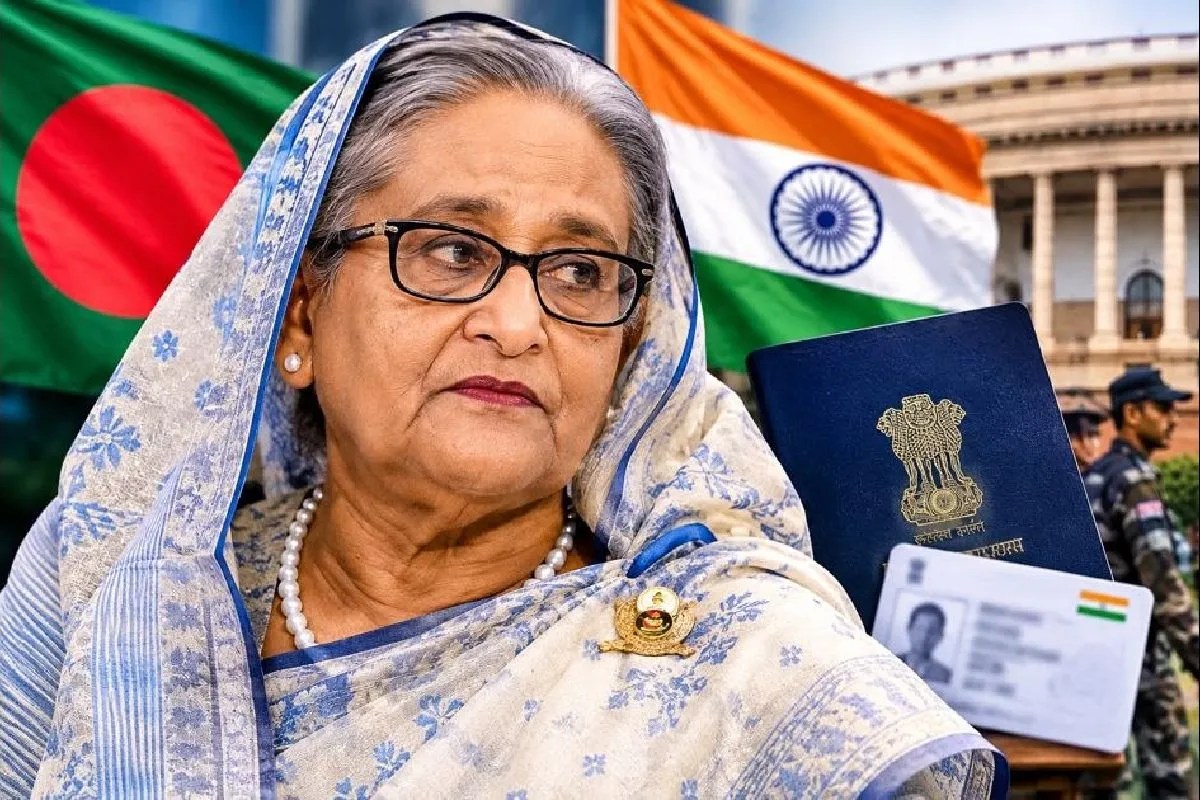
Rumors that Sheikh Hasina could return to Bangladesh in December—sparked by talk of a new passport—confuse travel paperwork with political reality. A passport is a piece of government paper. It does not clear arrest warrants, calm street fury, or reverse the collapse of a fifteen-year rule that ended in mass upheaval in August 2024.
Anyone who has covered South Asian politics for three decades knows how easy it is for a single administrative detail to turn into a fever dream. Rumor mills run hot in Dhaka and Kolkata. Exiles refresh news feeds looking for signs of a comeback, while opponents watch for openings to lock the door permanently. Yet a physical travel document is only the first hurdle in a much harder legal and political fight.
Why a New Passport Does Not Equal a Return
Travel documents get lost, expire, or get canceled in political transitions. Even when an exiled leader seeks or holds valid travel papers, stepping off a plane in Dhaka requires far more than an immigration stamp.
Sheikh Hasina left Bangladesh in August 2024 after weeks of student-led protests spiraled into deadly clashes and forced her resignation. Following her departure, authorities in Dhaka moved swiftly against figures from her administration and the Awami League, revoking passports of former officials in some cases while initiating legal proceedings and arrest warrants against key leaders. In that climate, asking about a passport is really asking a harder question: who controls the state apparatus, the courts, and the streets?
- Legal exposure: Criminal investigations, tribunal actions, and arrest orders turn any arrival at a port of entry into an immediate confrontation with law enforcement.
- Institutional hostility: Ministries, police forces, and courts reshaped after the political rupture are unlikely to welcome a returning former prime minister with open arms.
- Street volatility: Returning without ironclad security guarantees risks triggering fresh protests and clashes that neither domestic authorities nor neighboring capitals want.
A passport lets someone cross a border where they are permitted to enter. It does not manufacture political consent.
The Exile Precedent That Haunts Dhaka
Exile and return are woven into the DNA of Bangladeshi politics. Sheikh Hasina knows that history better than almost anyone alive.
After her father, Sheikh Mujibur Rahman, and most of her family were assassinated in August 1975, she spent years in exile in India before returning to Bangladesh in 1981 to lead a fractured Awami League. Her rival, Khaleda Zia of the Bangladesh Nationalist Party (BNP), also navigated decades of bitter rivalry, imprisonment, exile periods, and power swings. Political comebacks in South Asia have happened before. They almost never happen on a neat schedule set by rumor.
Political survival in Dhaka rarely follows a tidy calendar; it depends on shifting alliances inside the military, the judiciary, and the streets.
Yet history cuts both ways. Returning in 1981 meant stepping back into a country scarred by coups and military rule, building support over years of opposition agitation. A return right after a mass uprising carries a very different kind of danger. Emotions are raw. Grief and anger over the crackdown on protesters remain recent memories for millions of families.
What December Speculation Really Signals
When December enters the conversation around Sheikh Hasina and Bangladesh, the date usually reflects wishful thinking or tactical signaling rather than a confirmed flight plan.
In South Asian politics, rumor serves three practical purposes. First, it keeps loyalists engaged. Supporters who feel sidelined or hunted look for hope, and talk of a return keeps morale from collapsing completely. Second, it tests reactions. Watching how rivals, security agencies, and foreign diplomats respond to return chatter gives camp strategists a rough reading of the political temperature. Third, it distracts from internal party rebuilding. A party that has lost power often debates personalities and timelines instead of doing the slow work of reorganizing at the grassroots level.
Still, there is a counter-argument worth taking seriously. Some observers argue that prolonged exile from a distance can blunt a leader's feel for day-to-day shifts on the ground, while others contend that distance preserves a symbolic aura untouched by daily compromises. Both arguments have merit. Neither proves a December return is imminent without concrete changes in Dhaka's legal and security environment.
New Delhi, Dhaka, and the Regional Chessboard
No serious analysis of Sheikh Hasina can ignore India. Her immediate refuge there in August 2024 immediately complicated relations between New Delhi and the interim administration in Dhaka.
For years, bilateral ties under Sheikh Hasina were described in official statements as a golden chapter, marked by connectivity projects, security cooperation, and border management. That closeness also drew sharp criticism inside Bangladesh from opponents who viewed New Delhi as overly invested in one leader and one party. Once the political landscape shifted in Dhaka, India faced a delicate balancing act: managing relations with the new authorities in Bangladesh while hosting a high-profile former leader whose presence remains a sore point for many Bangladeshis.
- Diplomatic friction: Extradition requests, border tensions, and competing narratives in the media strain day-to-day diplomacy.
- Regional trade and transit: Power supply, rail and road links, and port access depend on pragmatic working ties regardless of personal political grievances.
- Geopolitical caution: Major powers watch South Asian instability closely, worried about refugee flows, economic shocks, and external influence.
Even if a passport issue is resolved on paper, diplomatic reality sets strict boundaries on where a former head of government can go and how she can move.
The Awami League Dilemma
A comeback is not just a personal decision for Sheikh Hasina. It is a survival test for the Awami League.
For fifteen years, power in the party and the state was heavily centralized. Decision-making flowed to the top. When a movement that centralized collapses suddenly, the organization left behind often struggles with arrests, leadership vacuums, and fractured messaging.
Hypothetical scenario: Suppose a mid-level district organizer in Chittagong or Rajshahi faces court summonses, asset freezes, and local hostility. A rumor about a leader getting a new passport might cheer him up for an afternoon. It will not pay his legal fees, reopen a closed party office, or convince a hesitant voter to risk arrest at a rally.
Real political revival requires organizational grit, credible local leadership, and a strategy that addresses why millions of citizens turned against the old order in the first place. Without confronting those grievances, nostalgia alone has limits.
What to Watch Instead of Flight Rumors
Readers who want to separate signal from noise should skip the countdown clocks and watch harder indicators.
Watch court filings and extradition arguments. Watch whether restrictions on political activity, media, and opposition organizing tighten or ease inside Bangladesh. Watch statements from the Bangladesh military, whose posture has repeatedly shaped political turning points in the country's history. Watch how ordinary households experience inflation, jobs, and public safety, because economic pain often reshapes political moods faster than speeches from abroad.
A passport is just a cover and a set of blank pages. Real power in Bangladesh is won or lost on the ground, not at an airport check-in counter.


