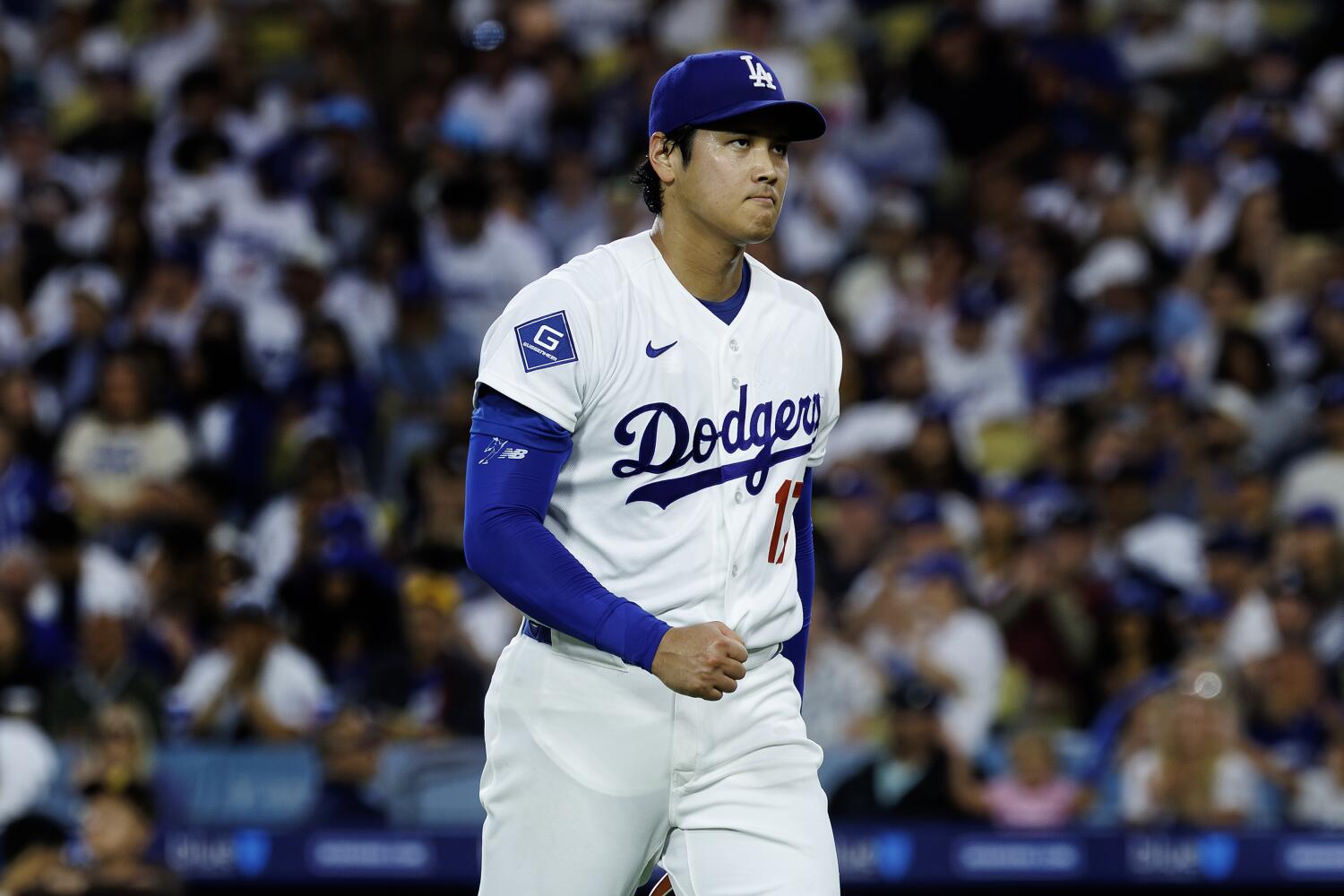
When the Los Angeles Dodgers entered the All-Star break with baseball's best record at 61-33, nobody was talking about their run differential or their division lead. The entire baseball universe was fixated on a single medical procedure.
Shohei Ohtani had fluid drained from his left knee after pulling out of his final pre-break start and sitting out the 2026 All-Star Game in Philadelphia.
The Dodgers swear it's just routine maintenance. Manager Dave Roberts insists it's a preventive measure designed to keep the four-time MVP fresh for October. Ohtani himself mentioned that the discomfort comes and goes, primarily bothering him when he lands during his pitching stride rather than when he's standing in the batter's box.
Don't let the relaxed official messaging fool you. When a player who carries a $700 million contract and two distinct full-time jobs experiences joint issues in his landing leg, every single inning becomes a high-wire act. The Dodgers don't just need Ohtani to hit home runs out of the leadoff spot. They need his arm in the postseason rotation if they want to repeat as champions.
The Real Risk of the Two-Way Workload
Playing two positions at an elite level in Major League Baseball isn't just difficult. It's an relentless physical grind that modern sports medicine is still trying to understand.
Ohtani skipped pitching entirely in 2024 following his second Tommy John surgery, focusing purely on offense and putting up a historic 50-50 season. In 2025, he gradually rebuilt his throwing workload. By mid-2026, he was back to operating as a full-fledged ace, posting an 8-2 record with a sparkling 1.79 ERA, a 0.95 WHIP, and 95 strikeouts across 85 2/3 innings.
Combine that with a .290 batting average, 22 home runs, and a 153 wRC+ at the plate, and you have a player who generates over 6.0 fWAR before mid-July.
That workload creates compound stress. When Ohtani pitches, his left leg acts as his lead landing leg, absorbing tremendous vertical force every time he drives off the mound. That same left leg serves as his back leg in the batter's box, generating the rotational power required to launch baseballs 450 feet.
When one kinetic chain gets disrupted, the body naturally compensates. A subtle shift in pitch delivery to spare a sore left knee puts additional strain on the elbow, shoulder, or right bicep. Ohtani admitted as much during a postgame session in July, noting that compensating for knee pain creates unnecessary stress elsewhere.
That is where the real danger lies. The knee fluid itself isn't a career-altering crisis. The mechanical drift caused by chasing comfort on the mound is what keeps pitching coaches awake at night.
Why the Dodgers Rotation Can't Afford Another Blow
If Ohtani were purely a designated hitter, a sore knee would be a mild inconvenience. He hit his 21st home run of the year during the exact same week his knee was flaring up, proving his swing remains lethal regardless of joint inflammation.
The problema lies in the starting rotation behind him. Los Angeles has endured a brutal wave of pitching injuries throughout the first half of the year.
Consider the current state of the Dodgers pitching staff:
- Tyler Glasnow is on the 60-day injured list.
- Blake Snell is on the 60-day injured list.
- Edwin Díaz is on the 60-day injured list.
- Bobby Miller, Gavin Stone, Brusdar Graterol, and Landon Knack are all sidelined with various ailments.
Young arms like River Ryan and Justin Wrobleski have stepped up admirably to hold the fort. Wrobleski entered the break sitting at 10-2 with a 2.69 ERA, while Ryan turned in a 9-5 record with a 2.49 ERA. Eric Lauer was brought in from Toronto to eat innings, holding down a 3.12 ERA in a spot-starter role.
That rotation looks passable in June against division opponents. It looks downright fragile when October rolls around and you're facing elite playoff lineups in a seven-game series.
Without Ohtani taking the ball every sixth or seventh day, the Dodgers are forced into continuous bullpen games. Overusing a bullpen in July leads directly to arm fatigue in September. The team already burned through several relievers when Ohtani was scratched against Arizona right before the break. Repeating that pattern across the second half will crumble the pitching staff before the postseason even begins.
What Mechanics Tell Us About the Knee Discomfort
Baseball insiders noticed subtle adjustments in Ohtani's pitching delivery starting around mid-June. Video analysis showed his arm angle dropping slightly from 33 degrees to 30 degrees. His stride stride length shortened, and his foot placement shifted slightly off line upon landing.
Even minor mechanical adjustments change how force travels through a pitcher's body. Pitching at 98 mph requires flawless energy transfer from the rubber through the legs, core, shoulder, and fingers.
When Ohtani plants his left foot, his knee must absorb nearly two and a half times his body weight in a fraction of a second. If that joint feels unstable or irritated, the brain instinctively alters the motion to protect the joint.
In the short term, Ohtani managed to pitch through it impressively. He racked up three straight wins across four June starts despite the mechanical noise. He leaned heavily on pitch selection, command, and sequencing to work through tough lineups like Pittsburgh and Minnesota.
You can only outsmart mechanics for so long. Eventually, mechanical breakdowns lead to velocity dips, lost control, or secondary injuries in the upper body. Draining fluid buys time, but it doesn't fix a flawed landing motion.
How Dave Roberts Must Manage the Second Half
Managing a two-way phenom requires throwing away the standard managerial playbook. Dave Roberts knows this better than anyone, but the second half of 2026 will test his discipline like never before.
The priority cannot be securing the number one overall seed or chasing personal individual awards. The sole focus must be keeping Ohtani healthy for the playoffs.
Here is how the Dodgers can realistically protect their primary asset while keeping their division lead intact.
Restructure the Pitching Schedule
The six-day rotation must become non-negotiable. The Dodgers cannot push Ohtani to pitch on regular four-day or five-day rest, even if the division race tightens. Giving him extra days off between starts reduces cumulative joint fatigue and keeps inflammation from building up.
Limit Inning Volumes
Ohtani doesn't need to throw 100 pitches every time he takes the mound. Keeping him on a strict limit of 85 to 90 pitches or 5 to 6 innings per outing will drastically reduce the stress on his landing leg without sacrificing his efficiency.
Strategic DH Days Off
While Ohtani hates sitting out, giving him a full day of rest every two weeks—rather than writing him into the lineup as the DH every single day—will do wonders for his joint recovery.
Prioritize Hitting Over Pitching If Forced
If the knee inflammation returns in August or September, the organization must make the hard call to shut Ohtani down as a pitcher while keeping him in the lineup as a hitter. A .290 hitter with 40 home runs in the lineup is far more valuable than a injured pitcher sitting on the bench recovering from knee surgery.
What to Watch When the Second Half Begins
The Dodgers open their second-half schedule in the Bronx against the New York Yankees. Roberts confirmed Ohtani will be in the lineup as the designated hitter immediately, but his pitching timeline remains undecided.
Keep a close eye on three specific indicators over the next three weeks:
First, monitor his stride length and landing foot orientation during bullpen sessions. If he's landing smoothly without shortening his stride, the fluid drainage successfully relieved the mechanical pressure.
Second, watch his home run power to the opposite field. When Ohtani's left knee is bothering him, he struggles to transfer power through his back leg, resulting in late swings and pull-side rolling ground balls.
Third, pay attention to the bullpen usage behind him. If the front office aggressively trades for starting pitching depth before the deadline, it signals that the team is preparing for a scenario where Ohtani's pitching workload is capped.
The Dodgers possess enough talent to win 95 games with Ohtani functioning strictly as a hitter. Winning a World Series, however, requires the transcendent, two-way version of number 17. Protecting that left knee isn't just a midseason storylines—it's the absolute master key to Los Angeles' championship window.