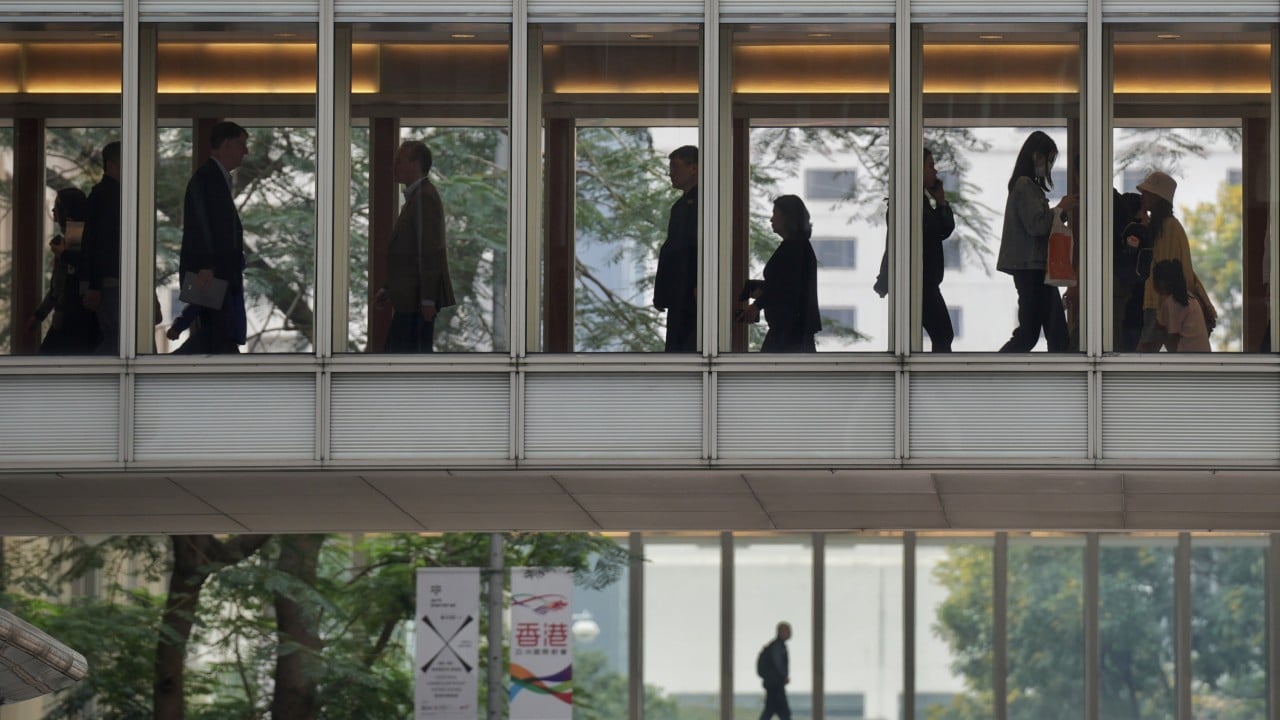
The air conditional hums a specific, expensive note on the 45th floor of a Central skyscraper. It is the sound of wealth trying to keep its cool. Step out onto the terrace, and the humidity of Hong Kong hits you like a warm, wet towel, smelling faintly of sea salt and diesel exhaust from the ferries crossing Victoria Harbour. Below, the city looks like a motherboard made of steel and neon. For two years, the people who own these views have been sweating for a different reason.
The desks were empty. The silence was deafening.
For months, the narrative surrounding Hong Kong’s commercial real estate was written in obituaries. Total gloom. People pointed to the glittering, empty towers and spoke of a permanent shift, a city losing its grip as the world moved on. But real estate does not move in a straight line. It breathes. Right now, if you listen closely to the whispering elevators and the hushed conversations in the high-end sushi bars of Exchange Square, you can hear the intake of breath.
The numbers came out recently, buried under dry financial jargon. Premium office vacancy rates in Hong Kong just hit a seven-month low. The catalyst? A sudden, intense spillover of demand from Central—the historic, beating heart of the city’s financial district—into the surrounding neighborhoods.
To understand why this matters, you have to look past the spreadsheets. You have to look at the people making the choices.
Consider a hypothetical fund manager we will call Arthur. Arthur has spent twenty years navigating the volatile currents of Asian markets from a corner office in Central. His identity is tied to the postcode. To Arthur, moving his team out of Central feels like a demotion, an admission of defeat. But the CFO is looking at the overheads, and the numbers do not lie. Central rents are legendary for their ability to make eyes water.
So Arthur takes a taxi ride. Just ten minutes east, toward Admiralty or Wan Chai, or across the water to Kowloon East. He steps into a brand-new development. The ceilings are higher. The windows are wider. The digital infrastructure actually works without a hitch. Most importantly, the price per square foot allows the company to keep its talent rather than cutting headcount.
Arthur signs the lease. Multiply Arthur by fifty, and you begin to understand the quiet migration reshaping the city.
This is not a story of collapse. It is a story of recalibration.
During the boom years, multinational corporations swallowed up massive footprints across Central just to plant a flag. They needed to prove they existed by occupying ten floors of prime real estate. That era of corporate vanity is dead. The modern executive is pragmatic. They are looking at the math and realizing that a premium building a few MTR stations away offers something Central often cannot: space to breathe, modern energy efficiency, and a blank canvas to design an office that actually makes employees want to leave their apartments.
The pressure cooker of Central is venting. As top-tier firms migrate to high-quality spaces in adjacent districts, they create a chain reaction.
First, the vacancy rates in Central itself begin to stabilize because the space left behind is immediately snapped up by firms that previously could never afford a Central address. Mainland Chinese asset managers, boutique legal firms, and family offices are waiting in the wings. They want the prestige. They want the proximity to the regulators. They are filling the vacuum.
Second, the districts receiving the spillover are transforming. Walk through parts of Kowloon East or the fringes of Wan Chai today, and you will see a different crowd than you did five years ago. The local cha chaan tengs—the traditional diners serving milk tea and pineapple buns—are now sitting side-by-side with artisanal espresso bars. The suits are there, but they have ditched the ties. The energy is lighter.
It is easy to get lost in the macroeconomics of it all. Analysts love to throw around percentages and absorption rates. But let's be honest about how confusing this environment can be. One week you read that global finance is abandoning the city; the next, you see headlines about vacancy rates shrinking. It is enough to give anyone whiplash.
The truth is found in the physical reality of the streets. Hong Kong has always been a city built on density and speed. It cannot afford to stay stagnant. When one area becomes too congested or too expensive, the economic energy naturally bleeds into the next available space. It is a survival mechanism.
This current shift reveals a profound truth about the post-pandemic corporate world. The office is not dead, but its purpose has been rewritten. It is no longer just a place where people sit at computers for eight hours. It is a tool for recruitment, a physical manifestation of a company's culture, and a hub for collaboration that cannot be replicated on a video call.
To achieve that, companies need better buildings. They need smart buildings. They need spaces that do not feel like corporate prisons. If they have to move a mile down the road to get it, they will.
The sun starts to set over the harbor, turning the water a deep, metallic bronze. The lights in the towers flip on, one by one, creating a vertical grid of glowing windows. In those rooms, people are still arguing over budgets, signing contracts, and mapping out the next quarter.
The desks are filling up again. The silence is gone.
The great Hong Kong office migration is not a sign of a city fading into irrelevance. It is the sound of a financial titan shifting its weight, finding its footing, and getting ready for the next round.


