International bodies function as high-stakes theatrical markets where state actors trade symbolic capital for domestic political survival and geopolitical influence. When leaders take the podium at the United Nations General Assembly, their performance is rarely measured by immediate legislative outcomes. Instead, diplomats and heads of state operate within a constrained optimization problem: balancing the signals sent to foreign adversaries, allied coalitions, and domestic electorates. Critics often reduce these speeches to emotional reactions—calling them spectacles of shame or triumphs of statecraft—while ignoring the underlying structural mechanics that govern multilateral communication. Evaluating high-level diplomatic addresses requires stripping away partisan indignation and examining the quantifiable inputs, audience segmentation, and opportunity costs that dictate state rhetoric on the global stage.
The Dual Audience Problem in Multilateral Statecraft
Every leader addressing the General Assembly faces a fundamental structural tension known in international relations as the two-level game. On the first level, the speaker must negotiate or project power relative to foreign governments and international organizations. On the second level, the speaker must satisfy the demands of domestic constituents, interest groups, and political opponents who view international summits through a domestic prism.
This dual-audience requirement distorts the clarity of diplomatic signaling. When a leader addresses the UN, the message is rarely singular. A sentence designed to reassure an international coalition about burden-sharing often reads as weakness to domestic critics. Conversely, domestic posturing that plays well on national television networks frequently undermines diplomatic flexibility abroad by hardening negotiating positions in public view.
To model this dynamic, consider the signaling threshold required to shift international behavior versus the threshold required to mobilize domestic approval. Domestic audiences demand moral clarity, emotional resonance, and visible displays of national sovereignty. Foreign ministries and diplomatic corps evaluate speeches based on legal commitments, resource allocations, and strategic predictability. When a head of state tilts heavily toward domestic signaling—using the global microphone primarily for internal political consumption—international credibility erodes. The audience abroad perceives the performance as hollow rhetoric, while domestic opponents dismiss it as ineffective grandstanding.
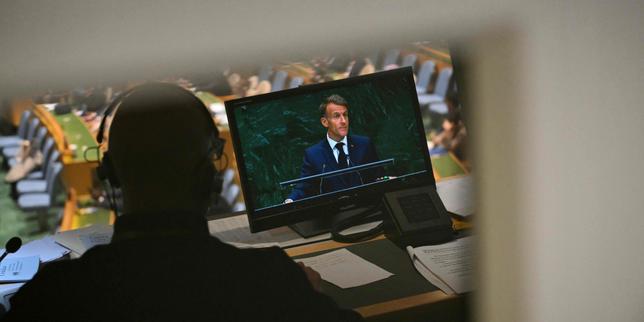
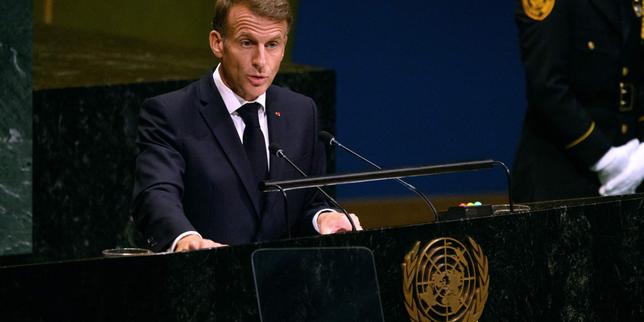
The recent discourse surrounding high-profile addresses by French leadership at the United Nations illustrates this friction point. Commentators frequently diagnose the performance through a binary lens of success or failure, ignoring the systemic pressures that compel leaders to speak simultaneously to divergent constituencies. Analysts must map these addresses against the structural constraints of the speaker's domestic political cycle, economic vulnerabilities, and coalition stability.
The Cost Function of Symbolic Diplomacy
Diplomatic capital is finite. Every public statement expends political reserves that could otherwise be deployed toward bilateral negotiations, legislative maneuvering, or institutional reform. To understand why leaders choose specific rhetorical postures, one must analyze the cost function of symbolic diplomacy.
In economic terms, cheap talk occurs when communication imposes no cost on the sender regardless of whether the underlying intentions are true or false. Because multilateral forums like the United Nations rely entirely on speech rather than immediate coercive action, speeches risk being categorized as cheap talk by sophisticated international actors. To overcome this skepticism, leaders must embed costly signals into their addresses. A costly signal might involve committing to specific financial contributions, binding treaty frameworks, or military deployments that impose domestic political risks if broken.
When speeches lack these binding commitments, they rely entirely on rhetorical intensity to generate impact. Yet rhetorical intensity suffers from diminishing marginal returns. Each successive use of apocalyptic language, moral outrage, or absolute demands reduces the signaling value of future interventions. If every international crisis is described as an existential threat requiring immediate collective action, the state loses its ability to credibly signal prioritization when genuine security emergencies arise.
Furthermore, the opportunity cost of diplomatic grandstanding is measured in institutional trust. International organizations depend on norms of procedural decorum and constructive ambiguity to maintain functionality. When a leader uses the General Assembly rostrum to bypass quiet channels and launch unvarnished public criticisms, the transaction costs of future multilateral cooperation increase. Other member states respond by hardening their defenses, increasing bureaucratic friction, and reducing information-sharing.
Information Asymmetry and Narrative Control
The modern information environment introduces severe distortion into multilateral diplomacy. Traditional diplomacy relied on closed-door negotiations where state actors could trade concessions away from public scrutiny, allowing both sides to save face and build sustainable compromises. The televising and digital fragmentation of international summits have inverted this calculus.
Today, a speech delivered in New York is instantly disassembled into short-form video clips, translated across linguistic silos, and weaponized by domestic political factions within minutes. This real-time feedback loop alters the optimization function of the speaker. Leaders no longer design speeches for the delegates sitting in the General Assembly hall. They design them for algorithmic amplification across digital networks.
This shift changes the nature of narrative control. In a low-transparency environment, a leader can afford nuanced, conditional language that signals willingness to compromise. In a high-transparency, algorithmic environment, nuance is penalized. Algorithms favor emotional polarization, moral absolutes, and confrontational framing. A speech that attempts a balanced assessment of a complex geopolitical crisis fails to capture attention, while an aggressive, zero-sum declaration generates maximum engagement.
Thus, the content of UN addresses increasingly reflects the mechanics of attention economics rather than the requirements of long-term statecraft. Leaders are incentivized to perform moral authority rather than exercise practical diplomacy. This creates a dangerous divergence between performative output and operational reality. While citizens consume the spectacle of high-stakes confrontation on their screens, the actual work of conflict resolution and resource allocation migrates entirely out of public view into secretive bilateral channels, or worse, stops happening altogether.
The Structural Limits of Multilateral Appeal
To evaluate the true efficacy of a major international address, one must measure it against the institutional architecture of the United Nations itself. The UN is built on a Westphalian foundation of sovereign equality coupled with the structural inequality of the Security Council veto. This architectural contradiction creates a permanent structural impasse.
When leaders stand at the podium and demand sweeping reforms, structural transformations of global governance, or immediate interventions in humanitarian crises, they are operating against the grain of institutional design. The General Assembly is a deliberative body lacking executive enforcement mechanisms. Speeches delivered there cannot alter the distribution of global power or compel unwilling sovereign states to alter their behavior unless backed by concrete instruments of coercion.
Recognizing these structural limits exposes the core error of treating UN speeches as primary drivers of geopolitical change. Speeches are lagging indicators of geopolitical reality, not leading catalysts. They reflect existing power balances, resource constraints, and domestic political pressures. When a leader attempts to use rhetorical force to override structural imbalances, the result is frustration and public cynicism.
The public reaction of shock or moral injury when a leader's speech fails to move international adversaries stems from a fundamental misunderstanding of this dynamic. Observers mistake the theater of diplomacy for the mechanics of power. They assume that eloquence equals execution, and that moral condemnation is equivalent to strategic deterrence.
Strategic Calibration for Statecraft
Effective international communication requires strict alignment between stated objectives and available instruments of power. When evaluating future high-level addresses, analysts and strategists must abandon subjective assessments of style and focus on core operational metrics.
First, examine the ratio of commitments to rhetoric. Does the speech introduce verifiable policy changes, financial commitments, or institutional adjustments, or does it rely entirely on moral exhortation? A high ratio of commitment to rhetoric signals serious intent and increases diplomatic credibility. A high ratio of rhetoric to commitment signals domestic political distraction and invites international disregard.
Second, assess the target audience calibration. A statecraft strategy must clearly separate domestic political communication from international negotiation. Mixing these channels degrades both. Leaders who must address domestic audiences regarding international crises should do so through domestic media channels rather than co-opting multilateral institutions for domestic grievance mobilization.
Third, evaluate institutional preservation. Every intervention in a multilateral forum should be audited for its long-term impact on institutional norms. Actions that degrade the procedural integrity of international bodies for short-term domestic gain impose high systemic costs on future diplomatic flexibility.
Statecraft in the twenty-first century demands a cold-eyed assessment of limits. The podium of the United Nations is not a pulpit for moral transformation; it is a crowded marketplace of competing national interests. Leaders who understand this market operate with precision, using sparse, credible signals to protect national security and advance strategic interests. Those who mistake the theater for reality leave behind only noise, accelerating the degradation of the very institutions they purport to defend.