Headline news about a roster signing rarely explains what the contract actually buys. When the Toronto Raptors signed 6-foot-7 Canadian guard Jalen Celestine on October 16, 2026—following his 2026 NBA Summer League appearances, his five-year collegiate arc through California, Baylor, and Cincinnati, and his quick waiver move just a day later—standard wire reports treated the transaction as a simple local-interest note. That framing misses the real mechanics of NBA roster engineering. A transaction like this is not a vote for immediate rotation minutes; it is an option-value play built around Exhibit 10 contract structure, G League affiliate pipeline control, and low-cost perimeter shooting evaluation.
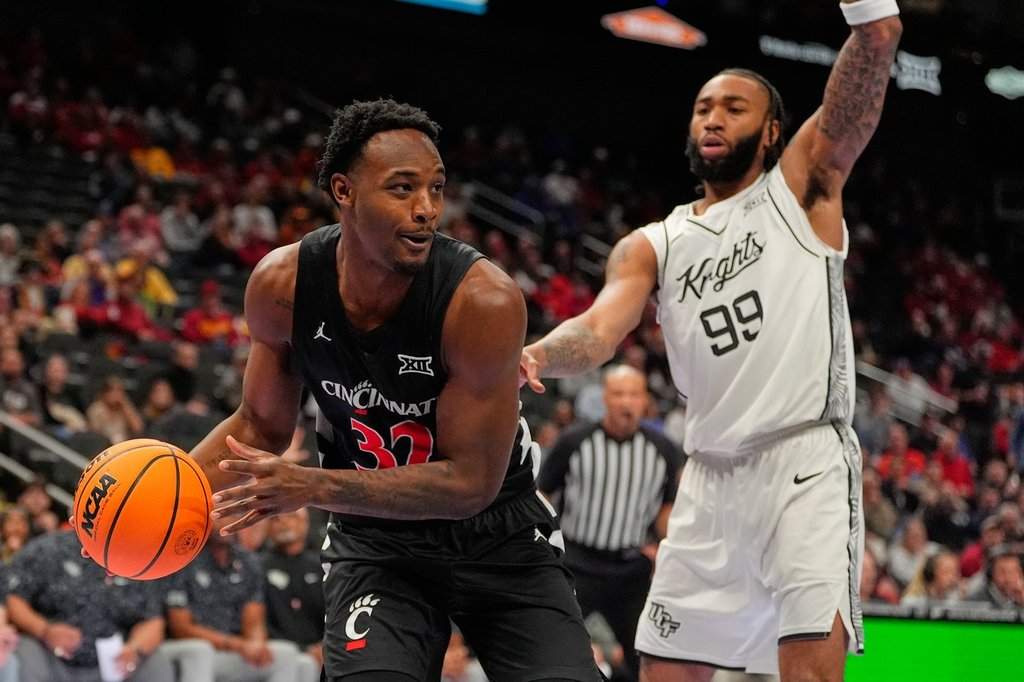
To understand the move properly, separate what is verified from what is inferred. Verified facts establish that Celestine, born December 20, 2001 in Ajax, Ontario, went undrafted in 2026 after playing the 2025–26 college season at Cincinnati, where he averaged 8.6 points, 3.1 rebounds, 1.3 assists, and 23.8 minutes across 32 games (14 starts), shooting 42.4% from the field and 40.5% from three-point range. He also logged Summer League action with Toronto in July 2026 (including a 9-point outing on 3-of-5 three-point shooting against Denver), signed with the Raptors on October 16, 2026 on an Exhibit 10 deal, appeared in a preseason game against Detroit on October 17, and was placed on waivers almost immediately as Toronto pruned its roster. What follows from those facts—specifically how front offices weigh a 6-foot-7 wing shooter's developmental runway, G League assignment routing, and roster-spot scarcity—is an analytical assessment grounded in basketball operations rather than disclosed contract numbers.
Deconstructing the Standard Wire Narrative
Conventional sports coverage of a signing like this relies on a predictable sequence: announce the transaction, list height and hometown, summarize recent college box scores, and mention a Summer League highlight. That structure works for speed, yet it flattens three distinct operational layers into a single flat story.
First, standard summaries treat an autumn training-camp or Exhibit 10 signing as if it competes directly with established rotation players. In reality, a late-offseason or pre-opening-night signing placed on waivers within days serves a different function: securing organizational rights or affiliate alignment for Raptors 905 while keeping regular-season NBA roster slots open for guaranteed contracts, two-way deals, or higher-priority conversions.
Second, basic box-score recaps often conflate raw efficiency with NBA readiness. Shooting 40.5% from three over 32 games at Cincinnati—following a 44% three-point mark in 23.8 to 27.0-minute collegiate stretches earlier in his career at California—signals spacing utility, yet college three-point percentage does not automatically transfer against longer closeouts, faster rotations, and NBA defensive physicality.
Third, local-interest framing highlights Canadian roots and Summer League familiarity without testing whether those factors carry real decision weight. Front offices do not carry a player solely for geography; they evaluate skill translation, positional size, health durability, and cost. Geographic familiarity simply lowers information friction because evaluators already have live data on how the player handles the organization's terminology and pace.
The Four Pillars of a Fringe Wing Signing
Every low-cost, non-guaranteed or Exhibit 10 NBA signing can be evaluated across four operational pillars: Size-to-Skill Ratio, Shot-Profile Portability, Transaction Optionality, and Attrition Risk.
Size-to-Skill Ratio
At 6-foot-7 and roughly 220 pounds, Celestine profiles as a jumbo guard or wing. In modern NBA lineups, positional height at the guard or wing spot matters because taller perimeter players can switch across multiple spots or contest shots without forcing a smaller guard onto a larger forward. The bottleneck lies in how that size pairs with ball-handling and creation. Across his senior season at Cincinnati, his 1.3 assists per game in 23.8 minutes indicate a complementary rather than primary-initiation role. When a 6-foot-7 perimeter player does not generate high-volume paint touches or playmaking advantage, his value depends heavily on catch-and-shoot accuracy, defensive discipline, and low-mistake execution.
Shot-Profile Portability
Shooting is the most portable skill for an undrafted or fringe NBA wing, provided the mechanics and shot selection survive higher defensive speed. Celestine's 40.5% three-point shooting in his final NCAA season and prior high-percentage stretches establish a credible baseline as a floor spacer. Still, three-point percentage alone is an incomplete metric. Analysts separate clean, unguarded rhythm threes from shots taken off movement, late in the shot clock, or against NBA-length contests. A player who needs wide-open separation faces a steeper adaptation curve than one whose release is quick and compact.
Transaction Optionality
In NBA cap and roster management, optionality means acquiring the right to evaluate or retain a player later at minimal commitment. Signing a player and waiving him shortly thereafter—often with an eye toward G League affiliate placement—lets a club keep a known commodity inside its developmental orbit without locking up a guaranteed standard contract. If injuries hit the main roster later in the season or two-way slots shift, the team already has baseline scouting and film on how the player operates within its system.
Attrition Risk
Fringe roster spots carry high turnover. A player entering the league at age 24 after five collegiate seasons brings maturity and physical conditioning, yet has a shorter age-based development window than a 19-year-old one-and-done prospect. Prior injury history—including missing the entire 2022–23 season at California while recovering from knee surgery before returning in 2023–24—also enters any durability ledger. Front offices weigh whether a player's ceiling justifies long-term investment or whether his best path is proving high-floor, low-error role play in the G League.
Cause-and-Effect Chains Most Coverage Misses
Surface-level reporting lists isolated facts: a signing, a Summer League game, a college stat line, and a waiver move. Connecting cause to effect reveals why those events happen in sequence.
- Undrafted status to Exhibit 10 routing: Going undrafted in June 2026 meant no team committed guaranteed money on draft night. That status pushed Celestine into a prove-it path where Summer League tape and training-camp or Exhibit 10 opportunities become the primary audition for a two-way or standard deal.
- Roster crunch to rapid waiver: NBA clubs carry up to 21 players in the preseason but can only bring 15 standard contracts and three two-way contracts into the regular season. Signing a player in mid-October and waiving him a day later is not a contradiction; it is standard roster mechanics designed to finalize regular-season slots while routing depth talent toward the G League.
- Spacing utility to defensive accountability: Even when a 6-foot-7 shooter knocks down perimeter looks, NBA coaches rarely trust a wing in meaningful minutes unless he defends without fouling, rotates on time on the weak side, and rebounds his position. Offensive floor-spacing gets a player into the gym; defensive reliability keeps him on the floor.
- Multi-stop college path to rapid role clarity: Playing across California, Baylor, and Cincinnati exposed Celestine to different coaching systems, conference matchups, and role expectations. While transferring multiple times can complicate long-term continuity, it also gives evaluators evidence of adaptability across varied environments.
A Tactical Framework for Evaluating Fringe NBA Signings
Fans and analysts who want to judge a signing like this without falling for hype or dismissing it out of hand can apply a four-step audit whenever a non-guaranteed or Exhibit 10 move hits the wire.
- Audit the contract mechanism before the box score. Determine whether the deal is standard guaranteed, partially guaranteed, two-way, or Exhibit 10. Contract structure tells you how much financial and roster commitment the team actually made.
- Isolate NBA-translatable skills. Focus on traits that scale up in pace and physicality—perimeter shooting, positional size, straight-line cutting, and defensive positioning—rather than high-usage college scoring that may not repeat in a smaller role.
- Check the depth chart bottleneck. Look at the exact positions ahead of the player on the main roster and two-way slots. A path to minutes requires either a clear skill gap on the roster or sustained injuries at that position.
- Track G League usage and efficiency. If the player lands with the affiliate, evaluate shot selection, three-point volume, turnover rate, and defensive matchups rather than counting stats alone.
This framework has clear limits. Box scores and transaction wires cannot measure locker-room fit, practice habits, shooting mechanics under NBA closeouts, or how a player responds to being waived and assigned to a developmental league. A clean G League stint improves odds, yet no low-cost signing comes with a guarantee of a permanent NBA job.
Strategic Play for Roster Evaluators and Front Offices
For a basketball operations group managing the back end of a roster, the disciplined play with a 6-foot-7 perimeter shooter like Celestine is structured low-cost skill testing inside the G League affiliate. Do not overreact to a brief preseason cameo or a single hot shooting stretch, and do not treat a rapid waiver as organizational dismissal. Instead, assign clear developmental benchmarks in the G League—specifically high-volume catch-and-shoot three-point attempts, low turnover rates, and multi-position wing defense—and re-evaluate call-up or two-way candidacy only when roster attrition and verified skill translation align.