The air inside a well-run animal shelter is never truly quiet. There is a baseline hum of existence—the sharp, echoing bark of a young retriever, the rhythmic scraping of plastic food bowls against concrete, the low, vibratory purr of a cat pressing its flank against wire mesh. It is a loud, chaotic symphony of survival.
But when a system breaks completely, the first thing that changes is the sound. The noise doesn't just stop; it evaporates, replaced by a heavy, suffocating stillness that warns you something is terribly wrong before you even cross the threshold.
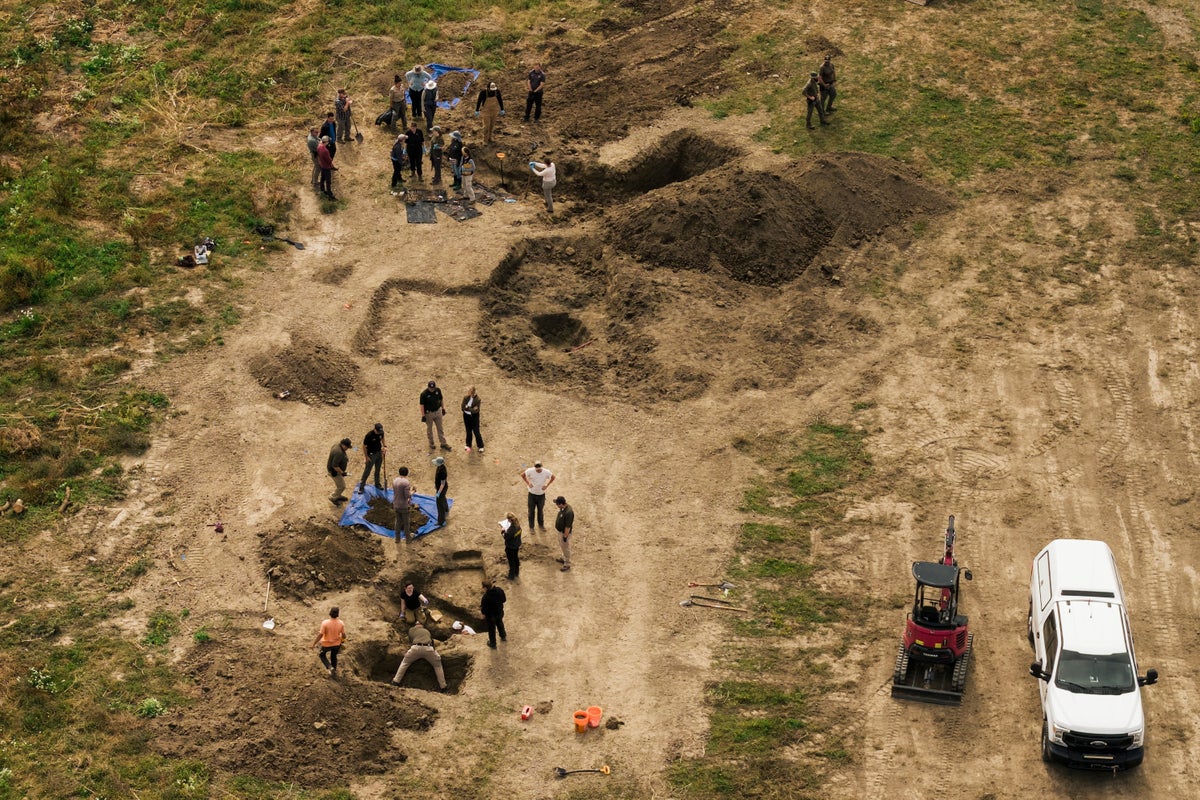
In late 2024, investigators stepped into a facility in California and encountered that exact silence. What they discovered inside was not a sudden accident or a natural disaster, but the catastrophic aftermath of a slow, invisible collapse. One hundred and seventeen dogs were found dead. They did not die from a single, dramatic event. They faded away, one by one, behind closed doors, while the outside world went about its business.
To understand how more than a hundred living creatures vanish from the ledger of care while still inside the building meant to save them, you have to look past the shocking headlines. You have to look at the machinery of modern animal welfare, the human breaking points behind it, and the quiet horror of a safety net turning into a trap.
The Weight of the Unseen
Every morning, thousands of shelter workers across the country wake up to face a math problem that cannot be solved.
Imagine a facility built to hold fifty animals comfortably. Now imagine that every single day, ten new animals arrive at the door. Some are surrendered by families who can no longer afford groceries, let alone pet food. Others are brought in by animal control, found wandering the hot asphalt of suburban streets. On Monday, you have fifty dogs. By Friday, you have one hundred. The physical walls of the building do not expand. The budget does not double. The hours in the day remain strictly fixed at twenty-four.
This is the point where the invisible stakes become agonizingly real.
When a shelter exceeds its capacity, the environment changes from a temporary sanctuary into a pressure cooker. Staff members must decide who gets a walk, who gets a clean kennel, and who gets pushed to the back of the line. It starts small. A water bowl left dry for an extra hour because a worker was cleaning up an outbreak of parvo in another wing. A cough that goes unnoticed in a dog tucked away in a makeshift crate in a hallway.
In the case of the California investigation, the scale of the failure suggests a complete evaporation of oversight. One hundred and seventeen animals do not perish overnight. Their passing requires time. It requires days and weeks of neglect, a period during which the basic human instinct to notice suffering was somehow overridden by a profound, systemic paralysis.
Consider the reality of a worker walking down those aisles. The psychological phenomenon is well-documented: compassion fatigue. When human beings are exposed to overwhelming, unceasing distress without the resources to alleviate it, their brains protect them by shutting down empathy. The eyes look, but they do not see. The mind registers a quiet cage not as a tragedy, but as one less chore to complete before going home.
The Paper Trail and the Living
People often think of animal shelters as places of emotion—all wagging tails and tearful adoptions. In reality, they are bureaucratic entities driven by paperwork, funding metrics, and municipal contracts. When an investigation unfolds, the first things seized are rarely the cages; they are the logs.
The discrepancy between what is written on a clipboard and what is happening in the back room is where these tragedies hide.
A dog arrives. It is assigned a number. It becomes a line item in a database. In an idealized system, that number tracks a journey from intake to medical evaluation, behavioral assessment, and eventually, a new home. But when the system bogs down under the sheer volume of a regional stray crisis, the numbers lose their connection to flesh and blood. A dog can remain "active" on a computer screen long after it has ceased to breathe in a dark corner of a facility.
The public reaction to these revelations follows a predictable script. There is an immediate wave of fury. People demand arrests, firings, and the permanent closure of the facility. This anger is entirely justified. Someone must answer for the profound betrayal of public trust and basic human decency.
But the real problem lies elsewhere, far beyond the individuals who held the keys to that specific building.
If we treat this horror as an isolated incident—the work of a few uniquely cruel or incompetent actors—we miss the broader, more terrifying truth. This facility did not exist in a vacuum. It operated within a culture that routinely treats animal welfare as an afterthought, an underfunded utility to be managed on a shoestring budget until a crisis forces it into the evening news.
The Cost of Looking Away
We live in an era of severe displacement. Housing costs have skyrocketed, forced mobility is high, and the financial margin for error for the average family has shrunk to almost nothing. When a family loses their home, their pets lose their home too. The local shelter is the recipient of all this societal stress. It is the destination for the casualties of our economic reality.
Yet, we expect these institutions to perform miracles without tools.
When you look closely at the numbers behind municipal budgets, animal services are almost always at the bottom of the ledger, ranking far behind road repairs, waste management, and local policing. We want the stray dogs off our streets, but we do not want to think about where they go or what happens to them when they get there. We demand that shelters maintain a "no-kill" status, yet we do not provide the staffing, the medical supplies, or the behavioral rehabilitation required to make that status sustainable.
The result is a fragile facade. On the outside, a website shows cheerful photos of adoptable puppies. On the inside, staff members are drowning in a sea of logistics, disease, and impossible choices.
The tragedy of the 117 dogs in California is a extreme manifestation of this hidden deficit. It is what happens when the facade cracks entirely and the water rushes in. The people responsible will face the legal system, as they should. The community will grieve, as it must.
But the true memorial for those lost animals cannot be built from anger alone. It requires a cold, clear-eyed look at the local facilities in our own neighborhoods. It requires asking the uncomfortable questions before the silence sets in: Who is counting the cages? Who is checking the logs? And who is making sure that the people we trust with the vulnerable have the support they need to remain human?
The investigation will eventually conclude. The news trucks will pack up their cables and drive away to the next breaking story. The building may be scrubbed clean, the locks changed, and a new sign hung above the door. But somewhere, miles away, another shelter is filling past its limit, its workers are growing tired, and the quiet is waiting to take hold again.