The mobile phones went dark on a Thursday.
To the outside world, it looked like a choice. People turn off their phones every day to escape noise, to sleep, to reset. But when four distinct lines go dead at the exact same hour, silence stops being an absence of sound. It becomes a weight.
In the Daspara neighborhood of Rangpur, Bangladesh, a newly constructed three-story house stood with its lights off and its main gate bolted from the outside. Inside, the air had grown heavy.
Consider what happens next: relatives, gnawed by a quiet panic after forty-eight hours of unreachable calls, traveled to the property on a Saturday night. They knocked. They met only the hollow echo of a locked door. When the police finally forced the entry open at eleven-thirty, they did not find a home. They found a crime scene scrawled across multiple floors.
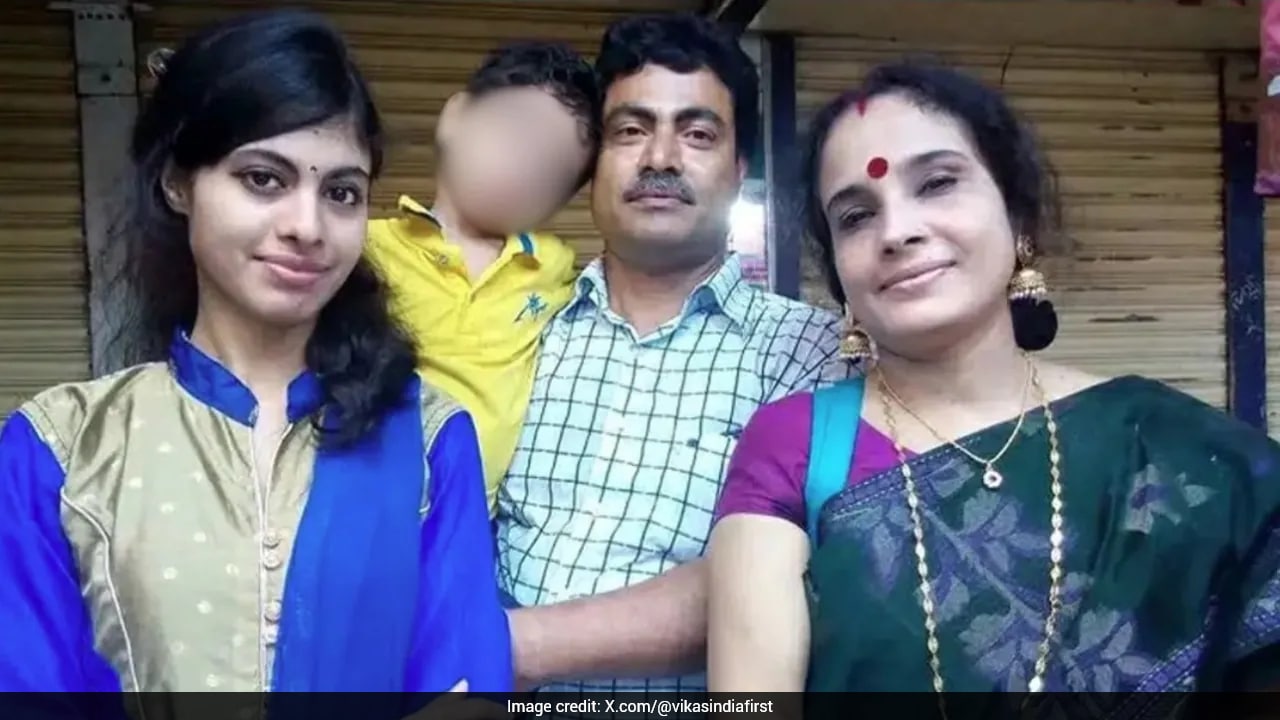
The lives cut short belonged to a family that had spent decades weaving themselves into the fabric of local education and quiet community living. Ganapati Chakraborty, sixty-five, had only recently closed the classroom door on a lifetime of teaching at Rangpur Zilla School, retiring just months prior. Retirement, for him, was meant to be measured in the gentle art of homeopathic practice, offering remedies to neighbors and watching the future unfold for his children. His wife, Pritilata Chakraborty, fifty, shared the domestic rhythm of a household focused on books and milestones. Their daughter, Agami Chakraborty Prarthi, twenty-three, had just secured her master's degree in English from Carmichael College. Their son, Priyam Chakraborty, twelve, was still navigating the ordinary world of a Class five student.
None of them survived the week.
Investigators moving through the dark rooms discovered a chilling geography of violence. The bodies were scattered, telling a fragmented story of sudden terror. Pritilata and Agami were found lifeless on the staircase. Ganapati’s body was recovered higher up, on the roof. Young Priyam was tucked underneath a bed, a final, heartbreaking attempt at shelter. Household belongings lay tossed in disarray, leading authorities from the Criminal Investigation Department and Detective Branch to weigh the initial terrifying contours of a robbery gone brutally wrong, alongside other darker motives.
Autopsies and forensic examinations now hold the timeline, but preliminary assessments point toward strangulation.
For the living, the statistics and police briefs offer no comfort. Puja Chakraborty, Pritilata's younger sister, voiced a sentiment familiar to anyone who has stared at an empty chair and refused to believe it: her brother-in-law was a good man who kept no enemies. Nieces and neighbors echoed the same bewildered refrain. In a community where minority families already navigate the delicate, jittery balance of safety and vulnerability, a tragedy of this magnitude sends shockwaves far beyond a single residential lane.
A house built for old age stands empty. The classrooms are missing a teacher. The registers are closed.
Only the questions remain, hanging in the quiet Rangpur air long after the police lights have faded.