The moon does not provide safety in the North Kivu province; it only provides enough light for the shadows to move. In the village of Masala, the night was supposed to be a period of rest after the back-breaking labor of the fields. Instead, it became a tomb. When the Allied Democratic Forces (ADF) arrived, they didn't bring demands or manifestos. They brought machetes and fire.
By the time the sun rose over the lush, emerald hills of the Democratic Republic of the Congo, twenty-two people were no longer breathing.
We often consume news from Central Africa as a series of statistics—digits on a screen that flicker and fade. 22 dead. 10 wounded. 50 missing. But these numbers are a mask. They hide the smell of charred wood and the specific, piercing pitch of a mother’s grief. To understand why this keeps happening, we have to look past the "fatal attack" headlines and into the red dirt of the Beni territory, where the cost of living is measured in seconds of awareness.
The Anatomy of a Midnight Raid
Imagine a man named Jean-Pierre. He is a hypothetical composite of the farmers who live in these villages, but his reality is shared by thousands. Jean-Pierre spent his Tuesday weeding maize. His hands are calloused, stained by the very earth that represents his only hope for a future. As he lays down on a thin mat, he hears a branch snap.
In a stable part of the world, that sound is a stray dog or a falling limb. In eastern Congo, that sound is a death sentence.
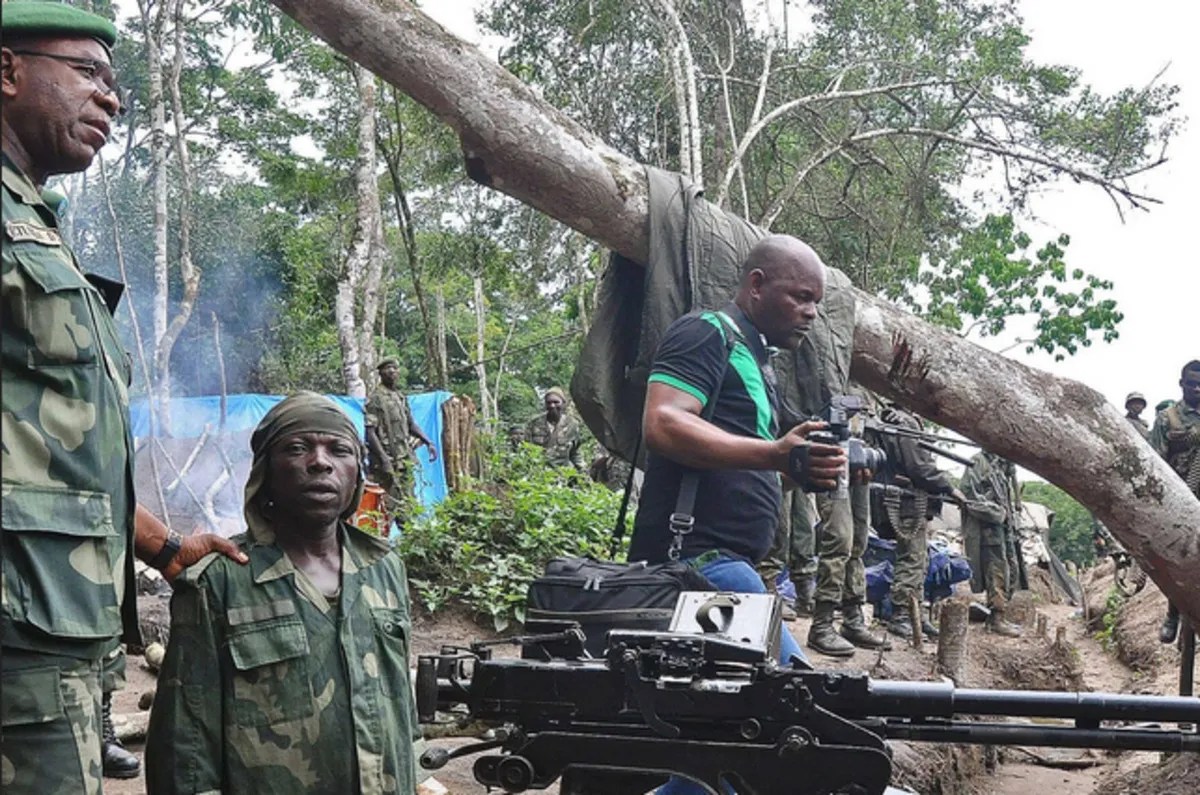
The ADF, a group with murky origins in Uganda that has since morphed into a franchise of the Islamic State, operates with a terrifying, rhythmic cruelty. They do not seek to hold territory in the traditional sense. They seek to hollow it out. They want the villagers gone so the forests can belong to the ghosts and the gold. When they entered Masala and the neighboring hamlets, they didn't just kill; they destroyed the infrastructure of survival. They burned the grain stores. They hacked down the very crops Jean-Pierre had spent all day tending.
The tragedy of the twenty-two who fell this week is that their deaths were entirely predictable. For decades, the eastern DRC has been a playground for over 120 armed groups. The state is a flickering candle in a hurricane. While the central government in Kinshasa sits over 1,500 miles away—separated by a sea of nearly impenetrable rainforest—the people of North Kivu are left to defend themselves with nothing but prayers and a keen ear for the sound of approaching boots.
The Invisible Stakes of a Forgotten War
Why does a rebel group kill twenty-two villagers in a remote corner of the world? The answer is rarely about ideology, even when they fly a black flag. It is about the geography of greed. The ground beneath those blood-stained huts is some of the richest on the planet. From the coltan in your smartphone to the gold in a wedding band, the wealth of the Congo is its greatest curse.
When a village is attacked, the survivors flee. They become "Internally Displaced Persons," a sterile term for a family living under a plastic sheet in a camp outside Goma. Once the land is empty, the resource extraction becomes easier. The "rebels" are often just the violent enforcement arm of a global supply chain that prefers its labor cheap and its oversight nonexistent.
The international community watches. Occasionally, a statement is issued. "Deep concern" is expressed. But for the people of Masala, "deep concern" does not stitch a wound or bring back a father. The UN peacekeeping mission, known as MONUSCO, has been winding down its operations, leaving a security vacuum that the Congolese army is struggling to fill. The vacuum is not empty for long. The ADF and their rivals rush in like air into a punctured lung.
The Weight of the Aftermath
The morning after the attack, the silence is the worst part. It is a heavy, unnatural quiet that settles over a place where life has been violently extinguished. The survivors return from the bush, their clothes torn by thorns, their eyes wide with a shock that may never leave.
They find their neighbors slumped in doorways. They find the smoke still rising from the ruins of their hopes.
The factual reality is that the DRC is facing one of the longest-running humanitarian crises in history. Over six million people have died in conflicts here since the late 1990s. If this were happening in Europe or North America, every hour would be a breaking news cycle. But because it happens in the "dark" heart of Africa, it is relegated to a three-paragraph blurb on page ten.
We must confront the uncomfortable truth: our distance from the tragedy is a luxury bought with the lives of people like those in Masala. When we ignore the instability of the Congo, we ignore the human cost of the modern world.
There is no "complex" political situation that justifies the slaughter of twenty-two civilians in their beds. It is not a "tribal conflict" or an "ancient rivalry." It is a systemic failure of global proportions. It is the result of a world that values the minerals in the ground more than the people walking upon it.
The burials are quick. In a tropical climate, you cannot wait. The bodies are laid in the earth, and the living are left with a choice that is no choice at all. Do they stay and risk the return of the shadows? Or do they walk into the unknown, joining the millions of others who have lost everything but their breath?
Jean-Pierre—if he survived—is now a man without a home, a man whose life's work has been reduced to ash. He is not a statistic. He is a witness. He remembers the faces of those who fell, the names of the children who will never grow up to harvest the maize, and the specific, terrible sound of a village dying in the dark.
The blood in the dirt of Masala will dry, and the jungle will eventually reclaim the charred ruins of the huts. But the hole left in the fabric of humanity by these twenty-two lives can never be mended. We are all smaller because of it. We are all less than we were before the sun went down on Tuesday night.
The moon will rise again tonight over North Kivu. Somewhere, a branch will snap. And somewhere, someone will start to run.