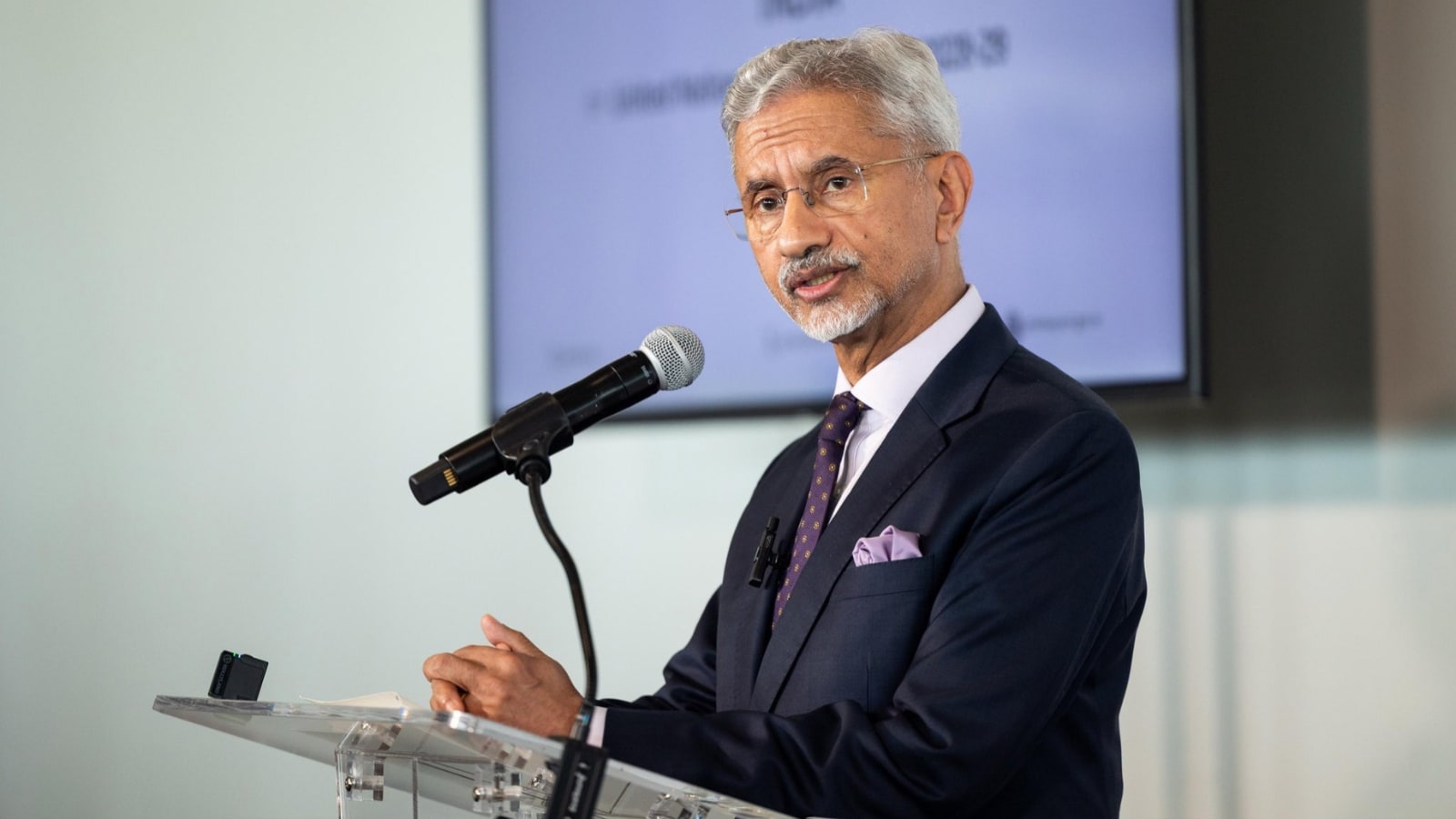
On July 15, 2026, when Indian External Affairs Minister S. Jaishankar and Belgian Deputy Prime Minister Maxime Prévot sat down in Brussels to co-chair their inaugural Strategic Dialogue, the official press releases spoke of standard bilateral cooperation. They mentioned ports, microchips, and maritime security. But behind the dry diplomatic language lies a quiet, aggressive rewriting of international trade routes and high-tech supply chains. Europe is looking for a backdoor to escape its crippling dependencies on East Asian manufacturing, and India is positioned to be that backdoor. This is not just another routine meeting of global elites. It is an urgent attempt to build a defensive wall against impending economic shocks.
For decades, Belgium has functioned as the quiet engine room of the European Union. It hosts the headquarters of the European Commission, the world’s most influential regulatory body, and possesses Antwerp, one of the continent's busiest maritime gateways. Yet, its most critical strategic asset might be a sprawling research complex in Leuven called Imec. Imec does not manufacture consumer microchips. Instead, it develops the foundational technologies, architectures, and lithography techniques that companies like TSMC, Intel, and Samsung rely on to print their most advanced silicon.
As India pours billions into its own semiconductor manufacturing ambitions, the path to success does not run through Washington or Taipei. It runs through Belgium.
The Semiconductor Illusion
India wants to build silicon fabrication facilities, commonly known as fabs. The federal government in New Delhi has committed billions of dollars in subsidies to attract global semiconductor giants to set up shop in states like Gujarat and Assam. But building a fab is only half the battle. Fabs are useless without constant access to foundational intellectual property, advanced chemical supplies, and specialized machinery.
The global microchip pipeline is incredibly fragile. Most observers focus heavily on Taiwan, where the majority of advanced chips are manufactured. This focus is narrow. If you trace the pipeline back to its origin, you find a small, highly concentrated cluster of institutions in Western Europe that hold the keys to the entire industry. ASML in the Netherlands builds the extreme ultraviolet lithography machines required to print advanced chips. Imec in Belgium acts as the shared laboratory where the entire global industry tests and designs the next generation of transistors.
Without access to the research coming out of Leuven, India’s domestic chip factories risk becoming obsolete before they even finish construction. New Delhi knows this. During the talks in Brussels, the Indian delegation spent significant energy focusing on research partnerships and talent pipelines with Belgian institutions. They are trying to secure a direct pipeline of knowledge. If Indian engineers can train directly within the Belgian research ecosystem, India can bypass years of expensive trial and error in its domestic manufacturing initiatives.
This is a transactional arrangement. Belgium, representing the wider European interest, needs a trusted partner that can scale up production without the geopolitical risks associated with East Asian supply corridors. By linking Indian labor and capital directly with Belgian intellectual property, both sides are attempting to create a parallel supply chain that operates independently of traditional flashpoints.
The Battle for the Ports
While microchips dominate the headlines, the physical movement of goods remains the ultimate bottleneck of global trade. The Port of Antwerp is the second-largest port in Europe, handling hundreds of millions of tons of cargo every year. It is also the primary entry point for Indian goods entering the European market, particularly chemicals, pharmaceuticals, and steel.
The maritime industry is currently facing a dual crisis of security and decarbonization. Houthi attacks in the Red Sea have forced shipping companies to abandon the Suez Canal, routing vessels around the Cape of Good Hope instead. This adds weeks to transit times and millions of dollars in fuel costs. In response, India and its European partners are trying to find alternative routes to keep trade flowing.
During the Brussels meeting, Indian Commerce Minister Piyush Goyal led a high-level business delegation to the Port of Antwerp. The focus was not on standard shipping agreements. The real objective was to integrate Antwerp with India’s domestic logistics network.
The Western Terminal Infrastructure
India has been investing heavily in its own maritime infrastructure, particularly the Jawaharlal Nehru Port Trust in Mumbai and the newly built deepwater port at Vizhinjam. The goal is to build a high-speed maritime corridor that connects Indian manufacturing hubs directly to Western Europe.
This plan faces massive obstacles. Green shipping initiatives pushed by the European Union require vessels to reduce their carbon footprint drastically by the end of the decade. Shipping companies cannot simply use older, cheaper vessels if they want to dock in European waters. This has sparked a sudden rush to develop green hydrogen and ammonia bunkering facilities at major ports.
Belgium has positioned itself as a pioneer in hydrogen technology. India, with its vast solar energy potential, wants to become the world’s cheapest producer of green hydrogen. By aligning their port infrastructure, the two nations are attempting to build a green maritime corridor. If successful, ships carrying goods between Mumbai and Antwerp could run on green fuels processed at either end of the journey, satisfying strict European environmental laws while bypassing traditional fossil fuel networks.
The Diamond Connection
You cannot discuss India-Belgium trade without addressing the diamond industry. Antwerp has been the diamond capital of the world for centuries, but Surat, a city in western India, cuts and polishes roughly nine out of every ten diamonds sold globally.
This industry is currently undergoing a massive structural shift due to sanctions on Russian rough diamonds. Historically, Russia’s Alrosa was one of the largest suppliers of rough stones to both Antwerp and Surat. With those supply chains severed by geopolitical tensions, the industry has had to pivot.
Goyal’s visit to the Antwerp World Diamond Centre was an effort to stabilize this fragile ecosystem. The rise of laboratory-grown diamonds has disrupted traditional mining companies, and both nations are trying to establish clear regulatory frameworks to govern this new market. They want to ensure that natural diamonds can still be traced reliably while providing a stable pipeline of raw materials for Indian cutting factories.
The European Defence Shift
For decades, European nations viewed India primarily as an economic partner rather than a security ally. That perspective has shattered. The conflict in Ukraine has forced European capitals to realize that they can no longer rely solely on the United States for their security.
Belgium’s foreign minister explicitly pointed to the European Union's massive strategic defence spending initiative, which aims to mobilize hundreds of billions of dollars by 2030 to rebuild Europe's industrial defence base.
Historically, India bought its military hardware from Russia. This arrangement has become increasingly untenable as Russia’s industrial capacity is consumed by its own war efforts, leaving India with shortages of spare parts and modern technology. New Delhi is aggressively diversifying its defence suppliers, turning to countries like France, Germany, and now Belgium.
[European Defence Re-Armament €800B] <---> [India's Defence Industry Diversification]
                       \                        /
                        \                      /
                         [Joint Industrial R&D]
Belgium does not build fighter jets or aircraft carriers, but it excels in niche military technologies, including advanced metallurgy, small arms, dual-use electronics, and aerospace components. Companies like Thales Group, which has a massive footprint in Belgium, are key players in this sector. The discussions in Brussels aimed to move beyond simple buyer-seller relationships. India is demanding that European defence companies co-develop and manufacture systems on Indian soil.
This is a difficult pill for European manufacturers to swallow. They are hesitant to share sensitive intellectual property with foreign partners. But the sheer scale of India’s military modernization budget, combined with Europe’s need for rapid industrial scaling, is forcing a compromise. Joint development of dual-use technologies, cyber security defense, and maritime surveillance systems are now on the table.
Why This Strategic Alliance Might Fail
Every diplomatic press conference paints a picture of perfect alignment. The reality is far more complicated. The partnership between India and Belgium faces deep systemic friction that could easily derail these ambitious projects.
The biggest hurdle is the long-delayed India-European Union Free Trade Agreement. Negotiations have dragged on for years, stalled by disagreements over agricultural tariffs, labor standards, and intellectual property rights.
+------------------------------------+------------------------------------+
| Indian Grievances                  | European Union Grievances          |
+------------------------------------+------------------------------------+
| High tariffs on auto components    | Lack of robust IP protection       |
| Strict European carbon taxes       | High import duties on dairy/wine   |
| Reluctance to accept foreign labor | Demands for strict labor standards |
+------------------------------------+------------------------------------+
India is highly protective of its domestic agricultural sector, which employs hundreds of millions of people. European farmers, meanwhile, are terrified of cheap imports and demand strict environmental regulations that Indian producers find impossible to meet. Furthermore, the European Union's Carbon Border Adjustment Mechanism, which imposes taxes on carbon-intensive imports like steel and cement, is viewed by New Delhi as a form of green protectionism designed to penalize developing economies.
There is also the challenge of bureaucracy. India’s regulatory environment is notoriously difficult to navigate. Foreign companies frequently complain of sudden tax policy shifts, unpredictable customs delays, and complex land acquisition laws. While the central government in New Delhi promises a red-carpet welcome for foreign investors, the actual experience on the ground in individual states is often characterized by red tape.
Belgium is not without its own internal political challenges. The country is deeply divided along linguistic and regional lines, with Wallonia and Flanders often pursuing differing economic policies. This internal division can make the implementation of major international agreements slow and unpredictable.
The strategic alignment between India and Belgium is not born out of sentimental friendship. It is driven by cold, hard necessity. Both sides recognize that the old global order, dominated by cheap shipping routes and concentrated manufacturing hubs, is gone. To survive the coming decade, they must build new pathways of trade, technology, and security. The success of this inaugural Strategic Dialogue will not be measured by the warmth of the handshakes in Brussels, but by whether the first shipments of collaborative silicon actually make it from the labs of Leuven to the factories of Gujarat.