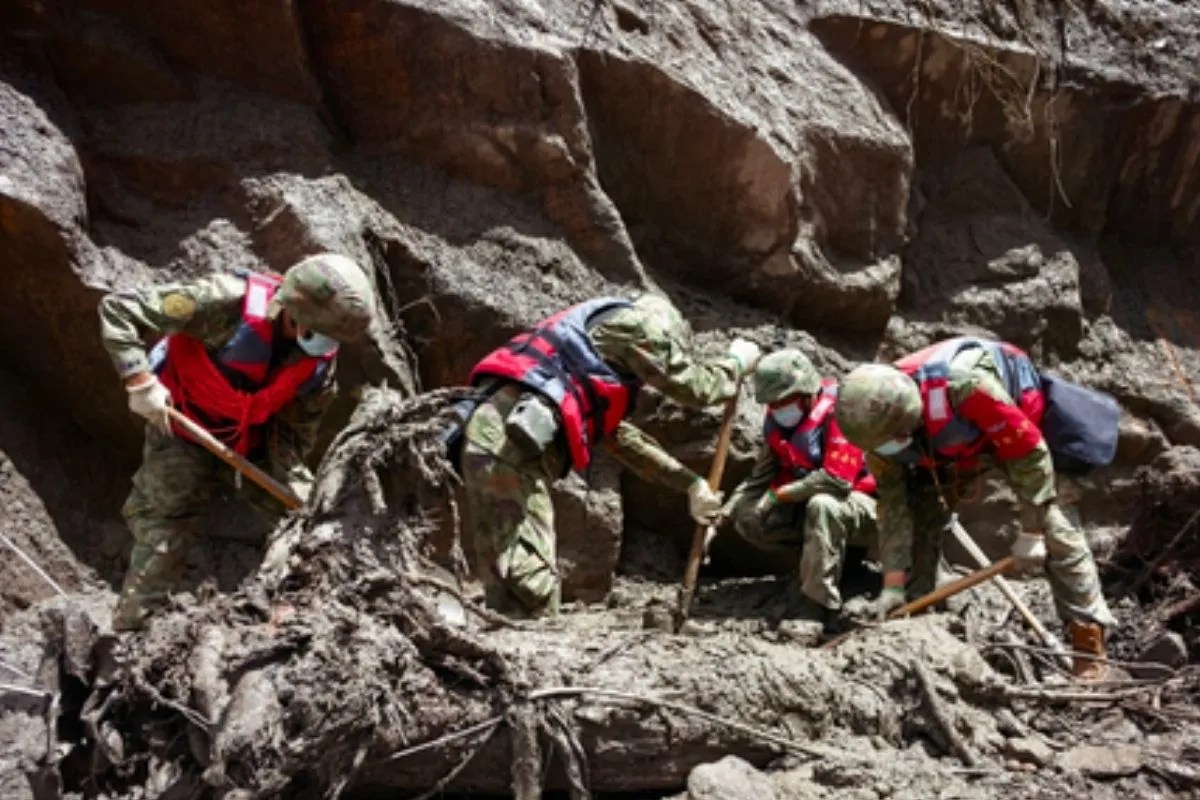
The air at seventeen thousand feet does not just chill the skin; it scrapes the inside of the lungs with tiny, invisible shards of ice. Down in the valleys, generals point grease pencils across topographical maps, measuring distance in centimeters and victory in degrees of latitude. Up on the ridgelines where the wind howls a permanent, hollow note across the shale, distance means nothing. Breath means everything.
For years, the men who wear the olive drab of the People's Liberation Army on the roof of the world lived under a specific kind of gravity. It was not merely the atmospheric pressure that forced every heartbeat to double its pace. It was the weight of unyielding ambition. Learn more on a connected topic: this related article.
The Shape of Shadows
History is rarely written in the grand halls where treaties are signed with silver pens. More often, it is scrawled in the dirt by officers who mistake their own stubbornness for destiny.
Consider the summer of two thousand seventeen. The Doklam plateau, a lonely wedge of green and stone where three nations meet, became a pressure cooker. Tanks did not roll immediately. Instead, boots hit the gravel. Shouts echoed across the thin air. Young men, barely old enough to shave, stood chest-to-chest in the freezing mud, staring into the eyes of adversaries they had been taught to view as historical wrongs waiting to be righted. More reporting by The Guardian delves into comparable perspectives on the subject.
At the center of that tense geometry stood a commander. A man whose name would later fill intelligence briefings from New Delhi to Washington. He was molded in a system that worships absolute obedience and rewards aggressive posturing. He believed, as many before him had, that the high peaks belonged to those who shouted the loudest and stepped the farthest.
Then came the freezing nights of two thousand twenty in the Galwan Valley.
If Doklam was a standoff of nerves, Galwan was a collision of raw, brutal physics. No firearms were drawn, by ancient and perilous agreement. Instead, iron rods, nail-studded clubs, and bare hands settled arguments in the dark beneath a freezing sky. Rivers of dark water rushed past banks stained with the blood of soldiers from both sides. Families thousands of miles away in the humid plains of central China and the green valleys of northern India waited for phone calls that would either never come or would change their lives forever.
The commander who had pushed his troops into those razor-edged ravines watched from the command tents. He believed his ascent was secured by every meter of disputed earth his men managed to seize. He miscalculated.
The Invisible Architecture of Fall
Power in rigid hierarchies is a fragile glass structure. It looks impenetrable from the outside, gleaming under the state lights. Inside, it is held together by invisible tension. Every promotion is a debt. Every victory is leased.
When borders freeze into stalemates, when valleys refuse to yield, and when the cost of confrontation begins to outweigh the political utility of a swaggering narrative, the system requires an adjustment. It rarely blames the blueprint. It replaces the builder.
Word trickles down through the administrative arteries of Beijing not with a bang, but with the quiet rustle of a classified dismissal. The general who led troops against India in those high-altitude flashpoints vanishes from the active rosters. No grand trials broadcast on national television. No public confessions in great auditoriums. Just the sudden, deafening silence of an airbrushed history.
We look for drama in the wrong places. We look for explosions, for cinematic coups, for dramatic courtroom showdowns. Real power operates with the cold efficiency of a surgeon removing a gangrenous limb. The general became a liability. He had pushed the machine to the brink of a broader conflagration, and in the delicate calculus of modern statecraft, reckless momentum is only useful until it threatens the entire apparatus.
The Echoes on the Ridge
Up on the disputed border today, the wind still howls across the desolate plateaus. The snow still blinds the unwary traveler. The younger conscripts, shivering in their prefabricated modular bunkers, look out across the same grey ridges through thermal optics.
They do not know the name of the man who commanded the brigade before them. His portrait has been scrubbed from the digital archives of internal command structures. His legacy is reduced to a footnote in strategic studies read by tired analysts in quiet rooms.
Yet, the consequences of his ambition linger like the smell of cordite after the guns have fallen silent. Every patrol is heavier. Every diplomatic handshake across the conference tables in Chushul is laced with a deeper, more permanent distrust. The men who died in the rocky gorges of Galwan are not coming back to life. Their mothers still sweep dust from empty thresholds.
A uniform is taken off. Epaulets are stripped in a quiet, windowless room. The machinery grinds forward, indifferent to the ambitions that fueled its cogs.
The peaks remain. Silent. Indifferent. Waiting for the next man with a map, a grease pencil, and a dangerous belief in his own inevitability.