Radio waves are the frantic pulse of our modern existence. They are the invisible threads tying us to every notification, every GPS coordinate, and every frantic news cycle. To live on Earth is to live inside a cacophony of electromagnetic noise that never, ever stops. But there is a place, roughly 240,000 miles away, where the screaming stops.
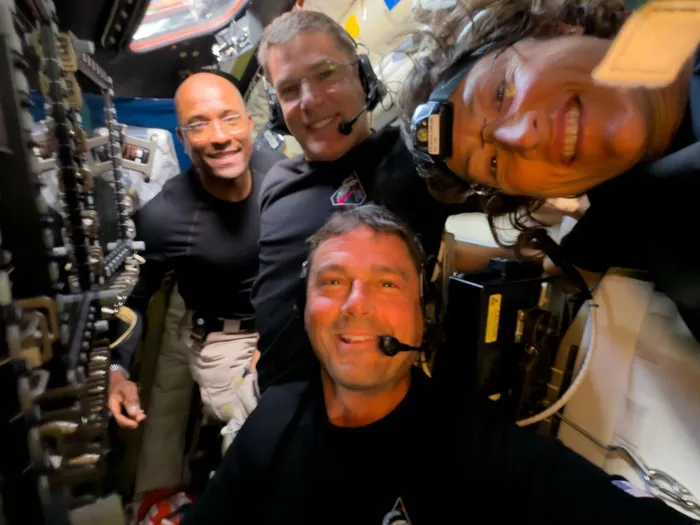
When the Apollo 8 astronauts drifted behind the Moon in 1968, they didn't just lose sight of the Earth. They lost the sound of it. For those minutes of orbital eclipse, they were the most isolated humans in history. They were shielded by 2,000 miles of solid lunar rock. The "Far Side" is not just a geographic location; it is the only true sanctuary of silence in our solar system.
We have spent decades calling it the "Dark Side," but that is a misnomer born of our own limited perspective. It gets just as much sunlight as the face we see from our backyards. It isn't dark. It is just hidden.
The Great Shield
Imagine standing on the lunar Far Side. You look up, and the sky is an obsidian void, punctuated by stars that do not twinkle because there is no atmosphere to blur them. But the most striking thing is what you don't see. You don't see Earth. On the near side, the Earth hangs like a massive, glowing marble, never rising or setting, locked in place by the Moon's synchronous rotation. On the far side, that marble is gone.
The Moon acts as a physical barrier against the roar of Earthly civilization. It blocks the terrestrial radio interference that makes deep-space astronomy so difficult from our own soil. This makes the Far Side the "quietest" radio environment reachable by humanity.
Scientists view this silence as a pristine resource. Without the background hum of FM radio, television broadcasts, and satellite signals, we could theoretically hear the very first whispers of the universe—the low-frequency signals from the "Cosmic Dark Ages" that occurred before the first stars even ignited. To hear the beginning of time, we have to go where our own noise cannot reach.
A Land of Craters and Constraints
The topography of the Far Side is a jagged, violent departure from the familiar face we know. While the near side is defined by the "Maria"—those vast, dark, basaltic plains that look like seas—the far side is almost entirely mountainous and heavily cratered. It looks like a shield that has spent four billion years taking hits for its planet.
There is a specific reason for this difference that goes beyond mere luck. The Moon’s crust is significantly thicker on the far side. Billions of years ago, when the Moon was still a molten ball of cooling rock, the Earth was radiating intense heat. The side facing Earth stayed hot and thin, allowing lava to seep out and create the smooth plains we see today. The far side cooled faster, forming a rugged, thick armor that swallowed up impact after impact without bleeding lava.
This ruggedness makes landing there a nightmare. You cannot simply point a telescope at the horizon and wait for a signal. If a rover sits in the Von Kármán crater on the Far Side, it cannot "see" Earth. It cannot transmit data home. The signal would hit the back of the Moon and stop.
The Bridge in the Sky
To solve this, we had to get creative with orbital mechanics. In 2018, China launched the Queqiao relay satellite. It doesn't orbit the Moon in a traditional circle. Instead, it sits at a point in space called the Second Earth-Moon Lagrange Point ($L_2$).
At $L_2$, the gravitational pull of the Earth and the Moon balance out in a way that allows a spacecraft to "hover." Queqiao follows a "halo orbit," tracing a path that keeps both the lunar far side and the Earth in its line of sight at all times. It is a digital bridge across the silence.
Through this bridge, the Chang’e 4 mission successfully touched down in 2019, marking the first time humanity had ever landed a craft on the lunar far side. It wasn't just a feat of engineering; it was a psychological breakthrough. We finally occupied the territory that had been a blank map for the entirety of human history.
The Weight of Isolation
Consider the hypothetical experience of a future colonist living in a habitat tucked into the South Pole-Aitken basin. This is one of the largest, deepest, and oldest impact craters in the solar system. The sheer scale of the landscape would be crushing.
On the near side, you can look up and see home. You can see the weather patterns over the Atlantic. You can feel connected to the billions of people living under that blue dome. On the far side, you are truly, fundamentally alone. If the relay satellite fails, you are effectively in another universe.
The psychological toll of "Earth-out" is something NASA and other space agencies study intensely. Most astronauts describe the "Overview Effect"—the profound shift in perspective that comes from seeing Earth as a fragile, borderless entity. But what happens when you lose the Overview? When you are staring into the infinite blackness of the outer solar system with no blue marble to ground you?
The Far Side represents the ultimate frontier. It is the training ground for Mars and beyond. If we can survive and maintain our sanity in the lunar silence, we might have a chance at the stars.
The Resource in the Shadows
We aren't just going there for the view or the silence. The Far Side is home to the South Pole-Aitken basin, a region that may contain vast deposits of water ice hidden in "permanently shadowed regions." These are craters where the sun has not shone for billions of years. The temperatures are some of the coldest recorded in the universe, hovering around $-240$°C.
Ice is more than just water. It is oxygen for breathing and hydrogen for rocket fuel. If we can harvest that ice, the Far Side becomes the gas station of the solar system. We stop being a species that has to carry every drop of life with us from Earth. We become a species that lives off the land.
But there is a tension here. The very things that make the Far Side valuable are at odds with one another. The astronomers want total, radio-quiet silence to listen to the Big Bang. The mining corporations and governmental agencies want to land massive, noisy, signal-emitting machinery to extract ice.
We are on the verge of colonizing the most quiet place in existence, and in doing so, we risk bringing the very noise we were trying to escape.
The Vanishing Mystery
For centuries, the back of the Moon was a canvas for our imaginations. It was where we put aliens, secret bases, and monsters. Now, it is a collection of high-resolution topographical maps and chemical compositions. We are trading mystery for mastery.
There is a specific kind of melancholy in that. Every time we shine a light into a dark corner of the solar system, we lose a bit of the wonder that fueled our ancestors. But in its place, we gain something more tangible: a future.
The Far Side remains the most honest mirror we have. It shows us our history in its craters—a record of the violence the Earth survived by virtue of its companion. It shows us our potential in its silence. Most of all, it reminds us that to see the truth, sometimes you have to turn your back on everything you know.
The next time you look at a full moon, remember that you are only seeing half the story. The other half is waiting in the quiet, tucked away from our lights and our phones, holding the secrets of where we came from and the roadmap for where we are going. We are no longer just looking at the Moon. We are preparing to step behind the curtain.