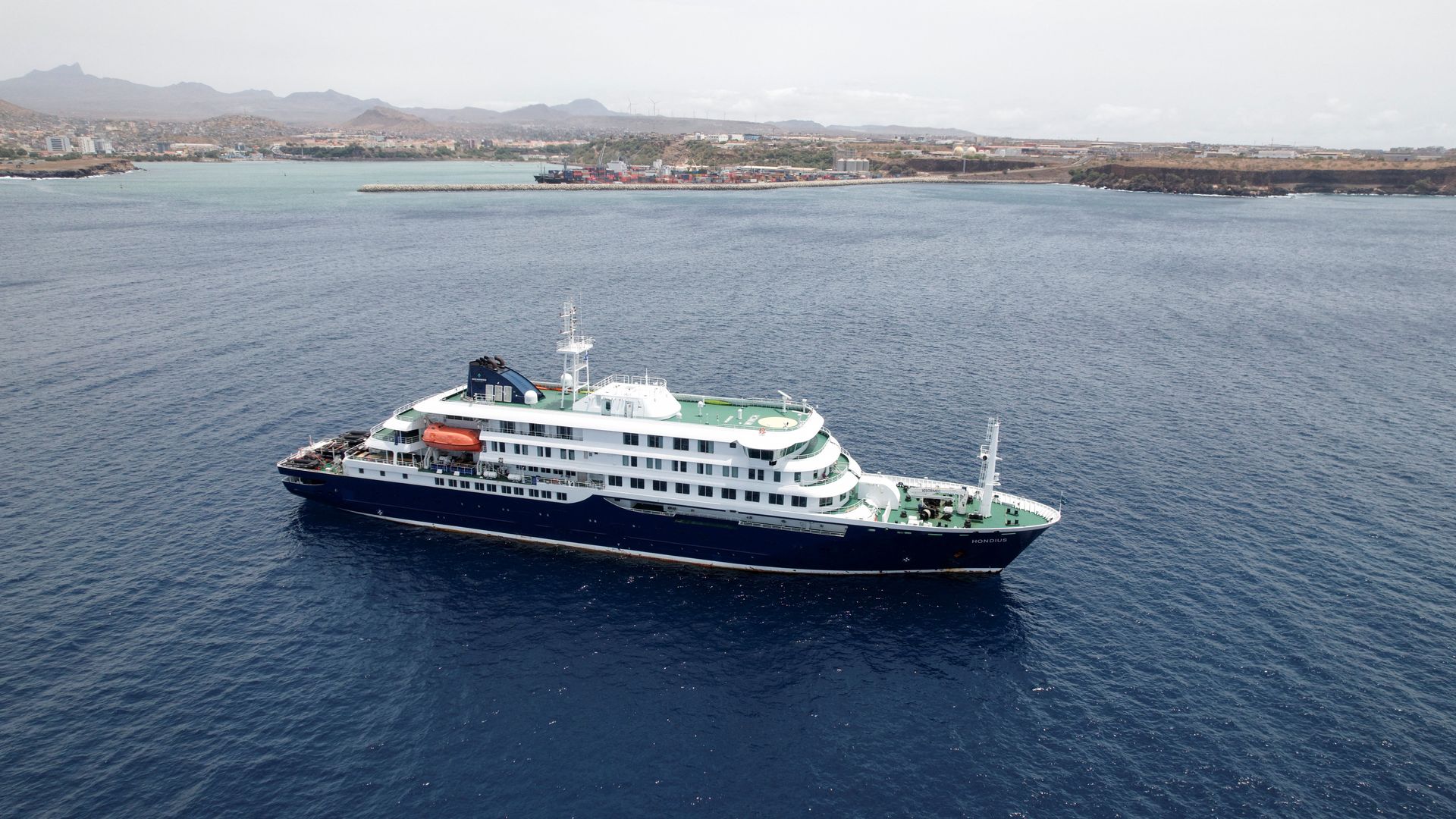
The Atlantic does not care about borders. It is a vast, slate-gray expanse that swallows sound and secrets alike, providing a perfect stage for a drama that most of the world only sees as a flickering notification on a smartphone. Somewhere between the salt-sprayed hull and the luxury linens of a cruise ship currently cutting through the waves toward the Canary Islands, a microscopic passenger is making its presence felt. It doesn't have a passport. It doesn't need a ticket.
Hantavirus is a name that carries a jagged, clinical edge. In a laboratory, it is a series of data points and viral loads. On a vessel packed with thousands of souls seeking sun and escape, it is a ghost in the ventilation, a shadow in the pantry, and a tightening in the chest of those charged with keeping the passengers safe. If you found value in this piece, you should look at: this related article.
The Weight of a Breath
Think of a man named Elias. He is a hypothetical composite of the many workers who keep these floating cities running—the people who move through the narrow corridors behind the polished mahogany doors. Elias spent his morning moving crates in a storage locker that hadn't been opened since the ship left its last port of call. He noticed a faint, musty smell. Dust motes danced in a shaft of artificial light. He wiped his brow, took a deep breath, and continued his work.
In that single, mundane moment, the stakes of the entire voyage shifted. For another perspective on this event, see the latest update from Reuters.
Hantavirus isn't like the flu. It doesn't drift through a crowded theater via a sneeze or a handshake. It is far more reclusive, usually transmitted through the aerosolization of waste from infected rodents. When dried droppings or urine are disturbed, the virus hitches a ride on dust particles. One deep breath in a confined space is all it takes for the pathogen to find a new home in human lungs.
[Image of Hantavirus structure]
The updated figures coming off the ship are more than just numbers; they are a countdown. As the vessel nears the volcanic shores of the Canaries, the medical staff on board are likely grappling with a reality that the glossy brochures never mention. They are looking for the early signs: the sudden fever, the muscle aches that feel like a heavy weight pressing down on the shoulders, the overwhelming fatigue that turns a vacation into a marathon of exhaustion.
The Architecture of an Outbreak
A cruise ship is an engineering marvel, but it is also a closed ecosystem. It is a steel lung. Air is circulated, filtered, and pushed through miles of ductwork. When a pathogen enters that system, the geography of the ship changes. The distance between the high-stakes baccarat tables and the humble dry-goods storage disappears.
The challenge with Hantavirus is its stealth. The incubation period is a slow burn, often lasting one to five weeks. A passenger could be sipping a cocktail as the ship docks in Santa Cruz de Tenerife, feeling perfectly healthy, while the virus is quietly replicating within their system. This lag time creates a terrifying disconnect between the moment of infection and the moment of crisis.
By the time the ship’s medical bay identifies a cluster, the "figures" the news outlets report are already snapshots of the past. They tell us where the virus was two weeks ago, not where it is today.
The Invisible Ledger
Public health officials are now playing a game of catch-up with the tide. The Canary Islands are a hub of movement, a gateway between Europe, Africa, and the Americas. When a ship at the center of an outbreak nears these ports, the local authorities aren't just looking at a boat; they are looking at a potential spark in a dry forest.
The mortality rate for Hantavirus Pulmonary Syndrome is a sobering statistic that refuses to be softened by poetic language. In some outbreaks, it climbs as high as 38 percent. It is a disease that essentially causes the capillaries in the lungs to leak, filling the air sacs with fluid. It is a drowning on dry land.
Imagine the tension in the captain’s quarters. On one side of the ledger, there are the logistical demands of a multi-million-dollar industry: port fees, frustrated passengers, and the delicate reputation of a brand built on the promise of safety and luxury. On the other side, there is the raw, biological reality of a virus that does not negotiate.
We often treat health news as something that happens to "other" people in "other" places. We read about outbreaks in remote rural cabins or deep in the forests of the American Southwest. But the current situation proves that our modern world has no remote corners. We have built high-speed bridges for ourselves, and the viruses are more than happy to use them.
The Human Toll of Logistics
The "updated figures" mentioned in the headlines represent real people—waiters, engineers, retirees, and families. For each person identified, there is a web of contacts, a trail of shared meals, and a series of common spaces that must be scrubbed, analyzed, and monitored.
The Canary Islands represent a threshold. For the passengers, it is a destination. For the virus, it is a possibility. The protocols being enacted now are a frantic attempt to close a door that might already be ajar. There is an inherent vulnerability in travel that we rarely acknowledge. We hand over our safety to the systems we inhabit, trusting that the air we breathe has been scrubbed of more than just odors.
But systems are built by humans, and humans are fallible. A single missed inspection, a storage door left cracked in a port where rodents thrive, a failure to recognize a fever as something more than "seasickness"—these are the tiny fractures that allow an outbreak to take hold.
The Language of the Sea
There is a specific kind of silence that falls over a ship when things go wrong. It starts in the crew quarters and leaks upward into the public spaces. It’s in the way a steward lingers a bit longer when cleaning a railing, or the way the ship’s doctor looks a little more tired during the morning briefing.
The Canary Islands are rising out of the horizon now, their dark, jagged peaks a stark contrast to the blue of the water. For those on board, the sight should be one of relief. But for the health authorities waiting on the pier, the sight of the ship is the beginning of a long, meticulous battle. They will board with clipboards and thermal scanners, looking for the heat of a fever that signals the silent stowaway has found a host.
We live in an age where we believe we have conquered the elements. We build ships that defy the waves and medicine that defies the dark. Yet, a handful of dust in a quiet corner of a deck remains enough to bring a titan to its knees.
The figures will continue to change. The news cycles will move on to the next crisis. But for the people on that ship, the Atlantic has never felt wider, and the air has never felt more precious. They are learning, in the most visceral way possible, that we are never truly alone on the water. We bring our world with us—the beautiful, the mundane, and the microscopic.
The ship slows as it approaches the harbor. The engines thrum a deep, vibrating chord that echoes in the hull. On the shore, the lights of the city flicker, oblivious to the drama unfolding in the quiet, climate-controlled cabins just a few miles out at sea. The invisible passenger is waiting to see where the journey ends.