Everybody loves a clean binary. Either you believe hanging drug mules turns a nation into a spotless, crime-free utopia, or you believe the War on Drugs is a total failure that ruins lives while failing to stop a single gram of contraband from crossing the border.
Both camps point straight at Southeast Asia to prove their point. And both camps are reading the map upside down.
The standard commentary on Singapore and Malaysia relies on a lazy consensus. Proponents of zero-tolerance policing look at Singapore’s gleaming skyline, point to the mandatory death penalty under the Misuse of Drugs Act, and declare victory. Critics look at Malaysia’s recent abolition of the mandatory death penalty in 2023, point to overcrowded prisons, and claim harsh deterrence is dead on arrival.
They are both asking the wrong question.
When policy analysts ask, "Do tough laws deter drug crimes?" they treat deterrence as a single, monolithic switch you flip on or off by adjusting prison sentences. In criminology, that is amateur hour. Deterrence is not a function of severity. It is a function of certainty, geography, and economics.
If you want to understand why Singapore maintains low domestic street crime while Malaysia struggles with recurring addiction cycles—despite sharing a causeway and decades of nearly identical statutory draconianism—you have to stop looking at the gallows and start looking at the supply chain.
The Criminology Blind Spot Severity vs Certainty
In 1764, Italian jurist Cesare Beccaria laid down the foundational rule of deterrence theory: the certainty of punishment, even if moderate, will always make a stronger impression than the fear of another which is more terrible, combined with the hope of impunity.
Modern criminologists, including Daniel Nagin at Carnegie Mellon University, have spent decades proving Beccaria right. Empirical reviews consistently show that increasing the severity of punishment—bumping a sentence from twenty years to life, or from life to execution—yields diminishing, often negligible returns on deterrence. What actually stops a rational actor from committing a crime is the certainty of getting caught.
Here is where the conventional comparison between Singapore and Malaysia falls apart.
For decades, both countries maintained mandatory death penalties for trafficking specific thresholds of narcotics—15 grams of heroin in Singapore, 15 grams in Malaysia. On paper, the legal deterrent was identical. In practice, the outcomes diverged wildly.
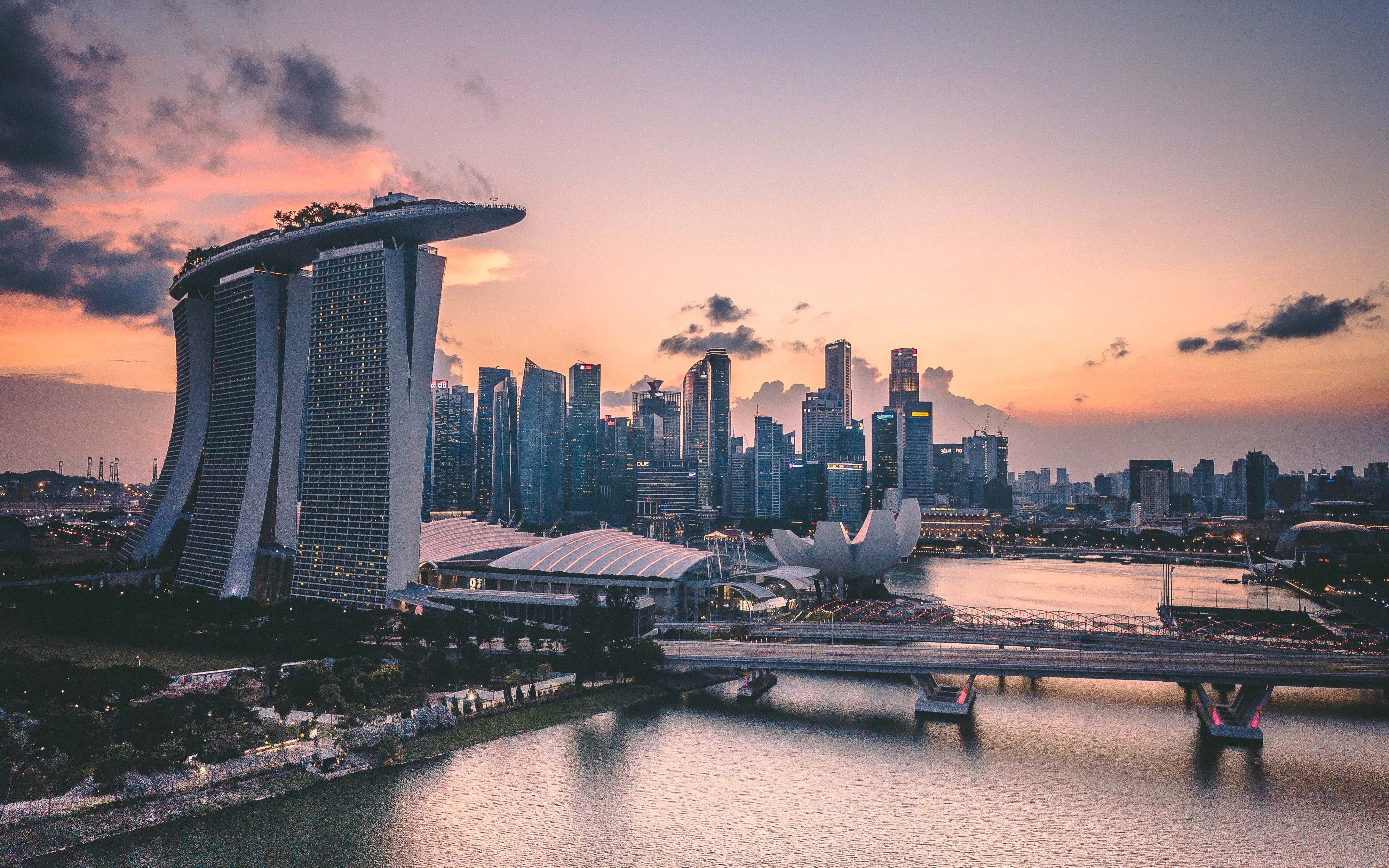
Why? Because Singapore is a 734-square-kilometer island city-state with one of the highest ratios of surveillance, border control, and law enforcement per capita on earth. Every port of entry is a choke point. Every parcel is scanned. The Central Narcotics Bureau operates in a closed, hyper-controlled environment where the certainty of detection is extraordinarily high.
Malaysia, by contrast, is a sprawling nation of over 330,000 square kilometers. It shares porous land borders with Thailand, hundreds of miles of dense jungle, and thousands of kilometers of coastline bordering the Strait of Malacca and the South China Sea. You can write the harshest statutory penalties in human history into the Malaysian Penal Code, but when a syndicate can move product across an unguarded river in Kelantan at three in the morning, the perceived risk of capture drops to near zero.
Severity without certainty is just expensive theater.
The Economics of the Mule Who Replaces Whom
To understand why mandatory execution fails to dismantle international trafficking networks, stop thinking like a judge and start thinking like a cartel logistics manager.
Drug syndicates do not send their board of directors across the Woodlands Checkpoint with half a kilo of heroin taped to their thighs. They recruit from the absolute bottom of the socioeconomic ladder. They target desperate, debt-ridden couriers—often foreign nationals from impoverished regions—who are told they are carrying harmless packages, or who are so financially cornered that a payout of a few thousand dollars outweighs a theoretical risk of execution.
Imagine a scenario where a syndicate needs to move ten shipments across a border. They hire ten couriers. Border enforcement catches three and executes them. Do the remaining seven quit? No, because they are already in transit, or they don't know the first three were caught. Even when the executions hit the front page of The Straits Times, the syndicate simply recruits ten more desperate people from a pool of millions living in extreme poverty across the region.
In economics, this is known as the replacement effect. As long as the profit margin on illicit narcotics remains astronomical—driven entirely by prohibition itself—the supply of expendable labor is effectively infinite.
Executing a low-level courier does not raise the cost of doing business for the syndicate. It is a rounding error. The drugs are already paid for at the source, the courier is disposable, and the kingpins sit comfortably in jurisdictions far beyond the reach of Changi Prison or Sungai Buloh.
I have watched policy teams spend millions drafting legislative amendments to crank up statutory minimums, convinced that adding ten years to a trafficking charge will scare off the bosses. It never does. The bosses aren't the ones driving the truck.
What Malaysia Realized That Singapore Refuses to Admit
For years, Malaysia followed the exact same playbook as its southern neighbor. Under the Dangerous Drugs Act 1952, Section 39B mandated the death penalty for trafficking. The result? Over a thousand people sitting on death row, the vast majority of them low-level mules, alongside chronically overcrowded prisons where petty drug users were warehouse-packed next to hardened offenders.
By the late 2010s, Malaysian officials and health authorities were staring at an undeniable failure. Decades of punitive crackdowns had not eradicated domestic drug use; it had merely driven users underground, fueling HIV transmission rates among people who injected drugs and creating a massive recidivism loop.
In 2023, Malaysia finally blinked. Parliament passed the Abolition of Mandatory Death Penalty Act, giving judges discretion to impose life sentences of 30 to 40 years and whipping instead of automatic execution. Even earlier, Malaysia began shifting away from purely punitive incarceration toward harm reduction—introducing needle exchange programs and methadone maintenance therapy, which drastically reduced HIV infections among drug users.
Malaysia realized a brutal truth: when your enforcement apparatus cannot seal the borders, a purely punitive legal framework destroys your own criminal justice system while leaving the drug trade intact.
Singapore, however, refuses to budge. And to be fair to Singaporean policymakers, their system achieves a very specific, narrow objective: it keeps open-air drug markets off Singaporean streets. You will not find an equivalent to Philadelphia’s Kensington neighborhood or Vancouver’s Downtown Eastside in Orchard Road.
The Hidden Cost of the Singapore Model
If you judge success strictly by street-level visibility, Singapore wins. If you look beneath the surface, the trade-offs are staggering.
First, there is the administrative and moral cost of executing low-level offenders, including cases involving individuals with documented intellectual disabilities, which have drawn fierce international scrutiny. When the state removes judicial discretion through mandatory sentencing, the law becomes a blunt instrument incapable of distinguishing between a ruthless cartel architect and a coerced, cognitively impaired courier.
Second, Singapore’s domestic drug figures rely heavily on mandatory rehabilitation and surveillance. Under the Misuse of Drugs Act, authorities can commit suspected users to Drug Rehabilitation Centres without a criminal trial based solely on a positive urine test. Upon release, former detainees face strict supervision orders, frequent mandatory urine testing, and severe penalties for relapse.
Does this suppress street crime? Yes. Does it cure addiction? The data is far murkier. Relapse rates in coerced abstinence programs without comprehensive psychological and community support remain a persistent challenge globally, and Singapore’s strict criminalization creates immense stigma that deters struggling users from seeking voluntary medical help before they are caught.
Third, Singapore’s success is largely an export of its problem. The demand for recreational substances among affluent Singaporeans hasn't vanished; it has simply migrated. Every weekend, thousands of residents cross the causeway into Johor Bahru or fly to Bangkok, Kuala Lumpur, and Jakarta, where the laws are looser or enforcement is more porous. Singapore hasn't eliminated drug consumption among its population; it has pushed the consumption offshore.
Dismantling the Worst Arguments on Both Sides
When this topic comes up in public debate, the same tired talking points get recycled endlessly. Let’s clear the deck.
Does the death penalty stop drug trafficking in Singapore?
No, it stops amateur smuggling through official checkpoints, and even then, seizures still happen regularly. The Central Narcotics Bureau continues to intercept kilograms of heroin, cannabis, and methamphetamine every single year. If the death penalty were an absolute deterrent, CNB seizures would be zero. They aren't. What keeps volumes lower than in neighboring countries is intense customs screening, intelligence operations, and the small physical footprint of the island—not the noose.
Would legalizing drugs in Southeast Asia solve the problem?
This is the Western libertarian fantasy that completely ignores regional geopolitics. Singapore and Malaysia sit directly downstream from the Golden Triangle—the border region of Myanmar, Laos, and Thailand, which is one of the largest synthetic drug and opium production hubs on the planet. Cartels in Shan State pump out hundreds of millions of methamphetamine pills (yaba) and tons of crystal meth annually. If Malaysia or Singapore suddenly legalized hard narcotics tomorrow, they wouldn't create a peaceful, regulated tax haven; they would immediately become the primary logistical transshipment hub for some of the most heavily armed transnational syndicates in Asia.
Is Malaysia’s repeal of the mandatory death penalty going to cause a crime wave?
Unlikely. Criminological data from jurisdictions that have abolished mandatory capital punishment—including neighboring countries and Western nations—consistently shows no causal spike in violent or trafficking offenses following the removal of automatic execution. Removing the mandatory aspect simply allows judges to weigh culpability, sparing desperate couriers while keeping long-term incapacitation on the table for actual syndicate operators.
What Actually Dismantles Drug Markets
If you want to actually disrupt narcotics networks rather than just filling prisons with disposable couriers, the playbook requires precision, not theatrical cruelty.
Follow the Liquidity, Not the Mules
Syndicates survive on cash flow. Law enforcement agencies that focus on street-level arrests and border seizures are attacking the cheapest, most easily replaceable asset a cartel owns. Dismantling a network requires forensic accounting, anti-money laundering enforcement, and targeting the shell companies, real estate investments, and underground banking systems (like hawala or unregulated crypto off-ramps) where the actual profits are cleaned. Take the money, and the organization collapses overnight.Restore Judicial Discretion Across the Board
Mandatory minimum sentences—whether for execution or decades-long imprisonment—transfer power from judges to prosecutors. Prosecutors use the threat of mandatory death or life sentences to coerce plea deals from low-level offenders who actually have zero intelligence to trade, while genuine syndicate bosses hire top legal teams or stay outside the jurisdiction entirely. Let judges evaluate intent, coercion, and hierarchy.Separate Public Health from Border Security
Treating a person suffering from substance use disorder with the same punitive apparatus designed for an armed transnational trafficker is an operational waste of resources. Every dollar spent locking up a non-violent user in a maximum-security facility is a dollar stolen from intelligence gathering, port scanning technology, and financial crime units. Medicalize addiction; militarize anti-money laundering.Invest in Detection Certainty
If deterrence relies on the certainty of getting caught, budgets should flow toward non-intrusive inspection technology, AI-driven cargo risk profiling, and regional intelligence sharing across ASEAN borders. A 90% chance of getting caught with a five-year sentence deters far more traffickers than a 2% chance of getting caught with a death sentence.
The Real Lesson From the Causeway
The next time a politician or pundit points to Singapore to argue for harsher prison sentences, ask them to explain why the exact same laws failed to produce the exact same results thirty miles north in Malaysia.
They won't have an answer, because admitting the truth ruins the political narrative. Tough laws are easy to pass. They make great headlines, they satisfy the public's desire for retribution, and they allow leaders to look decisive without doing the grueling, unglamorous work of fixing porous borders, rooting out institutional corruption, and dismantling financial laundering networks.
Singapore’s low street crime is the product of hyper-efficient state capacity, geographic containment, and relentless border surveillance. The gallows are just the ornament on top of the machine. Mistaking the ornament for the engine is how nations spend decades executing the poor while the cartels keep counting their cash.


