The Cooling Measure Myth
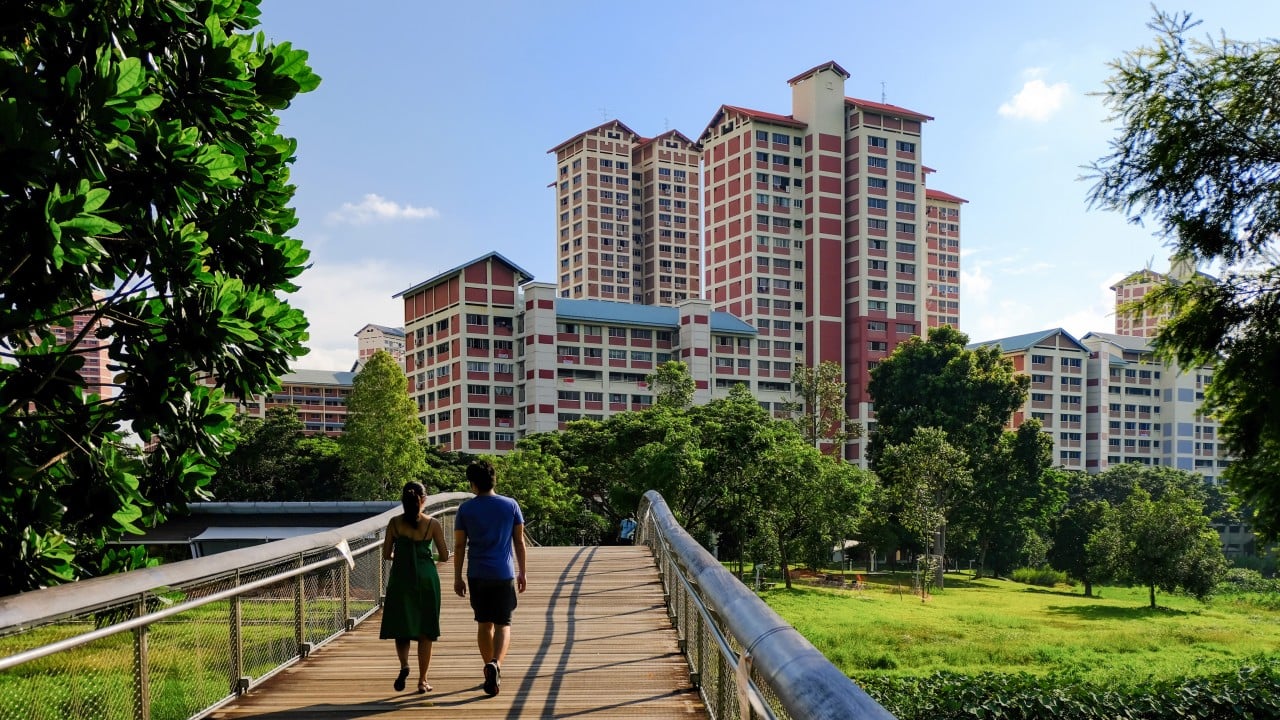
Mainstream financial media loves a "goldilocks" story. They look at Singapore’s plateauing private property prices and rising HDB resale values and call it a masterclass in market stabilization. They claim the government has successfully "cooled" the heat that is currently incinerating the middle class in Hong Kong, London, and Sydney.
They are wrong.
What we are witnessing isn't a cooling. It’s a structural enclosure. The Singapore government hasn't tamed the beast; they’ve simply built a more expensive cage and kept the keys for themselves. When the media praises the "envy of Asia" for its price stability, they are ignoring the fact that the entry price for the average citizen has been decoupled from reality.
I’ve spent fifteen years watching capital flows in Southeast Asia. I’ve seen developers pull hair out over Gross Plot Ratio (GPR) tweaks and Additional Buyer’s Stamp Duty (ABSD) hikes. The consensus is that these measures protect the "little guy." In reality, they have turned the Singapore property market into a high-stakes club where only the generational wealthy and the state-backed entities can play.
The ABSD is a Protectionist Wall Not a Safety Net
The 60% ABSD on foreign buyers is frequently cited as the hero of the story. The narrative says it stops "hot money" from inflating prices.
Let's look at the math. If a foreign family office wants to park $100 million in Singapore real estate, a 60% tax is a rounding error for their long-term wealth preservation strategy. It’s a fee for entry into one of the safest jurisdictions on earth. For the local upper-middle-class professional trying to buy a second investment property to fund their retirement, the 20% ABSD is a death sentence for their internal rate of return (IRR).
By making the tax so prohibitively high, the government hasn't stopped inflation; they’ve localized the monopoly. They have ensured that only those who already own assets can afford to acquire more. This isn't a "slowdown." It’s the solidification of a landed gentry.
The HDB Resale Trap
The most dangerous misconception in the current discourse is that the rise in HDB resale prices is "good for the masses."
People look at million-dollar flats in Queenstown or Tiong Bahru and celebrate the "wealth effect." This is a fundamental misunderstanding of what a home is. If your primary residence doubles in value, but every other home you might move into also doubles in value, you haven't gained wealth. You’ve gained a higher property tax bill and a more expensive life.
The skyrocketing HDB resale market is a signal of failure, not success. It means the "sandwich class" has been priced out of the private market entirely. They are now cannibalizing the public housing stock, driving prices up for the very people the HDB system was designed to protect.
When a 4-room flat in a mature estate hits $900,000, the system is broken. The government's "cooling" of the private sector has simply pushed the speculative pressure into the public sector. It’s like squeezing one end of a balloon and being surprised when the other end explodes.
The Illusion of Supply
"We are ramping up BTO (Build-To-Order) launches," the officials say.
I’ve analyzed the land sale tenders. The government controls 90% of the land in Singapore. They are the ultimate price setter. By drip-feeding land supply under the guise of "prudence," they ensure that prices never actually drop.
True price discovery would require the state to flood the market until prices fell to a level commensurate with median wage growth. They won't do that. They can't. The entire Singaporean social compact is built on the promise that your house is a growing asset. If prices actually fell—which is what a "slowdown" should actually mean—there would be a riot at the ballot box.
So, they engineer a "sideways" movement. They use technical levers like the Total Debt Servicing Ratio (TDSR) to limit how much you can borrow, effectively telling you: "You can't have this lifestyle because you can't afford the debt, but we won't let the price drop to where you could afford it with cash."
The Opportunity Cost of the "Safe Haven"
Investors are flocking to Singapore because it’s "safe." But safety has a cost that no one talks about: stagnation.
When 40% to 50% of a household's net worth is locked into a 99-year leasehold asset that cannot be easily liquidated without a massive tax hit, that capital is dead. It isn't being used to start businesses, fund R&D, or invest in high-growth equities. It’s sitting in a concrete box.
The "envy of Asia" tag is a distraction. While other cities deal with the volatility of a real market, Singapore has created a synthetic one. It’s a low-volatility, low-yield environment that favors the incumbent and punishes the aspirant.
Stop Asking if Prices Will Fall
Investors and homebuyers keep asking: "When will the cooling measures work and bring prices down?"
They are asking the wrong question. The measures are working. Their purpose isn't to make housing affordable; it's to keep the system from collapsing under the weight of its own success. The government will never allow a 20% correction. They will simply increase the grants, extend the loan tenures, or tweak the CPF (Central Provident Fund) usage rules to keep the floor where it is.
If you are waiting for a "crash" to enter the market, you are betting against a government that owns the casino, the chips, and the oxygen in the room.
The Brutal Reality for the Next Generation
Imagine a scenario where the median age of a first-time private property buyer shifts from 32 to 45. That is where we are headed.
The barrier to entry is no longer talent or income; it is inheritance. The "cooling" of the market has merely slowed the speed of the treadmill while increasing the incline. If you don't have "Bank of Mom and Dad" to help with the 25% down payment on a $2 million entry-level condo, you are effectively locked out of the private wealth ladder.
This is the "stability" the rest of Asia supposedly envies: a rigid, predictable, and increasingly narrow path to ownership that favors old money over new ideas.
Stop calling it a slowdown. Call it what it is: the final stage of the commodification of space.
Buy if you must, but don't buy the lie that this is a healthy market. It's a managed utility, and you're just paying the subscription fee.