The lazy consensus of the global economic commentariat relies on a tired fairy tale. Mention state intervention, industrial policy, or housing targets, and the free-market fundamentalists rush to invoke the ghost of Gosplan. They point to bread lines, rust belts, and Soviet grey blocks. They warn that any government daring to pick a winner will inevitably back a loser.
It is a convenient narrative. It is also fundamentally illiterate when measured against reality.
Look at the standard comparison thrown around boardrooms and policy circles. Critics love to contrast the laissez-faire myth of Hong Kong with the administrative reality of Singapore. They argue that Hong Kong prospered purely because the government stayed out of the way, leaving everything to market forces and the invisible hand.
This argument is historical revisionism dressed up as economic theory.
Hong Kong never operated as a pure free-market sanctuary. The colonial government owned every inch of land, controlled the supply, built massive waves of public housing housing nearly half the population, and ran the port. But more importantly, using Hong Kong as the gold standard of non-intervention ignores the ultimate counter-argument living just south of the Malacca Strait.
Singapore is the most aggressively planned, state-directed economy outside of a formal command state, and it completely crushes the competition.
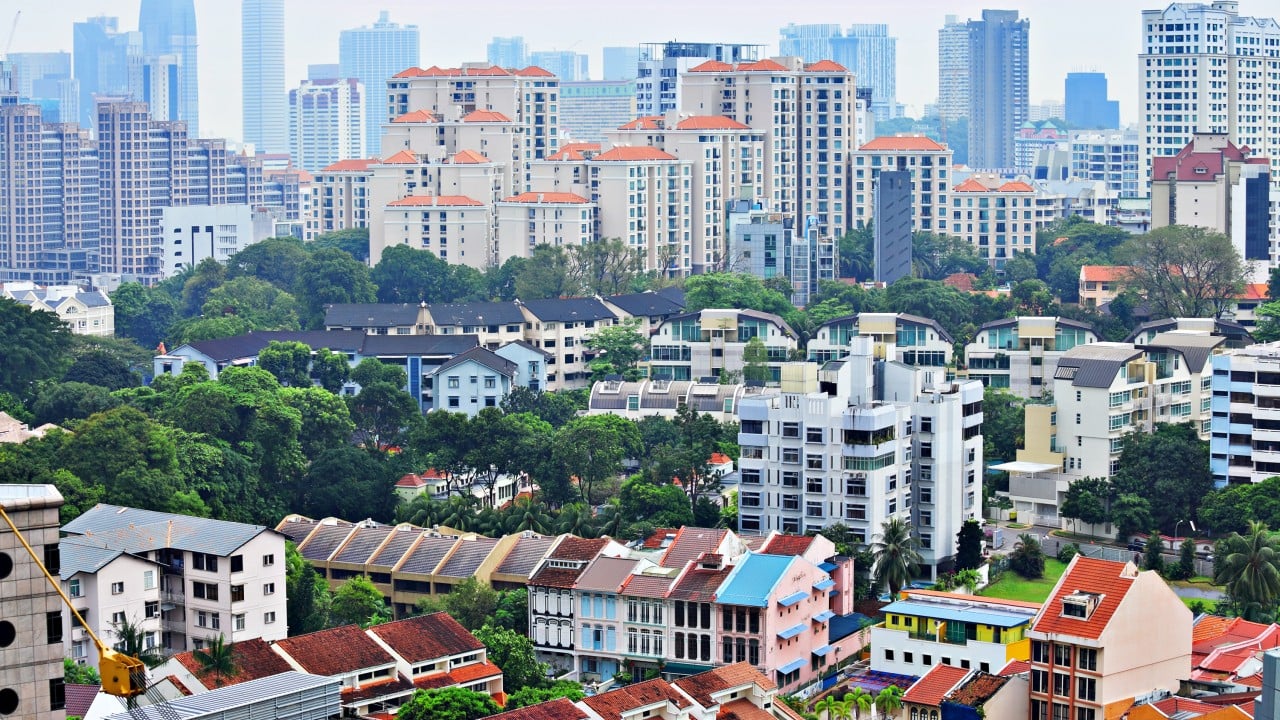
Let us look at the mechanics. The Singaporean government does not just regulate the market. It owns the land, builds the factories, manages the sovereign wealth fund, dictates population growth, shapes workforce skills through state-mandated training, and houses over eighty percent of its citizens in government-built towers through the Housing and Development Board.
The state acts as an enterprise. It treats the entire nation like a venture capital portfolio. When Singapore needed a manufacturing sector from scratch in the sixties, the Economic Development Board did not wait for venture capitalists to notice the island. They flew to multinational headquarters, offered tax holidays, built the infrastructure, and handed them turnkey facilities.
When the local housing market threatened to price out the working class, the state did not cross its fingers and hope for a supply correction. They reclaimed the land, seized private plots through eminent domain when necessary, and built concrete towers at scale. They decoupled shelter from speculative market forces.
Contrast that with the chaotic, hyper-financialized property market of the historical Hong Kong model, where a tiny cartel of developers controlled land auctions, driving housing costs to levels that crushed domestic consumption and sparked generational despair. The free market did not create a paradise of opportunity there. It created a billionaire playground surrounded by cage homes.
The orthodox playbook insists that state planning stifles innovation because bureaucrats lack the imagination of entrepreneurs. This is a nice talking point, but it fails the empirical test. Singapore routinely ranks near the top of global innovation indices, boasts world-class biotechnology hubs, dominates regional finance, and attracts the regional headquarters of every major multinational on earth.
Bureaucrats do not need to invent the next semiconductor design to enable it. They just need to build the electrical grid, fund the research universities, secure the water supply, and offer tax structures that incentivize long-term capital deployment over quarterly stock buybacks.
The real secret of Singaporean state capitalism is ruthless, technocratic pragmatism unburdened by ideological dogma. If a market works, use it. If a market fails, crush it with state power.
When the private rental market gouges citizens, the state builds public housing. When foreign labor threatens social cohesion, the state imposes strict quotas and levies. When strategic industries need scale, state-linked corporations step in to provide anchor capital.
The market is a tool, not a religion. Treating it like an infallible deity is how Western economies ended up with hollowed-out manufacturing sectors, crumbling infrastructure, and housing crises that span decades.
We have spent the last forty years pretending that government intervention is a cancer on economic vitality. We watched public infrastructure decay while financial engineering cannibalized real productivity. We treated deregulation as an absolute good, regardless of the systemic fallout.
It is time to drop the dogmatic illusions. Central planning does not fail because the state is involved. It fails when the state is incompetent, corrupt, and detached from global realities. When state direction is paired with meritocratic execution, fiscal discipline, and strategic foresight, it leaves unmanaged markets in the dust.
Stop worshipping the invisible hand. It is too busy picking your pocket.