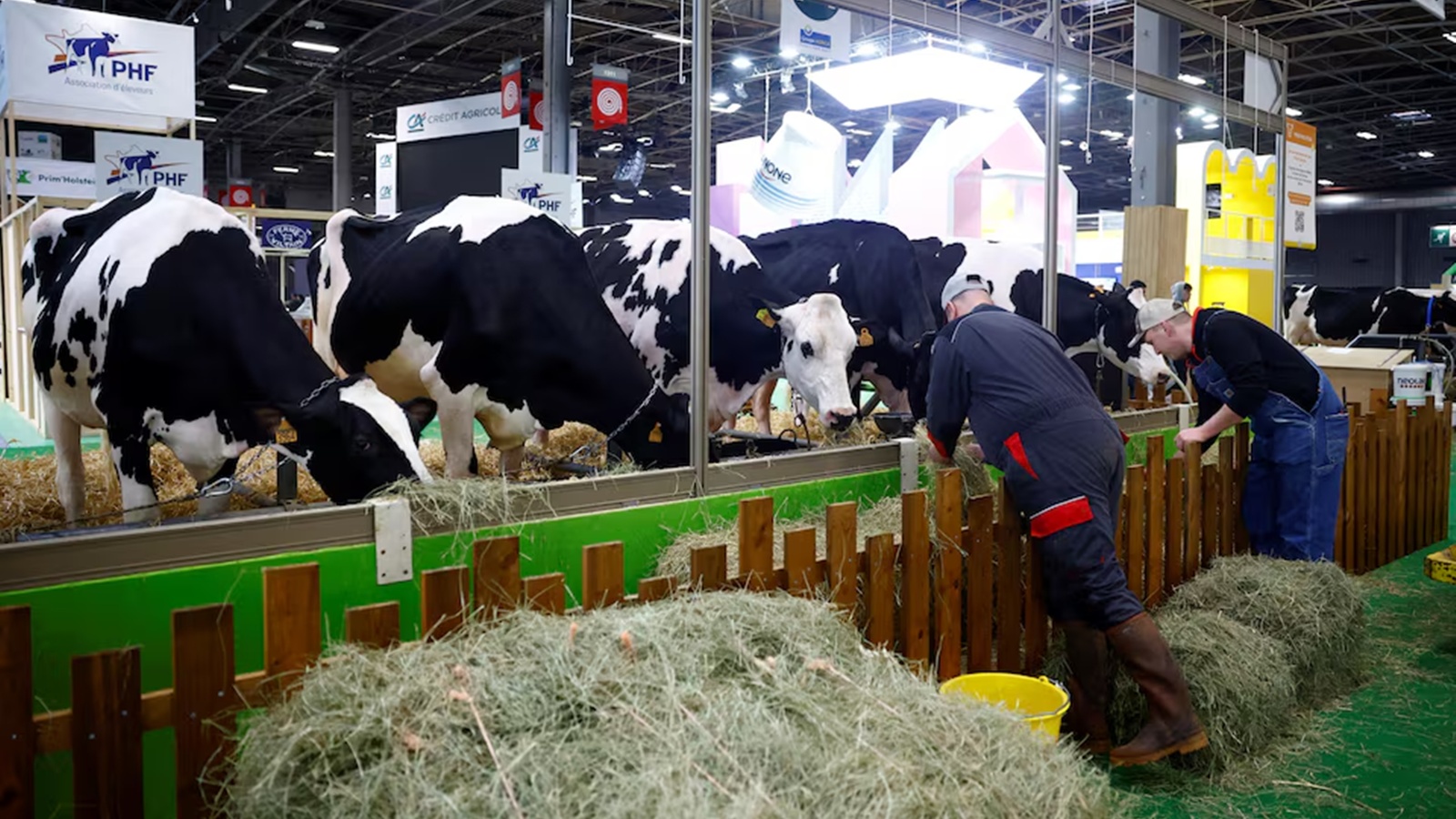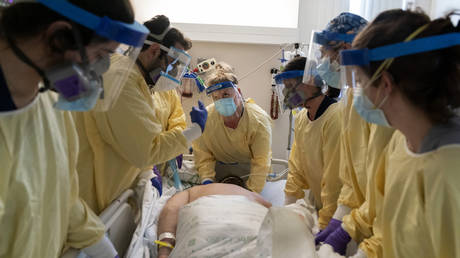
One person gets sick from a farm animal virus in France, and suddenly half the internet is ordering hazmat suits and shorting agricultural stocks. Relax. Put down the doomscroll.
A single confirmed human spillover of a livestock virus is a biological footnote, not an extinction event. Yet whenever a headline drops with words like first human victim and livestock virus, media outlets rush to spin the same predictable yarn. A novel pathogen jumps from an animal host to a human. Alarms ring. Experts warn of pandemic potential. Readers get told to watch the border, wash their hands, and brace for the worst.
That is the lazy consensus. And it is terrible epidemiological analysis.
I have spent years watching bio-risk teams, public health communicators, and corporate crisis rooms burn millions of dollars preparing for the wrong failure mode. They obsess over the spark and ignore the fuel. When a livestock virus infects a human in a place like France, the real story is rarely that spillover happened for the first time in recorded history. The real story is how rare sustained human-to-human transmission actually is, how heavily industrial agriculture shapes exposure, and why our surveillance systems are only now good enough to catch what used to slip past unnoticed.
Calling a single human case a "claim" by a virus treats a pathogen like a serial killer hunting down victims. Viruses do not have intent, strategy, or personal vendettas. They have replication rates, receptor binding affinities, and evolutionary trade-offs. Anthropomorphizing a livestock virus makes for great clickbait. It makes for awful science.
Spillover Is Not a Pandemic
Let’s get the terminology straight before another pundit confuses a dead-end infection with a global outbreak.
Zoonotic spillover happens when a pathogen moves from a vertebrate animal host to a human. Sustained human-to-human transmission happens when the virus adapts well enough to pass reliably from person to person without needing a fresh animal source every time.
Most zoonotic spillovers end at patient zero—or a tiny cluster of exposed workers—because the virus is poorly adapted to human airways, gut lining, or immune evasion machinery. A virus that thrives in cattle, sheep, pigs, or poultry often binds preferentially to receptors that are scarce or differently distributed in the human respiratory tract. Even when a human gets infected, the viral load may stay low, symptoms may look like ordinary flu or gastroenteritis, or the host's immune system may shut it down before onward spread ever gets going.
Think about that distinction. A spillover event proves biological possibility. A pandemic requires ecological and evolutionary alignment. Treating every first human case as proof of imminent mass spread is like seeing a single spark hit damp firewood and announcing the forest has burned down.
Public health institutions like the World Health Organization, the European Centre for Disease Prevention and Control, and the U.S. Centers for Disease Control and Prevention track spillover events for a reason: early detection matters when a pathogen has high virulence or pandemic potential. Monitoring is smart. Panicking over a single case without evidence of sustained transmission is theater.
The Surveillance Trap Behind "First Human Victim" Headlines
Whenever a headline declares a "first human victim" in a country with modern diagnostics like France, ask a blunt question: was it really the first time it ever happened, or is it the first time a lab had the assay, the sequencing depth, and the reporting pipeline to prove it?
Over the past two decades, molecular diagnostics have exploded in capability and reach. Reverse transcription-PCR panels, targeted metagenomics, and whole-genome sequencing allow reference laboratories to identify pathogens that previously would have been logged simply as "acute febrile illness of unknown origin" or "atypical pneumonia."
Imagine a scenario where a rural farm worker fifty years ago caught a mild or moderate infection from sick livestock during lambing or calving season. No multiplex panel existed for that animal virus. The local clinic treated the fever and fatigue symptomatically, the worker recovered or died without a specialized necropsy, and the medical record closed. Fast-forward to today: a hospital clinician orders broader testing, a reference lab flags a livestock pathogen, and global news wires turn a diagnostic milestone into a sensation.
Better surveillance is a triumph of modern medicine. It is also a massive source of perception distortion. When you turn on brighter floodlights in a dark barn, you see more mice. That does not automatically mean the barn suddenly became overrun overnight.
Why People Ask the Wrong Questions About Livestock Viruses
Scroll through the questions people type into search bars the moment a livestock virus hits the news, and you will see how skewed the framing is.
"How contagious is this livestock virus to humans?"
Wrong starting point. "Contagious" usually implies easy person-to-person spread, which is the exact hurdle most animal viruses fail to clear. The sharper questions are:
- Did transmission require close, prolonged contact with infected animals, bodily fluids, or contaminated farm environments?
- Is there any epidemiological link between the human case and secondary human cases with no animal exposure?
- Does the virus show genetic markers associated with mammalian adaptation, such as changes in polymerase activity or receptor binding preference?
If there is no onward spread among contacts despite real exposure, the headline contagion fear is premature.
"Should I avoid meat, dairy, or farm products from France?"
Let’s be brutally honest: knee-jerk food boycotts driven by spillover headlines usually miss how transmission actually happens. Most livestock-to-human transmissions occur via direct contact with sick animals, aerosols in barns or slaughterhouses, or contaminated surfaces—not a supermarket package sitting miles away. Furthermore, standard food safety controls, veterinary inspections, and proper cooking neutralize many pathogens.
If a specific foodborne risk exists, regulatory agencies issue targeted recalls or advisories based on actual evidence, not internet hysteria. Reacting before health authorities identify a food vehicle just punishes farmers and distorts supply chains for zero personal safety gain.
"Could this livestock virus mutate into the next pandemic?"
Technically, almost any RNA or DNA virus can mutate. That answer is a cop-out if you stop there. Mutation alone does not guarantee transmissibility, fitness, or immune escape; many mutations are neutral or actively harmful to the virus.
What actually determines pandemic risk is a brutal gauntlet of selection pressures. The virus has to replicate efficiently in human cells, exit efficiently (via coughs, sneezes, or shedding), survive long enough to reach a new host, and avoid getting wiped out immediately by existing immunity. Most animal viruses fail at least two or three steps of that gauntlet. Worrying about theoretical worst-case mutations is easy. Evaluating actual evolutionary barriers takes discipline.
Industrial Farming Changed the Math of Contact
If you want to understand why livestock viruses keep showing up on public health radars, stop looking for sci-fi super-viruses and look at modern animal production systems.
High-density livestock operations pack thousands of genetically similar animals into tight spaces. That creates ideal conditions for pathogens to circulate rapidly within herds or flocks. Add international animal movement, feed transport, seasonal labor, and close proximity between workers and animals, and the frequency of exposure goes up compared to small, isolated subsistence plots.
I have seen agritech and biosecurity teams pour massive budgets into futuristic prediction models while overlooking basic operational hygiene on the ground: inconsistent personal protective equipment use during high-risk tasks, poor ventilation in confinement units, delayed reporting of sick stock, and lack of routine occupational health screening for farm workers.
High exposure frequency does not automatically mean high pandemic risk. It does mean sporadic human cases will happen more often when a pathogen is circulating in animals. That is an occupational and veterinary management problem first, and a public health crisis only if we blow the response.
Where My Contrarian View Can Bite You
Let’s put cards on the table. Being the person who says "calm down, it's probably just a dead-end spillover" carries real risks if you get complacent.
First, rare does not mean harmless. Even a virus with near-zero human-to-human spread can cause severe disease, long-term complications, or death in the unlucky individual who catches it. Downplaying population-level pandemic risk should never mean brushing off clinical severity for the affected person or their family.
Second, early outliers sometimes precede inflection points. History is full of pathogens that looked quiet or localized right up until the moment ecological conditions shifted or a key adaptation emerged. If you treat every low-probability warning as noise, you will eventually miss the one signal that matters.
Third, public trust erodes fast when experts sound dismissive. If authorities or commentators tell the public "nothing to see here" and a cluster later materializes, credibility takes a hit that is hard to rebuild. Skepticism of hype is healthy; arrogance toward biology is fatal.
What Actually Works When a Livestock Spillover Hits the News
If you run a business with supply chain exposure, manage health communications, work in agriculture, or simply want to keep your head while everyone else loses theirs, skip the panic checklist and do this instead:
- Separate animal prevalence from human transmissibility. Check whether the outbreak is concentrated in livestock herds/flocks or showing chains of human-to-human transmission. Do not conflate veterinary outbreaks with human epidemics.
- Audit occupational exposure, not consumer panic. If you oversee agricultural operations, logistics, or field teams, focus on practical controls: proper PPE for handlers of sick or dead animals, handwashing and boot/equipment sanitation, sick-leave policies so symptomatic workers do not push through shifts, and fast veterinary reporting.
- Demand genomic and contact-tracing receipts. Ignore anonymous social media speculation and breathless cable segments. Look for updates from credible public health agencies detailing whether close contacts tested positive and whether viral sequences show human-adaptation signatures.
- Build flexible contingency plans instead of rigid fear. Keep supply chain options diversified and communication templates calm, factual, and updatable. Overreacting on day one locks you into embarrassing reversals on day three.
One human case of a livestock virus in France is a reminder to pay attention to animal health, occupational safety, and diagnostic rigor. It is not a cue to lose your mind. Watch the data, ignore the noise, and let the epidemiology do the talking.