A localized security incident at Calais-Fréthun station exposes the structural fragility of high-speed, cross-border rail networks where physical chokepoints, binational border controls, and rigid rolling-stock schedules intersect. When a bomb alert triggers an evacuation and security perimeter in northern France, the resulting disruption does not stay confined to a single terminal; it propagates backward into London St Pancras, Paris Gare du Nord, and Brussels-Midi through deterministic operational cascades. Understanding how a local threat paralyzes an international corridor requires stripping away surface-level incident reporting to examine the underlying architecture of the Channel Tunnel rail system.
Standard reporting on transit disruptions treats a security alert as an isolated delay event. That framing misses the mechanics of tightly coupled infrastructure. Cross-border high-speed rail operates with minimal slack capacity, strict regulatory handoffs between national police forces, and narrow recovery windows before overnight maintenance mandates shut down the tracks.
The Anatomy of a Chokepoint Disruption
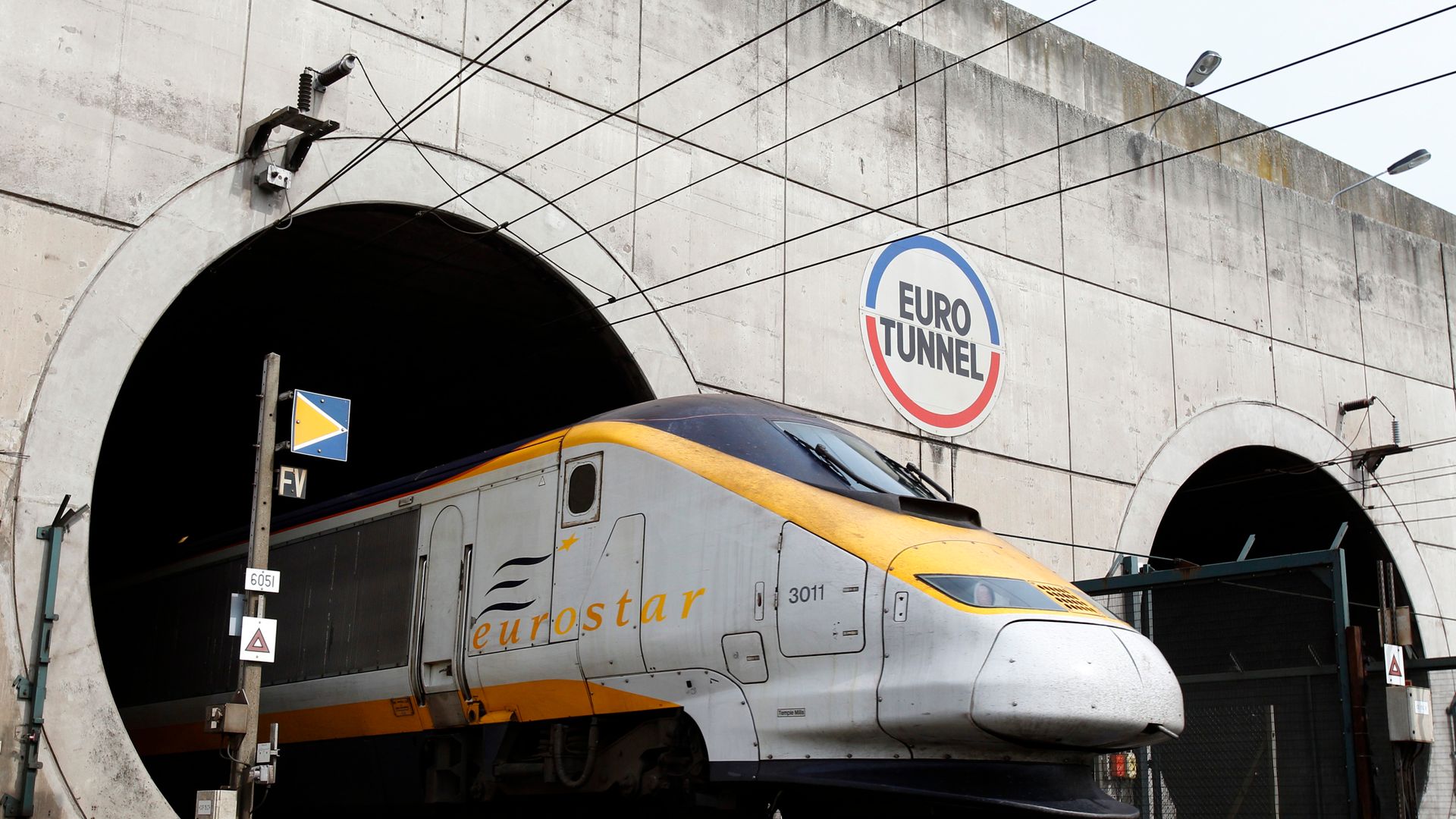
The Channel Tunnel rail corridor relies on a linear, non-redundant physical path between continental Europe and the United Kingdom. Unlike domestic highway networks or multi-hub aviation systems where traffic can be dynamically routed around a closed node, all Eurostar passenger services must pass through the tunnel portal near Calais. Calais-Fréthun sits immediately adjacent to this critical bottleneck.
When French authorities establish a security cordon around the station due to an unattended package or explicit threat, three operational mechanisms lock simultaneously:
- Physical Track Sterilization: Security protocols require halting rail traffic within a defined blast and investigation radius. Even if the threat is confined to a station concourse or parking structure, high-speed lines running directly through or adjacent to the terminal cannot safely accommodate trains moving at 300 kilometers per hour while bomb disposal units operate nearby.
- Border Control Paralysis: Because the United Kingdom sits outside the Schengen Area, Eurostar relies on juxtaposed border controls—French Police aux Frontières (PAF) and UK Border Force officers operating in each other's territories. Evacuating a station breaks the sterile security bubble required for pre-cleared international passengers. Every evacuated traveler must be re-screened through security and passport control once the perimeter lifts, creating a secondary processing bottleneck that outlasts the physical threat investigation.
- Rolling Stock Displacement: High-speed trainsets operate on tightly choreographed daily rotations. A train held in Kent or stranded on the approach to Calais misses its scheduled turnaround in Paris or Brussels. Because Eurostar utilizes specialized rolling stock engineered to meet strict Channel Tunnel fire-safety and signaling standards, operators cannot simply substitute domestic TGV or Thalys sets to cover missed departures.
The Cascading Failure Model
In systems engineering, tightly coupled networks experience rapid failure propagation when a single node drops offline. The disruption follows a predictable four-phase sequence that dictates both the duration of the outage and the severity of passenger displacement.
Phase 1: Immediate Containment and Line Hold
Upon receiving a bomb alert, station management and local law enforcement initiate an immediate evacuation of the terminal building and platforms. Simultaneously, rail traffic controllers issue emergency stop orders to trains approaching the sector. Trains already inside the Channel Tunnel proceed to exit portals under heightened monitoring, while inbound services from London, Paris, and Brussels are held at upstream stations or turned back at intermediate junctions. During this phase, operational uncertainty is at its peak; controllers cannot estimate reopening times because explosive ordnance disposal (EOD) teams operate independently of commercial rail schedules.
Phase 2: Queue Accumulation and Terminal Saturation
High-speed rail terminals in dense urban centers possess finite physical floor space. At London St Pancras International and Paris Gare du Nord, departure lounges are sized for steady-state throughput rather than multi-train holding patterns. Within sixty to ninety minutes of a track hold at Calais, departure halls reach maximum capacity. Station operators must then restrict entry to the terminal itself, pushing queues onto surrounding city streets. At this stage, the bottleneck shifts from the track infrastructure in northern France to crowd-management limits in capital cities hundreds of kilometers away.
Phase 3: Crew Duty-Time Expiration
Rail operations are governed by strict statutory limits on driver and train-manager working hours. While trains sit stationary waiting for security clearance in Calais, crew duty clocks continue to run. If a security sweep extends beyond two to three hours, crews scheduled to operate return legs time out legally. Even after EOD teams declare the station clear and tracks reopen, trains cannot move until replacement crews are deadheaded into position—a process complicated by congested regional rail networks and road traffic around the affected area.
Phase 4: The Overnight Maintenance Wall
The Channel Tunnel and its high-speed approach lines do not operate twenty-four hours a day. Fixed nightly maintenance windows are mandatory to inspect overhead catenary wires, track geometry, and tunnel ventilation systems. If a daytime security alert pushes delayed trains late into the evening, operators hit a hard curfew. Services that cannot clear the tunnel before the maintenance window opens must be canceled outright, converting temporary delays into multi-day displacement as stranded passengers compete for limited seat inventory on subsequent days.
Known Facts Versus Operational Hypotheses
Evaluating the systemic impact of a Calais security alert requires separating verified procedural realities from analytical assumptions regarding specific incident variables.
- Verified Structural Realities: Calais-Fréthun serves as both a regional TGV hub and an international Eurostar stop situated directly at the French mouth of the Channel Tunnel. Security alerts in France fall under the Vigipirate national security alert system, which mandates strict evacuation and perimeter protocols for unattended luggage or explicit threats. Furthermore, Channel Tunnel safety regulations strictly prohibit operating passenger trains through active security perimeters without formal clearance from national authorities.
- Analytical Hypotheses on Incident Escalation: When public reporting notes widespread Eurostar disruption following a Calais alert without specifying exact delay minutes or cancellation counts, the severity of the ripple effect depends on three unobserved variables: the time of day the alert occurs, the concurrent load factor of scheduled trains, and whether the threat affects the main high-speed bypass tracks or only the local station platforms. An alert occurring during peak commuter or holiday travel windows—when trains run at over 90 percent capacity—eliminates the operator's ability to re-accommodate displaced travelers on later departures, forcing multi-day recovery timelines. Conversely, an off-peak incident allows excess seat capacity later in the day to absorb stranded passengers once the perimeter clears.
The Economics of False Positives and Asymmetric Disruption
Security protocols at critical transit infrastructure operate under an asymmetric cost function. The cost of ignoring a genuine explosive threat—catastrophic loss of life, destruction of irreplaceable tunnel infrastructure, and multi-month economic severance between the UK and continental Europe—approaches infinity. Consequently, security protocols are calibrated for zero false negatives, which mathematically guarantees a higher rate of false positives.
This calibration creates an unavoidable vulnerability to both accidental disruptions (unattended tourist luggage) and low-cost asymmetric harassment (hoax calls). A single unattended suitcase or anonymous phone threat imposes near-zero cost on the originator while triggering millions of euros in systemic losses across rail operators, freight logistics, and passenger productivity.
The financial impact divides into three distinct buckets:
- Direct Carrier Liabilities: Under European rail passenger rights regulations, operators must provide assistance—meals, refreshments, and overnight hotel accommodation—during extended delays, alongside ticket refunds or re-routing. When thousands of passengers are stranded simultaneously in London, Paris, and Brussels, local hotel inventory spikes in price and rapidly sells out, driving carrier compliance costs sharply upward.
- Infrastructure Access Penalties: Rail operators pay track-access charges to infrastructure managers such as Getlink (operator of the Channel Tunnel) and SNCF Réseau. Unplanned cancellations disrupt slot allocations, triggering complex contractual adjustments and lost revenue from unutilized tunnel capacity.
- Downstream Supply Chain Friction: While passenger trains capture media headlines, the Channel Tunnel also carries high-value time-sensitive freight via LeShuttle Freight. When a security perimeter near Calais halts rail traffic, just-in-time manufacturing supply chains and perishable goods moving between continental Europe and Britain experience immediate inventory delays.
Why Standard Mitigation Strategies Fail
Transit planners frequently propose redundancy and dynamic rerouting as solutions to network fragility. In the specific context of the Calais-Channel Tunnel corridor, standard mitigation tools encounter hard physical and regulatory walls.
The Myth of Seamless Rerouting
In domestic rail networks, a blocked station can often be bypassed using parallel regional lines. No parallel rail route exists across the English Channel. The only physical alternatives are cross-Channel ferries operating out of the Port of Calais and Dunkirk, or short-haul aviation between London and continental hubs. Neither alternative possesses the surge capacity to absorb several thousand displaced rail passengers on short notice. Ferry terminals require separate vehicle and passenger check-in workflows, while short-haul airlines operate with high baseline load factors and strict airport security cutoffs.
The Limits of Pre-Positioning Rolling Stock
Maintaining spare high-speed trainsets on standby at both ends of the tunnel appears logical on paper but fails economically. Specialized Channel Tunnel-compliant trains represent massive capital expenditures. Leaving multi-million-euro assets idle in sidings to hedge against unpredictable security alerts destroys fleet utilization metrics and increases ticket prices for everyday travelers. Operators therefore run lean fleet schedules that maximize asset utilization during normal operations at the exact expense of resilience during acute shocks.
Juxtaposed Border Rigidity
Because border checks occur prior to boarding, passengers cannot simply be bused across the Channel via ferry or road tunnel without undergoing entirely new immigration and customs processing at port facilities. Border enforcement agencies staff terminals based on scheduled passenger manifests; they cannot instantly redeploy officers from a closed train station to a ferry port without creating severe staffing deficits and further security bottlenecks.
Strategic Mandate for Operators and Travelers
Eliminating security alerts at major transit hubs is impossible without dismantling public access to rail networks. Resilience therefore depends on compressing recovery time once a perimeter is established and decoupling passenger processing from track clearance.
For rail operators and infrastructure managers, the primary strategic lever is modular terminal segmentation. Designing station concourses with isolated, blast-rated security zones allows authorities to evacuate and sweep a compromised sector without breaking the sterile border-control bubble for passengers already cleared in adjacent wings. Implementing rapid-deployment mobile border-processing units at secondary transfer hubs further prevents total system lockup when a primary node goes offline.
For corporate travel managers and high-frequency travelers relying on cross-border rail, routing strategies must account for structural single-point failure risk. When traveling on critical, non-negotiable timelines between London and continental Europe, booking early-morning departures provides a vital operational buffer: morning trains benefit from fresh crew clocks, clear overnight track inspections, and maximum remaining daytime recovery capacity if an alert strikes. Conversely, booking the final departures of the evening exposes travelers to the overnight maintenance wall, where a minor security delay at Calais converts directly into a mandatory overnight cancellation.