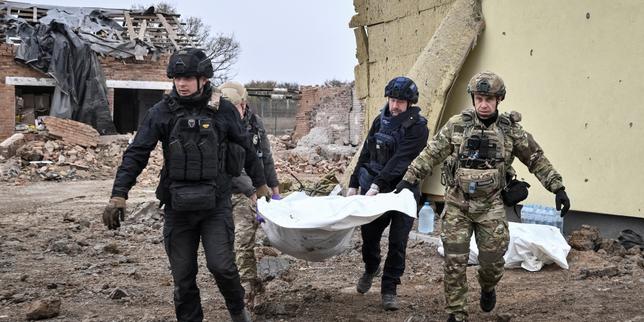
The kettle does not care about ballistic trajectories.
At 3:14 in the morning in a third-floor apartment in Kharkiv, the water hits a rolling boil just as the air raid siren begins its low, mechanical wail. Consider a hypothetical resident—let us call her Olena, though she is a composite of thousands of real people living across eastern and central Ukraine. She does not run to the corridor anymore. She does not grab the pre-packed emergency bag sitting by the front door, its straps dusty from months of disuse. Instead, she pours the boiling water over instant coffee, watches the dark granules dissolve, and counts the seconds between the whine of the incoming Shahed drone and the thud of air defense interceptors shaking the windowpanes.
Silence. Then a detonation three blocks away that rattles the spoon inside her ceramic mug.
We read the headlines over morning coffee of our own, safe behind screens thousands of miles away. "Russia intensifies strikes against civilian targets in Ukraine." Six words. Cold, clinical, stripped of dust and plaster. Newsrooms file these dispatches daily, tallying apartment blocks sheared in half, electrical substations reduced to twisted copper, and casualty figures updated in neat, incremental rows. When violence becomes a daily statistical feed, the human mind builds a callous to survive it. We start seeing coordinates instead of kitchens, infrastructure instead of the elderly man trapped on the seventh floor when the elevator dies.
But the real story is not found in the tonnage of explosives dropped this month. It lives in the deliberate, methodical dismantling of ordinary life.
The Architecture of Exhaustion
To understand why these strikes have shifted in intensity and character, you have to look at what a modern drone and missile campaign actually targets when it aims at a city. It is rarely just concrete. It is sleep. It is predictability. It is the fragile psychological contract that tells a human being that if they lock their front door at night, they will wake up in the same room.
Since the full-scale invasion began in February 2022, military analysts and United Nations monitoring missions have documented tens of thousands of verified attacks affecting civilian infrastructure across Ukraine. Hospitals, schools, thermal power plants, grain silos, and residential high-rises have absorbed repeated waves of cruise missiles, ballistic rockets, and Iranian-designed loitering munitions. According to the UN Human Rights Monitoring Mission in Ukraine, civilian casualties surged markedly during periods of intensified long-range bombardment, with explosive weapons used in populated areas accounting for the vast majority of deaths and injuries.
Think of a city not as a collection of buildings, but as a circulatory system. Power grids are the arteries; water pumping stations are the veins; residential neighborhoods are the tissue kept alive by both. When Russian forces launch coordinated swarms of drones followed minutes later by high-speed ballistic missiles, they are performing a calculated strike against that anatomy. First come the slower, buzzing drones to exhaust Ukrainian air defense interceptors and force radar operators to reveal their positions. Then come the ballistic missiles—Iskander-M or Kinzhal variants traveling at hypersonic speeds—giving residents less than three minutes from the first alert to find shelter.
Three minutes is barely enough time to put on shoes. It is nowhere near enough time to carry a disabled parent down six flights of concrete stairs in the pitch dark because the power grid was hit two hours earlier.
I remember standing inside a bombed-out school gymnasium in central Ukraine months after a strike, looking at a single child's sneaker wedged beneath a collapsed concrete beam. The air still smelled faintly of wet ash and pulverized drywall—a sharp, chalky odor that coats the back of your throat and refuses to leave for days. There were no artillery batteries parked in that courtyard. No ammunition depots hidden under the bleachers. Just parquet flooring scarred by shrapnel and blue paint peeling off walls where multiplication tables still hung crookedly from single nails.
You stand in a room like that and realize how absurdly thin the wall is between civilization and rubble. One second, a space holds noise, chalk dust, and lunchboxes; the next, it is an archaeological site.
Why Civilian Targets Become Primary Objectives
Readers often ask a straightforward question when confronted with news of escalating strikes on apartment complexes and power stations: what military advantage does bombing a bakery or a transformer yard actually achieve?
The answer lies in a grim doctrine of attrition that treats civilian morale as a center of gravity. When frontline advances stall into bloody, meter-by-meter trench warfare across the Donbas, long-range bombardment becomes a tool to project pressure deep behind the lines. The logic is brutally simple. If you cannot break the army at the front, you try to break the society sustaining it from behind.
Consider what happens when a thermal power plant is destroyed in late autumn or winter. Without electricity, electric water pumps fail within hours. Without water circulation, central heating pipes freeze and burst inside apartment walls. Without heat, hospitals must rely on diesel generators whose fuel supply chains are themselves targeted on highways and rail junctions. A single strike on an electrical substation ripples outward into every aspect of survival—spoiling insulin in refrigerators, halting municipal transit, forcing schools back into underground metro stations, and draining billions of dollars from an economy that desperately needs every hryvnia for frontline defense.
There is also a darker tactical evolution documented by international observers and emergency responders on the ground: the "double-tap" strike. Emergency crews from Ukraine's State Emergency Service rush into a burning apartment block minutes after an initial missile impact to pull survivors from the concrete slabs. Fifteen or twenty minutes later, a second missile strikes the exact same coordinates. Paramedics, firefighters, and neighbors digging with bare hands become the second wave of casualties.
I admit that writing about this brings a specific kind of helplessness. Words start feeling terribly inadequate when stacked against the physics of high explosives. You want to find a clean analytical framework, some geopolitical chess move that explains the cruelty in neat strategic terms, because admitting that terror itself is the tactical objective feels deeply unsettling. Yet the evidence leaves little room for euphemism. Under international humanitarian law—specifically the Geneva Conventions—attacks directed against civilians or civilian objects, as well as indiscriminate attacks that fail to distinguish between military targets and residential areas, constitute war crimes.
The Arithmetic of Air Defense
Every night across Ukraine, an invisible, high-stakes math problem plays out in the dark sky above cities like Kyiv, Odesa, Dnipro, and Zaporizhzhia.
Imagine trying to catch a swarm of hornets in a pitch-black room while someone throws stones at your head. That is roughly what Ukrainian air defense crews face during a mass combined assault. Russia has steadily scaled up its domestic production of long-range attack drones, launching dozens—and occasionally over a hundred—in a single night, often mixed with decoys made of plywood and foam designed to mimic the radar signature of live warheads.
Each decoy forces a agonizing calculation. Do you fire a Western-supplied interceptor missile costing hundreds of thousands—or even millions—of dollars at a target that might be carrying fifty kilograms of high explosive, or nothing at all? If you hold your fire to conserve scarce ammunition, that dot on the radar screen might dive straight into a pediatric ward or a crowded apartment building. If you fire, you deplete a magazine that may take months to replenish.
Mobile air defense teams—often just three or four soldiers mounted in the back of a pickup truck with a heavy machine gun, a thermal sight, and a spotlight—race along dark country roads trying to intercept drones before they reach urban limits. Their work is raw, loud, and exhausting. They track the distinct lawnmower buzz of approaching engines through freezing rain and fog, firing tracer rounds into the night sky while knowing that any drone they miss will detonate over sleeping families five kilometers down the road.
When air defense supplies tighten, the math turns lethal immediately. Interception rates drop by ten or fifteen percent, and that statistical dip translates directly into shattered glass across city blocks the next morning.
Life Inside the Pause Between Sirens
What outsider accounts rarely capture is the strange, stubborn normalcy people construct inside the gaps between attacks.
Walk down a street in Kyiv or Kharkiv at noon on a Tuesday after a heavy night of bombardment. Municipal workers in bright orange vests are already sweeping shattered window glass into neat piles along the curb. Plywood boards are being nailed over blown-out café storefronts before lunch service begins. Inside, the espresso machine hisses, baristas steam milk, and people sit at small tables checking damage reports on their phones while talking about grocery prices or whether their kid's soccer practice will be moved indoors.
This is not denial. It is defiance rendered in mundane routines.
Return to our hypothetical resident, Olena, as morning light finally breaks over Kharkiv. Outside her window, black smoke rises slowly from an industrial warehouse two miles away, staining the pale gray sky. Her coffee has gone cold on the counter. Her phone buzzes with messages from family members across the country—short, coded check-ins that have become the universal greeting of Ukrainian life: "How are you?" "Plus. Alive. Coffee is hot."
She steps onto her balcony to check the glass. One pane has a hairline crack running diagonally from the corner, vibrating faintly as a tram rumbles past on the street below. Tomorrow she will tape it with wide packing tape in an X-pattern, the universal badge of urban survival across the country, meant to keep glass from turning into flying daggers the next time a shockwave hits.
Then she picks up her keys, locks the front door, and walks down the stairs to catch the bus to work.
Three floors below, the emergency bag remains sitting by the entryway, untouched, while a thin layer of plaster dust from the ceiling settles quietly across its canvas straps.