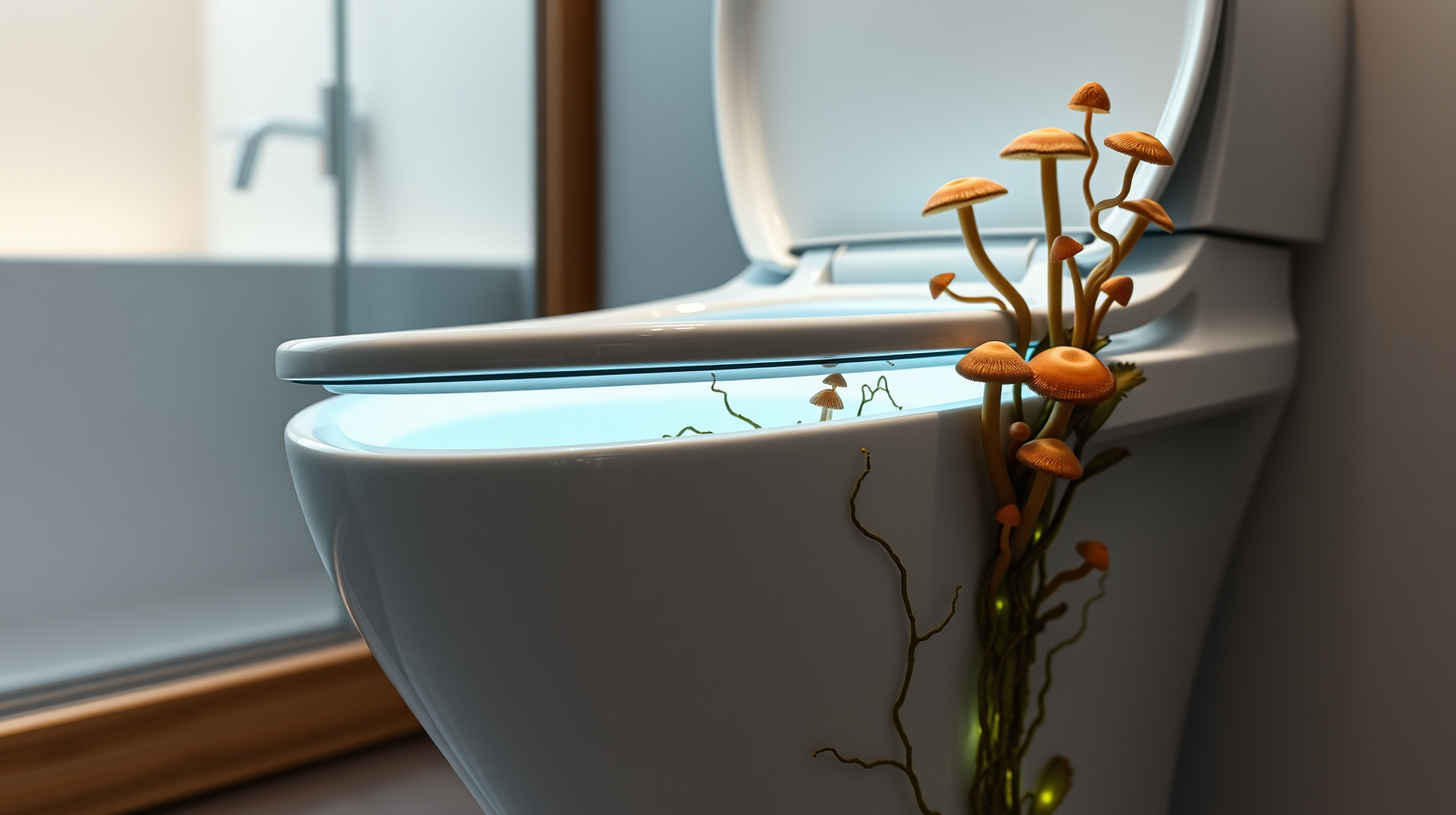
The tech press is currently swooning over the "MycoToilet," a student-led project out of the University of British Columbia. It is being heralded as the world’s first mushroom-powered, waterless toilet capable of turning human waste into clean, usable compost in just six weeks.
It sounds beautiful. It sounds elegant. It is also a biochemical fantasy that ignores basic thermodynamics and public health realities. Don't forget to check out our earlier coverage on this related article.
I have spent over a decade auditing decentralized sanitation systems and sustainable infrastructure projects. I have watched municipal pilots blow millions of dollars on "magical" ecological quick-fixes, only to quietly rip them out two years later when the reality of maintenance, pathogens, and scale hits the fan.
The MycoToilet is the latest iteration of this cycle: a feel-good design project masquerading as a scalable infrastructure solution. If you want more about the context here, Wired provides an informative breakdown.
The Six Week Lie: Why True Mycoremediation Takes Time
The headline hook for this project is the six-week timeline. To anyone who has ever managed a commercial composting facility or maintained a standard humanure system, that number should immediately trigger alarm bells.
Standard thermophilic composting of human waste requires a sustained temperature of 55°C to 60°C for several weeks just to ensure the destruction of persistent pathogens like Ascaris (roundworm) eggs. Fungi, specifically the white-rot species (Pleurotus ostreatus) typically used in these mycoremediation concepts, do not thrive at these blistering temperatures. They prefer a mellow ambient range of 20°C to 30°C.
Here is the mechanical conflict the creators are glossing over:
- If you let the pile get hot enough to kill the pathogens that cause cholera, dysentery, and parasitic infections, you bake and kill the mushroom mycelium.
- If you keep the pile cool enough for the mycelium to weave its beautiful matrix and break down lignin, you are left with a block of fungal mass that is still riddled with viable human pathogens.
To claim you get safe, agricultural-grade compost in 42 days via fungal digestion alone is a dangerous conflation of volume reduction and sanitization. The mushrooms might chew through the carbon matrix and make the waste disappear visually, but a visually clean block of mycelium is not safe fertilizer. It is a biological hazard wrapped in a pretty white jacket.
The Nitrogen Nightmare Nobody is Talking About
Let’s look at the actual chemistry of human waste. Human feces and urine are incredibly high in nitrogen. Mycelium, on the other hand, requires a high carbon-to-nitrogen (C:N) ratio to thrive—typically around 30:1 or even 50:1.
Imagine a scenario where an average adult uses this waterless system daily. The input is a highly concentrated, wet, low-carbon sludge. To keep the mushrooms from suffocating and dying from ammonia toxicity, you need to add massive amounts of dry, carbon-rich bulking agents like sawdust or wood chips after every single use.
This introduces a massive logistical failure point. A truly sustainable toilet cannot require a secondary supply chain of bulk timber byproducts just to keep its biological engine from choking. If you fail to add the exact requisite volume of carbon, the system defaults to an anaerobic mess. The mushrooms die, the stench becomes unbearable, and you are left with a traditional, poorly managed outhouse.
Decentralized Infrastructure is a Maintenance Trap
People love the idea of a self-contained, waterless grid. They hate the reality of maintaining it.
The "lazy consensus" among eco-designers is that if you make a product look sleek and appeal to environmental guilt, consumers will happily alter their behavior to accommodate it. They won't. I have reviewed data from decentralized sanitation trials across North America where composting toilets were installed in parks and off-grid cabins. The failure rate is staggering, not because the biology failed, but because human beings are lazy.
A mushroom-powered toilet isn't a "set-and-forget" appliance like a standard flush toilet connected to a municipal sewer system. It is a living, breathing pet. It requires:
- Precise moisture monitoring (too wet and the mycelial network drowns; too dry and it goes dormant).
- Strict temperature regulation.
- The manual handling of partially processed human waste at the end of the six-week cycle.
Who is going to handle that material? The average suburban homeowner is not going to pull a block of mushroom-grown humanure out of their bathroom fixture and spread it on their tomato patch. And they shouldn't—because as established, the pathogen load hasn't been rigorously vetted under real-world, variable operating conditions.
Dismantling the "People Also Ask" Premise
Whenever these projects hit the viral news circuit, the questions always follow a predictable, flawed pattern. Let's address them with brutal honesty.
Can waterless toilets replace municipal sewage systems?
No. Municipal sewage networks exist for a reason: density. A city like New York or London cannot function on decentralized, dry-composting systems. The sheer volume of carbon material required to balance the human waste output of a single high-rise building would require fleets of trucks importing sawdust daily and exporting giant blocks of fungal waste. It creates a larger carbon footprint than the water-treatment plant it seeks to replace.
Is mushroom compost made from human waste safe for vegetables?
Absolutely not without secondary, long-term thermophilic processing or multi-year curing phases. Do not let slick industrial design convince you that a six-week-old fungal block is safe to touch, let alone use to grow your food. The risk of heavy metal bioaccumulation and persistent viral strains is incredibly high in short-cycle systems.
The Actionable Alternative: Fix the Grid, Stop Inventing Gadgets
If we actually care about the environmental impact of human waste, we need to stop wasting intellectual capital on boutique bathroom fixtures for wealthy eco-minimalists. We need to invest in the unglamorous, heavy-duty engineering that actually moves the needle.
Instead of trying to put a mushroom farm in every bathroom, the focus must shift to centralized source-separation infrastructure.
Systems that separate blackwater (toilet waste) from greywater (sinks and showers) at the neighborhood level allow us to extract energy via anaerobic digestion while treating smaller volumes of water more efficiently. Cities like Hamburg, Germany, have already piloted blackwater separation systems that generate heat and electricity directly from municipal waste without asking citizens to act as amateur mycologists.
Stop falling for the aesthetic of sustainability. The MycoToilet is a fantastic university science experiment, but as a viable product to disrupt global sanitation, it is dead on arrival.
The next time you see an article praising a magic six-week ecological cure-all, look past the beautiful rendering of the wooden stall and ask for the pathogen count and the carbon logistics data. That is where the fantasy dissolves.