Sixteen Ecuadoran fishermen have filed a federal lawsuit against the United States government, alleging they were subjected to unlawful detention, abuse, and property destruction during a maritime interdiction operation in international waters. The complaint targets the legal architecture behind American counter-narcotics patrols in the Eastern Pacific, where U.S. Coast Guard and Navy vessels operate under bilateral agreements that routinely bypass standard due process. By demanding accountability in a U.S. courtroom, these plaintiffs are challenging the sovereign immunity shield that has protected American maritime enforcement from foreign scrutiny for decades.
You do not survive thirty years covering maritime law and federal enforcement without noticing a pattern. Every few years, a story washes ashore from the Eastern Pacific that makes Washington uncomfortable. A boat goes out from Manta or Esmeraldas. An American cutter or a Navy destroyer spots it on radar. Hours or days later, the vessel is sunk, the catch is ruined, and the crew is either flown to a federal holding cell in Florida or dumped back at an Ecuadoran port without a single charge filed against them. Usually, the story ends there. Poor fishermen from coastal South America do not hire Washington litigators. This time, sixteen of them did.
The Anatomy of a Maritime Interdiction
To understand what happens when an American warship stops a foreign fishing boat hundreds of miles off the coast, you have to understand the Maritime Drug Law Enforcement Act (MDLEA). Enacted in 1986 at the height of the cocaine boom, this statute gives the U.S. Coast Guard sweeping authority to board, search, and seize foreign vessels in international waters if the flag state consents or waives objection. On paper, it is a tool to stop narco-traffickers before they reach Central America or Mexico. In practice, it functions as a floating dragnet with almost no immediate judicial oversight.
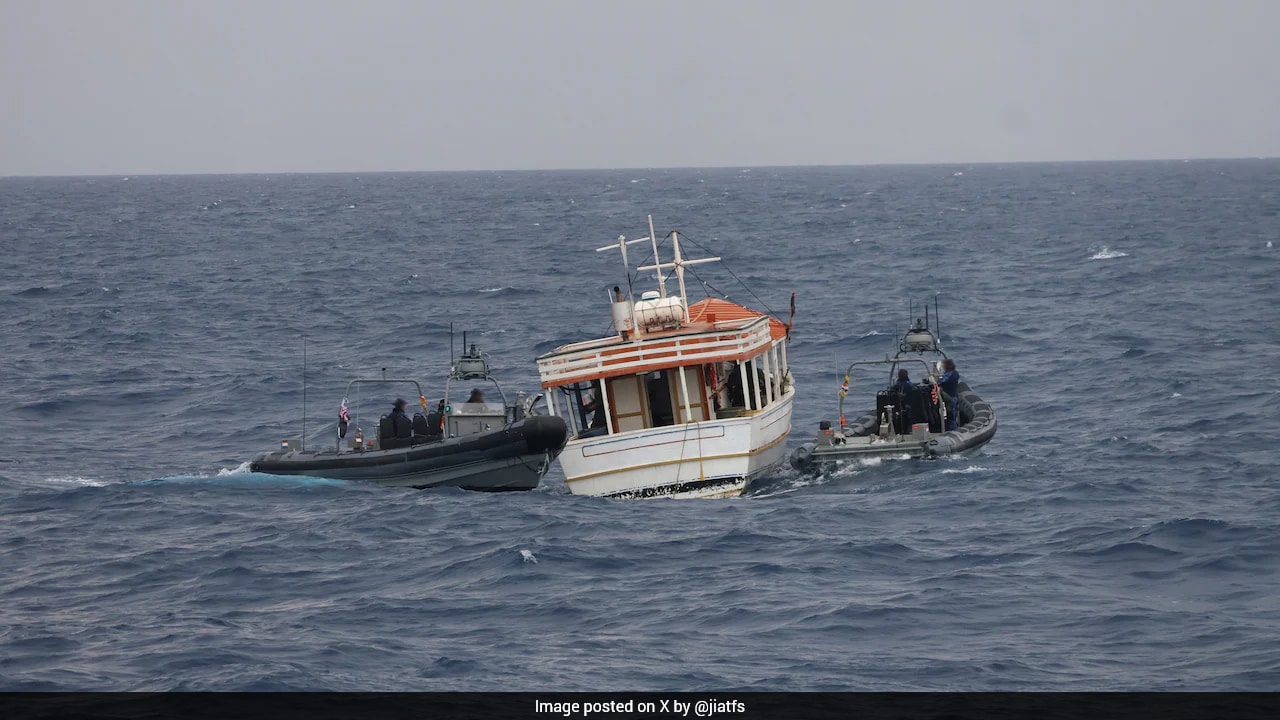
When a U.S. patrol spots a vessel suspected of smuggling—often because the boat is riding low in the water, carrying extra fuel drums, or operating in a known transit corridor—it initiates a right-of-visit boarding. Coast Guard Law Enforcement Detachments (LEDETs), frequently deployed aboard U.S. Navy ships, launch rigid-hull inflatable boats to intercept the target. If the crew claims Ecuadoran nationality, Washington contacts Quito under the terms of their bilateral maritime interdiction agreement. Once Ecuadoran authorities confirm or waive jurisdiction, the vessel becomes subject to American enforcement protocols.
That is where the disconnect between policy and reality becomes brutal. Artisanal fishermen in Ecuador routinely travel hundreds of miles offshore in small fiberglass pangas equipped with outboard motors and extra barrels of gasoline to chase tuna and mahi-mahi. To an aerial surveillance drone or a naval radar operator, a panga loaded with fuel drums and blue tarps looks identical to a go-fast smuggling boat.
What Happens When No Drugs Are Found
In a standard domestic traffic stop, if a police officer searches your car and finds nothing, you drive away. At sea, under current U.S. interdiction procedures, innocence does not guarantee a safe trip home. When boarding teams suspect contraband is hidden inside the hull or beneath false decks, they use destructive testing methods—drilling into fiberglass, tearing up floorboards, and confiscating communications equipment for forensic analysis.
If the search turns up zero narcotics, the operational reality becomes grim. A vessel with holes drilled in its hull cannot safely navigate four hundred miles back to port. In many documented instances across the Eastern Pacific, U.S. forces have declared unseaworthy vessels a "hazard to navigation" and sunk them using gunfire or explosive charges, leaving the fishermen stranded aboard the cutter for days or weeks while diplomatic channels sort out their repatriation. During that time, these men are held on the weather decks of military vessels, often exposed to the elements, shackled to cables, and given minimal information about their legal status.
The lawsuit filed by the sixteen Ecuadoran fishermen strikes directly at this gray zone. When the U.S. government detains foreign nationals at sea, destroys their livelihood, and eventually releases them without criminal charges, who pays for the boat? Under traditional interpretations of sovereign immunity and the Federal Tort Claims Act (FTCA), claims arising in a foreign country or involving military combatant activities are barred. Government lawyers routinely argue that maritime interdictions fall outside the reach of civil damages, leaving innocent mariners with destroyed vessels, crushing debt to local boat owners, and zero legal recourse.
The Bilateral Trap Between Quito and Washington
Why does the Ecuadoran government allow its citizens to be treated this way? Follow the leverage. Ecuador sits wedged between Colombia and Peru, the two largest coca-producing nations on earth. Over the past decade, transnational criminal organizations and Mexican cartels have turned Ecuadoran ports like Guayaquil and Manta into primary export hubs for cocaine bound for North America and Europe. Facing escalating domestic violence and institutional strain, Quito has leaned heavily on U.S. security assistance, intelligence sharing, and naval patrols.
In 2023, Ecuador and the United States signed expanded maritime security agreements allowing American military personnel, vessels, and aircraft to operate with unprecedented latitude in Ecuadoran waters and airspace. For Quito, the trade-off is straightforward: Washington provides the hardware, the surveillance satellites, and the naval muscle to disrupt cartel supply chains, and in exchange, Ecuador waives sovereign objections when its flag vessels are stopped on the high seas.
The collateral damage of this arrangement falls squarely on coastal communities. In towns like Jaramijó and Santa Rosa, fishing is not a corporate enterprise; it is a survival economy built on informal credit. A fisherman borrows money from a local financier to buy fuel, ice, bait, and provisions for a two-week trip. If the boat is sunk by a U.S. cutter after a fruitless search, the fisherman does not just lose his catch. He comes home indebted to lenders who do not accept diplomatic waivers as payment.
Inside the Legal Strategy Challenging Sovereign Immunity
The plaintiffs' attorneys are not just asking for money; they are attempting to crack open a constitutional and statutory fortress. Historically, courts have deferred to the executive branch on matters involving high-seas interdictions, treating them as extensions of foreign policy and national security. To get past a motion to dismiss, the legal team representing the sixteen fishermen has to navigate several formidable barriers:
- The Suits in Admiralty Act (SIAA) and Public Vessels Act (PVA): Unlike the Federal Tort Claims Act, which explicitly excludes claims arising abroad, maritime statutes allow private parties to sue the United States for damages caused by public vessels in international waters—provided the plaintiffs can establish negligence or unlawful conduct rather than protected discretionary policy decisions.
- The Discretionary Function Exception: This is the government's favorite shield. Federal lawyers will argue that decisions regarding how to board a vessel, how aggressively to search for hidden contraband, and whether to sink an unseaworthy boat involve judgment calls grounded in national security policy, making them immune from judicial second-guessing.
- Constitutional Protections Extraterritorially: Courts have long debated whether the Fourth and Fifth Amendments protect non-citizens outside U.S. territory. While criminal defendants prosecuted in federal court under the MDLEA have occasionally challenged the length of their at-sea detention under the Due Process Clause, civil plaintiffs seeking damages for abusive treatment and property destruction face a much steeper climb.
- Reciprocity Requirements: Under the Public Vessels Act, a foreign national can only sue the U.S. government if their home country allows American citizens to bring similar lawsuits in its own courts. Establishing legal reciprocity between Ecuador and the United States will be an early procedural battleground.
If the federal court allows these claims to survive initial motions to dismiss, the discovery phase alone could expose internal Coast Guard and Navy rules of engagement that have never been examined in open court.
The Human Cost of Zero-Tolerance Metrics
In Washington, counter-narcotics operations are measured in metric tons seized and vessels disrupted. Those numbers justify annual budget requests to Congress for new cutters, maritime patrol aircraft, and Joint Interagency Task Force South (JIATF-South) operations out of Key West. Nobody tracks the number of innocent fishermen left bankrupt by false positives.
Consider a hypothetical scenario based on standard operating procedures documented in federal court records. A four-man crew leaves port with 800 gallons of fuel and four tons of ice, aiming for fishing grounds 350 miles southwest of the Galápagos. Three days out, a maritime patrol aircraft flags their radar signature. A Navy destroyer intercepts them at dusk. Armed boarding officers climb aboard, order the crew to the bow, and spend twelve hours tearing apart the fish hold with crowbars and power drills. They find two tons of yellowfin tuna and zero kilograms of cocaine. Because the seawater pumps were damaged during the search and the hull is compromised, the boarding officer declares the boat unsafe. The crew watches from the deck of the warship as their vessel is riddled with rounds and sinks beneath the waves. They spend the next eighteen days handcuffed to a bench on the fantail, eating rations, before being transferred to an Ecuadoran coast guard boat with a piece of paper stating no contraband was found.
That is not an aberration. Variations of this exact sequence have surfaced repeatedly in criminal defense filings in the Southern District of Florida, where federal public defenders noticed that their clients—the ones who actually had drugs on board—were routinely held at sea for weeks in inhumane conditions before ever seeing a magistrate judge. The difference now is that the men bringing the suit were never charged with a crime because they never committed one.
Why Previous Oversight Failed
Congress has held periodic hearings on Coast Guard interdiction practices, and the Government Accountability Office (GAO) has examined maritime drug enforcement metrics. Yet operational habits at sea rarely change unless forced by judicial intervention or diplomatic crisis.
Part of the problem lies in jurisdiction. Because these incidents occur hundreds of miles from land, there are no independent witnesses, no body-camera footage released to the public, and no local police reports. The only official record of what happened during a boarding is written by the officers who conducted it. When a vessel is sunk at sea, the primary physical evidence—the boat itself—sits on the ocean floor, making it nearly impossible for a fisherman to prove his vessel was seaworthy before the boarding team arrived.
Furthermore, international human rights bodies have limited enforcement power over U.S. naval operations. While organizations like the Inter-American Commission on Human Rights can issue reports criticizing arbitrary detention at sea, they cannot compel the U.S. Treasury to compensate a fisherman in Manta for a lost Yamaha outboard engine. Only a U.S. federal court holds that power, which is precisely why this lawsuit represents a critical inflection point.
The Counter-Argument From Maritime Enforcement
To look at this fairly, you have to acknowledge the operational nightmare facing Coast Guard boarding teams in the Eastern Pacific. Smuggling networks are ruthless, adaptable, and heavily financed. Cartels routinely recruit impoverished fishermen—sometimes through cash payments, sometimes by threatening their families—to act as maritime mules. Smugglers build low-profile vessels (LPVs) designed to sit barely inches above the waterline, paint them ocean blue to evade visual detection, and hide cocaine inside fuel tanks, engine blocks, and double-hulled fiberglass compartments reinforced with lead shielding to defeat density meters.
Boarding officers stepping onto an unfamiliar boat in six-foot swells at midnight do not know if they are dealing with desperate fishermen or armed cartel operatives. They know that if they miss a hidden compartment, ton-quantities of cocaine will hit North American streets, fueling overdose deaths and cartel violence across the hemisphere. From the perspective of maritime commanders, aggressive searches and the scuttling of unseaworthy hulls are standard safety and enforcement protocols, not punitive measures.
Yet recognizing the difficulty of the mission does not erase the legal or moral obligation to clean up after a mistake. In domestic law enforcement, when a SWAT team kicks down the wrong door and destroys a family's home, municipalities frequently face lawsuits or statutory compensation claims. On the high seas, the U.S. government has operated under the assumption that geographic distance equals legal impunity.
What This Case Means for Future High-Seas Operations
If the sixteen Ecuadoran fishermen succeed in pushing their case past early procedural hurdles, the ripple effects will extend far beyond one lawsuit. A ruling that holds the United States financially liable for property destruction and prolonged detention of innocent foreign mariners would force the Department of Homeland Security and the Department of Defense to rethink how they conduct interdictions.
It could compel the Coast Guard to adopt stricter evidentiary standards before scuttling a vessel, establish formal administrative claims processes to reimburse innocent boat owners, or limit the duration that uncharged detainees can be held aboard military ships. More broadly, it puts Washington's bilateral security partners on notice. If foreign governments see that their citizens can successfully challenge U.S. maritime overreach in American courts, political pressure in capitals like Quito, Bogotá, and San José to renegotiate boarding agreements will intensify.
For decades, the vast expanse of the Eastern Pacific served as a legal black hole where geopolitical priorities outweighed individual rights, and where the people who paid the price had neither the money nor the voice to fight back. Sixteen fishermen just hired lawyers to drag that entire system into the light of a federal courtroom.