The coffee in the paper cup on Terminal 2's sticky laminate table had gone cold ten hours ago.
Mark checked his watch for the fourth time in a minute. The glowing blue digits refused to change their story. Flight MU582 was still pulsing a dull, mocking red against the airport's central departure board: Delayed. Around him, thousands of travelers slumped against backpacks, sprawled across molded plastic chairs, or paced corridors that hummed with the low, anxious vibration of a massive transit hub slowly grinding to a halt.
Outside the floor-to-ceiling glass windows, the air over the tarmac had taken on an unnatural, bruised purple hue. The wind didn't arrive with a dramatic howl. It started as a restless whisper, rattling the heavy metal seals of the terminal doors, before swelling into a heavy, kinetic pressure that made the entire building feel less like architecture and more like a ship bracing for a wave.
Typhoon Dolphin was coming. And Shanghai, a city of twenty-six million souls built on the flat, vulnerable delta of the Yangtze River, was directly in its sights.
We rarely respect the atmosphere until it demands our obedience. Modern travel promises permanence—a rigid grid of schedules, metal tubes that cross continents in hours, and the arrogant assumption that human will can override geography. But nature remains remarkably unimpressed by our itineraries. When a storm of this magnitude gathers over the western Pacific, it treats human convenience with total indifference.
Consider what happens next on a global scale. A single grounded wide-body aircraft in Shanghai doesn't just inconvenience the three hundred people sitting in Gate 42. It cascades outward like a shattered mirror. Crew rotations shatter. Connections in Frankfurt, Los Angeles, and Tokyo miss their windows. Cargo holds filled with perishable electronics, medical supplies, and urgent mail sit baking under storm-battered tarps.
Back in the terminal, Mark watched a tired mother try to explain to a crying four-year-old why they couldn't board the airplane yet. The child didn't care about barometric pressure, wind speeds sustained at over one hundred miles per hour, or the emergency directives issued by municipal aviation authorities. The child just wanted to go home.
That is the hidden cost of meteorological violence. We tally the economic damage in billions of dollars, and we count the grounded flights in neat little statistical rows on evening news broadcasts. But the true ledger is written in disrupted lives, missed weddings, stranded business owners, and the quiet, crushing fatigue of waiting in a room full of strangers while the sky falls.
Meteorologists had tracked Dolphin days in advance, watching the swirl of warm ocean water feed an insatiable engine of destruction. As the eye of the typhoon edged closer to the Chinese coast, local authorities did not hesitate. The memories of past storms—lessons paid for in human suffering—enforced a swift, uncompromising protocol. Ports closed. High-speed rail lines reduced speeds or halted operations altogether. Airlines preemptively canceled hundreds of flights out of Shanghai's Pudong and Hongqiao international airports long before the first heavy sheets of rain began to hammer the concrete.
This is the paradox of modern safety measures. When they work perfectly, they look like an overreaction.
If you stood inside Pudong Airport hours before the storm made landfall, the atmosphere was defined by an eerie, disciplined calm. Security personnel directed crowds with quiet authority. Ground crews rushed to secure loose equipment on the tarmac, anchoring service vehicles and tying down mobile stairs before the gusts turned them into airborne missiles.
Yet beneath that calm, tension pooled in the stomach of every traveler.
I remember standing in a similar storm years ago, watching the horizon vanish behind a curtain of slate-gray rain so dense it swallowed entire runways. There is a profound humbling that occurs in those moments. You realize how thin the veneer of our daily routines actually is. We spend our lives building complex infrastructures designed to conquer distance, only to be reminded by a spinning vortex of wind and water that we are entirely at the mercy of the elements.
As the afternoon bled into a premature, ink-black evening, the first real fury of Typhoon Dolphin struck the coastline.
The wind hit the terminal windows with the force of a physical blow, a concussive thud that made the glass ripple. Inside, the lights flickered once, twice, before the backup generators hummed to life, casting a pale, antiseptic glow over the thousands of displaced passengers. Announcements echoed through the PA system in Mandarin and English, polite, firm, and entirely definitive. No departures. No arrivals. The city outside was locking its doors.
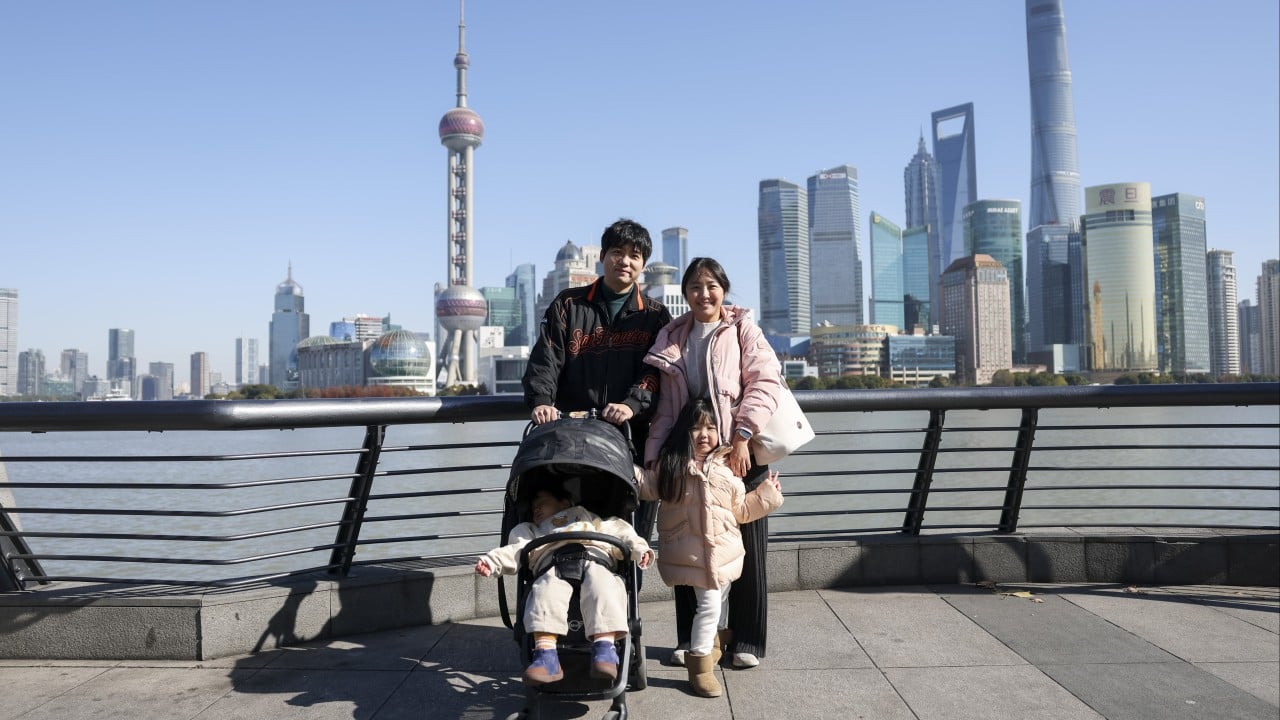
Shanghai is a metropolis defined by motion. Its financial districts pulse with relentless energy; its elevated highways are eternal rivers of red and white taillights. To see this city paralyzed is to witness a giant holding its breath.
Mark finally gave up on his coffee, tossing the cardboard cup into an overflowing bin. He slid to the floor, leaning his back against a concrete pillar, and opened a battered paperback book. He wasn't going anywhere tonight. None of them were.
Around him, the airport transformed into a strange, communal encampment. People shared snacks, traded stories of missed connections, and charged dying smartphones from the few available wall outlets like scavengers protecting precious resources. In the face of disruption, human connection stitched itself together out of shared exhaustion.
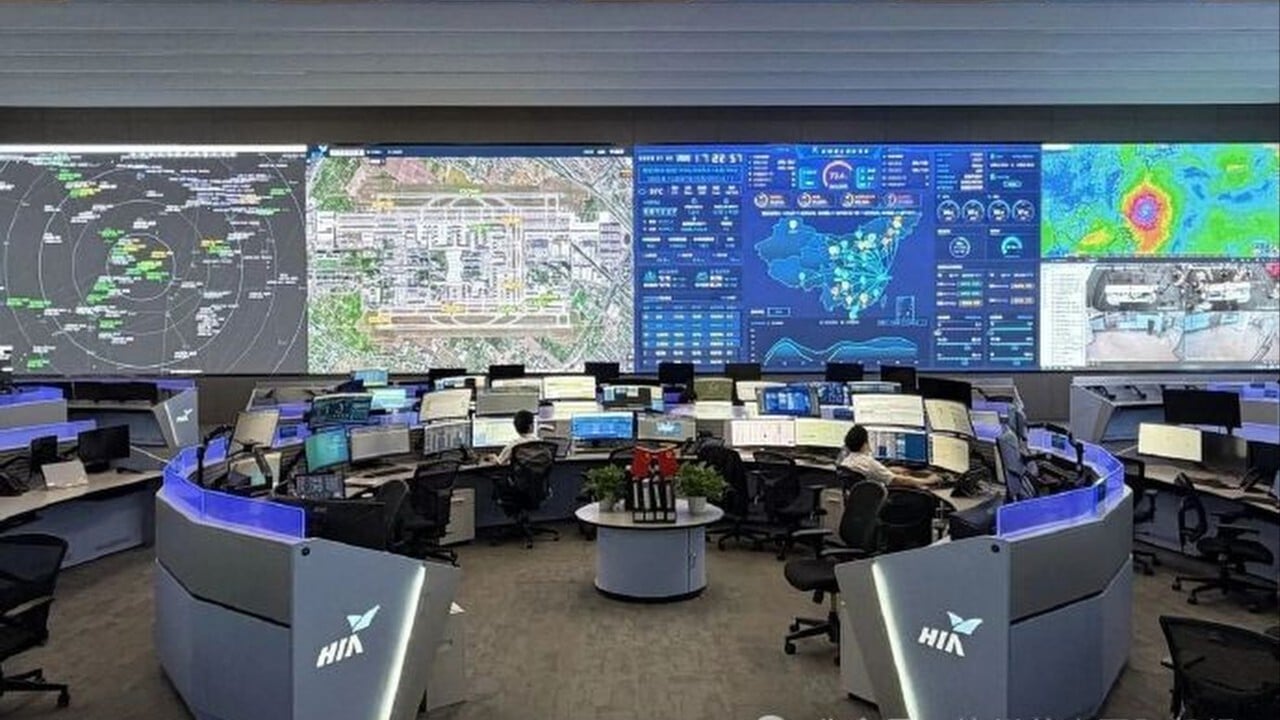
The storm would eventually pass. The winds would drop, the purple skies would clear to a sharp, washed-blue morning, and the massive machinery of global aviation would sputter back to life. Maintenance crews would inspect the runways, air traffic controllers would reset the board, and the endless migration of people and commerce would resume.
Until then, the runway lights cut through the blinding rain, flashing red into an empty night, waiting for the world to start moving again.