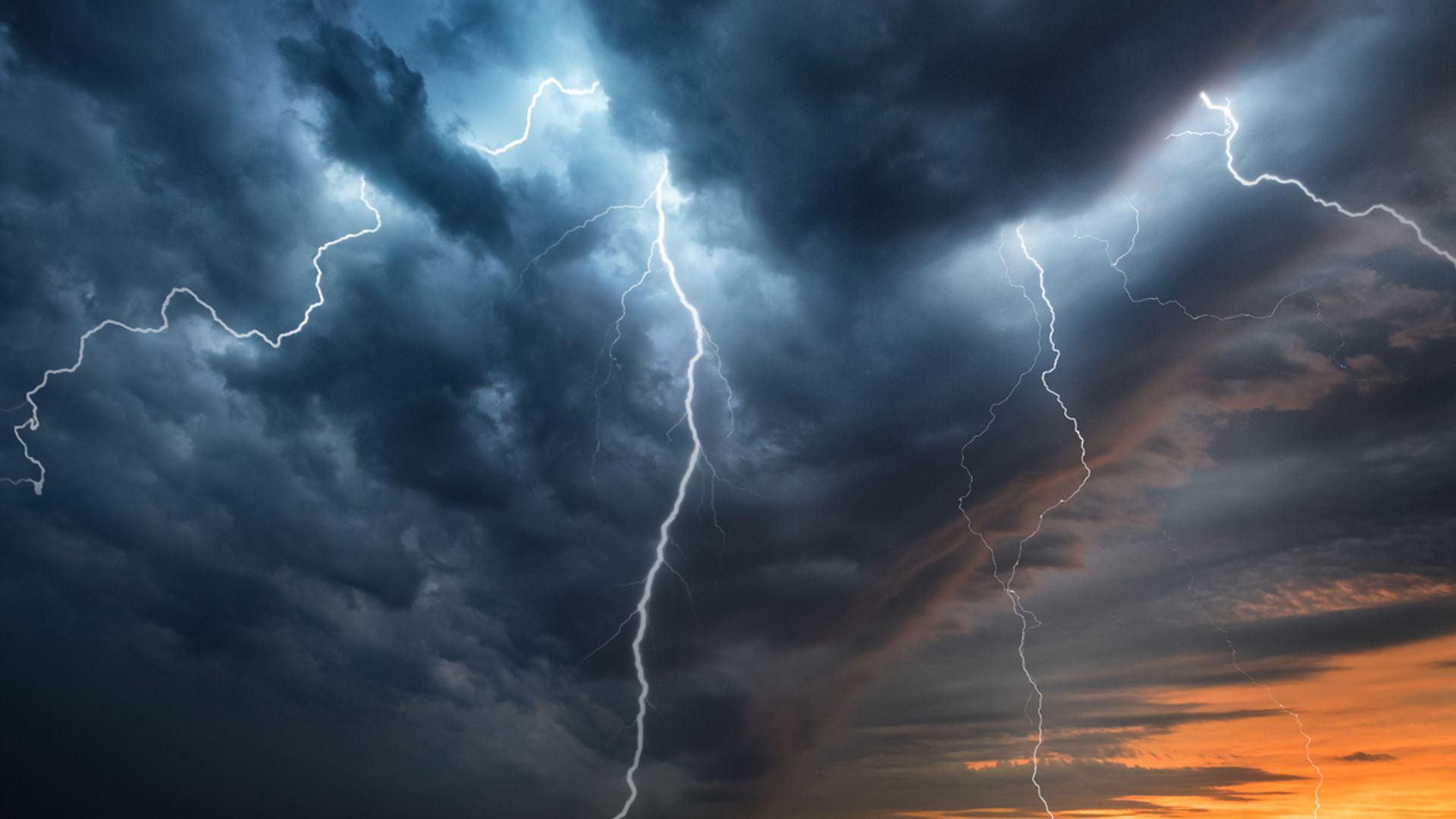
The air changes first. It is not something you see on a radar screen or read in a push notification, though the meteorologists at the Met Office are already scrambling to update their maps. It is a weight. A sudden, suffocating humidity that settles over the brickwork of suburban terraces and the dry, cracked soil of midland pastures.
You feel it in the small of your back. The afternoon sun, previously a welcome companion for a walk through the valley or a quiet pint in a beer garden, suddenly feels malicious. The breeze dies completely. Leaves hang limp from the oak trees, perfectly still, as if the natural world has agreed to a collective moment of silence.
Then comes the yellow warning.
To a casual observer clicking through a news feed, a yellow thunderstorm warning is just a splash of amber paint across a map of England and Wales. It looks like data. It reads like bureaucracy. The text warns of torrential downpours, sudden flooding, and the occasional lightning strike. But data does not capture the true nature of what is brewing.
A storm warning is not just a weather event. It is a disruption of human lives.
The Invisible Crucible
Consider a hypothetical commuter named Sarah. She is sitting in a stalled train carriage just outside of Birmingham, watching the sky turn the color of a bruised plum. Her phone battery is at twelve percent. She was supposed to pick up her daughter from nursery forty minutes ago. For Sarah, the Met Office warning is not a scientific abstraction. It is a ticking clock. It is the sudden, blinding sheet of water that hits the glass with the force of thrown gravel, wiping out visibility in a single second.
This is where the dry statistics of weather reporting fail us. A standard report tells you that up to thirty millimeters of rain could fall in less than an hour. It might mention that some areas could see sixty millimeters over the course of an afternoon.
What it omits is the physics of a flash flood.
When a summer heatwave bakes the British landscape, the ground hardens into something resembling concrete. The soil seals itself shut. When a month’s worth of rain drops from the sky in sixty minutes, the ground cannot drink it. The water has nowhere to go but sideways. It rushes down asphalt driveways, overflows Victorian gutters that were never designed for the climate of the twenty-first century, and pools into lethal, opaque lakes at the bottom of railway dips and underpasses.
We treat these warnings with a sort of casual indifference born of living in a temperate maritime climate. We joke about the British summer. We complain about the humidity. But the atmosphere does not understand irony.
The Engine in the Clouds
To understand why the sky is suddenly throwing down fire and water, you have to look at the ground beneath your feet. For days, the sun has been beating down, heating the earth. This warm air, heavy with moisture evaporated from the surrounding seas, begins to rise. It acts like a hot air balloon, pushing upward into the colder layers of the upper atmosphere.
Meteorologists call this convective activity. Think of it as a massive, invisible elevator lifting millions of tons of water vapor miles into the sky. As this warm, moist air collides with the freezing air above, it condenses rapidly. The clouds do not grow outward; they explode upward, bubbling into towering cumulonimbus formations that resemble cosmic cauldrons.
Inside these giant structures, a violent chaotic dance takes place.
Ice crystals traveling upward on fierce drafts collide with heavier, falling slush. This friction strips electrons away, creating a massive electrical imbalance between the top of the cloud, the bottom of the cloud, and the earth below. The tension builds. The air, which is normally an excellent insulator, can no longer contain the stress.
The result is a discharge of energy that momentarily reaches temperatures hotter than the surface of the sun.
When you hear the crackle of thunder dragging itself across the sky, you are not hearing a sound wave born of clouds bumping together. You are hearing the literal explosion of air being ripped apart and collapsing back in on itself as a bolt of lightning tears through the atmosphere at ninety thousand miles per second.
The Cost of the Complication
The immediate danger of a thunderstorm is obvious. We see the dramatic footage of cars submerged to their windows on flooded high streets. We read about the occasional roof split open by a direct lightning strike. Yet, the secondary ripples of these events are often far more insidious.
The power grid is remarkably fragile when confronted with atmospheric violence. A single strike on a substation can plunge thousands of homes into darkness within a millisecond. In a world dependent on digital infrastructure, that means more than just flickering candles. It means frozen medical equipment, failed water pumps, and paralyzed transit networks.
Then there is the hazard of the roads.
Driving through a summer downpour is entirely different from navigating a persistent winter drizzle. The first twenty minutes of a thunderstorm are the most treacherous. The rain mixes with the months of oil, grease, and rubber dust that have accumulated on the dry roads during the hot spell. This creates an invisible, slick film that turns tarmac into an ice rink.
Brake pads lose their grip. Tires lose contact with the road entirely, riding on a thin cushion of water in a phenomenon known as aquaplaning. The steering wheel goes light in your hands. You are no longer driving; you are piloting a two-ton sled with absolutely no control over where it stops.
The Anatomy of Precaution
Living through these shifts in the climate requires a change in perspective. We have grown accustomed to believing that our infrastructure can shield us from the whims of the natural world. We assume the trains will always run, the taps will always flow, and the roof will always hold.
A yellow warning is a gentle reminder from the universe that our control is largely an illusion.
Preparing for these events is not an exercise in panic; it is an exercise in mindfulness. It means clearing the dead leaves from the drain outside your front door before the sky turns black. It means checking on an elderly neighbor whose basement flat sits at the bottom of a sloping hill. It means having the humility to pull over to the side of the road when the wipers can no longer keep up with the deluge, rather than pushing through out of sheer stubbornness.
The storm will pass. It always does.
Within a few hours, the air will clear, washed clean by the violence of the afternoon. The suffocating humidity will break, replaced by that sharp, earthly smell of wet soil and ozone that the Greeks called petrichor. The sun will peek back through the retreating purple clouds, casting long, dramatic shadows across a landscape that looks largely the same but has been subtly, irrevocably altered.
But until that moment arrives, the sky remains heavy. The warning stands. The clouds continue their slow, deliberate march across the hills of Wales and the plains of England, carrying a billion gallons of water and a million volts of electricity, waiting for the precise moment to let it all go.


