The coffee in Plauru used to taste like quiet mornings and the damp silt of the Danube. Now, it tastes like metallic dust and the sharp, electric tang of ozone.
Costel doesn’t look at the sky anymore. He listens to it. He is a man who knows the precise difference between the rhythmic chug of a fishing boat and the high-pitched, mosquito-like whine of a Shahed drone. One is the sound of his livelihood. The other is the sound of a foreign war deciding that his backyard is no longer his own.
Plauru is a tiny Romanian village, a cluster of houses clinging to the edge of the European Union. Across the water, less than a few hundred meters away, lies the Ukrainian port of Izmail. For decades, the river was a bridge of commerce and shared history. Today, it is a front line that doesn’t officially exist.
The Geography of a Near Miss
When the drones fall, they don’t always hit the grain silos in Izmail. Sometimes, they lose their way. They veer south. They scream over the reeds and the willow trees, crossing into NATO airspace with a casual, mechanical indifference to international law.
Consider the physics of a stray munition. A drone launched from hundreds of miles away doesn't recognize a treaty. It doesn't see the invisible line in the water where Romania begins. To the machine, it is all just coordinates. To the people living in the Danube Delta, it is a game of Russian roulette where they never asked for a seat at the table.
Last autumn, the metal rain began in earnest. Fragments of charred Russian drones were found embedded in the Romanian soil. These weren't just abstract reports on a nightly news broadcast in Bucharest; these were smoking holes in the ground where cows graze.
The fear here isn't loud. It is a low-frequency hum. It’s the way a mother clutches her child’s hand a little tighter when she hears a distant "thud" at three in the morning. It’s the way the village elders stop talking when a Romanian F-16 tears through the clouds above, a roar that shakes the windowpanes and reminds everyone that they are protected—and yet, deeply vulnerable.
The Shadow of Article 5
There is a phrase that politicians in Brussels and Washington love to use: "Every inch of NATO territory." It is meant to sound like a shield. It is meant to evoke a wall of steel that no enemy would dare breach.
But when you are standing in a cornfield in Tulcea County, looking at a crater, "every inch" feels like a very small space.
The geopolitical stakes are staggering. If a stray drone kills a Romanian citizen, does the world go to war? Does a village of 200 people become the spark for a global conflagration? This is the paradox of the borderlands. The alliance is built on the idea of collective defense, but the reality is a messy, gray-zone existence where "accidental" incursions are met with diplomatic protests rather than retaliatory strikes.
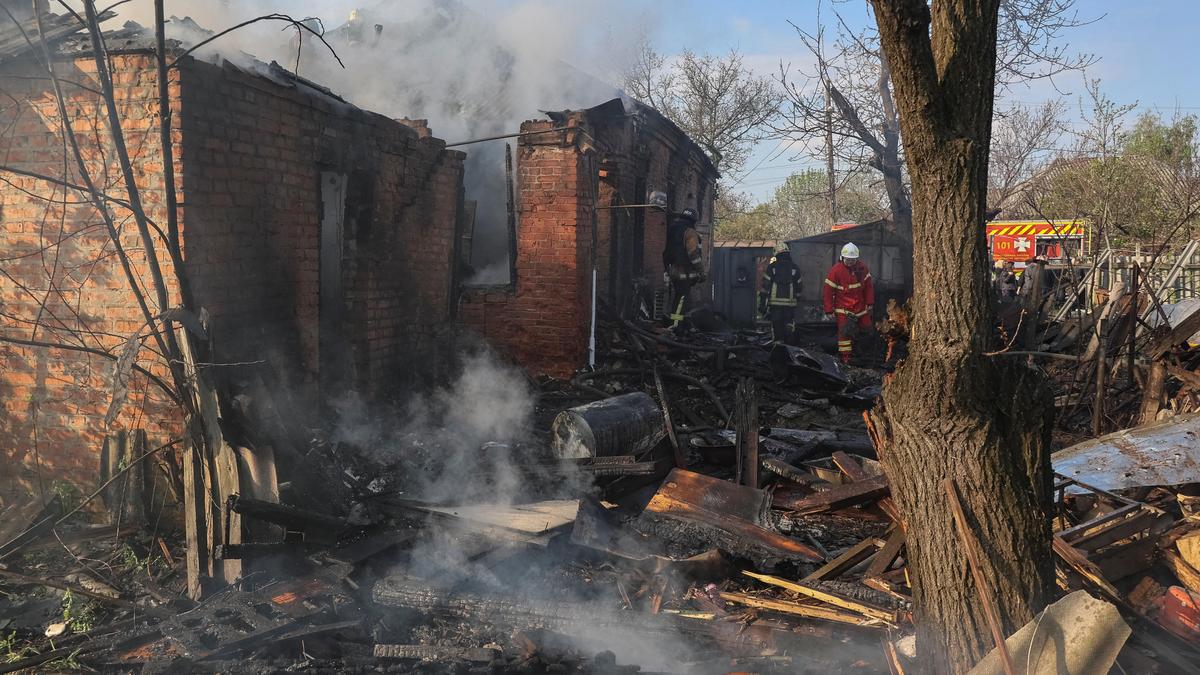
The Romanian government has built air-raid shelters in these border villages. They are concrete boxes, cold and smelling of damp earth. Imagine leaving your warm bed in the middle of the night to sit in a bunker because a port across the river is being incinerated. You aren't a combatant. You aren't even in the country at war. You are just a neighbor catching the sparks from a burning house.
The Economic Silence
It isn't just the threat of fire. It’s the death of the river’s soul. The Danube Delta is a UNESCO World Heritage site, a place where the water used to be thick with sturgeon and the air filled with the cries of pelicans. Now, the tourism industry is a ghost.
Travelers who once sought the isolation of the wetlands are stayed away by the headlines. They see the maps. They see the proximity. The guesthouses sit empty, their brightly painted shutters fading in the sun.
"Who wants to watch birds when they might see a missile?" a local boatman asks. He doesn't expect an answer. He just gestures to his empty vessel, bobbing rhythmically against the dock. The loss of income is a slow-motion disaster, a quiet erosion of a community that has survived centuries of empires and borders, but finds itself struggling to survive a war of attrition happening in its peripheral vision.
The Architecture of Anxiety
Living on the edge of NATO means living with a split personality. On one hand, there is the reassurance of the most powerful military alliance in history. There are the radar installations, the joint exercises, and the high-tech surveillance systems that hum quietly in the hills.
On the other hand, there is the raw, primal reality of being a human being in the path of a kinetic conflict.
The "invisible stakes" are the psychological ones. It is the trauma of proximity. When the night sky lights up over Izmail, the reflection dances on the Romanian side of the river. The fire is real. The heat is almost palpable. The sound of the explosions isn't a vibration on a screen; it is a physical blow to the chest.
This is the hidden cost of the war in Ukraine. It is the destabilization of peace for those who aren't even fighting. It is the way a peaceful landscape is transformed into a "theater of operations" in the minds of its inhabitants.
The Long Watch
The Romanian authorities have increased patrols. They have deployed more anti-drone systems. They speak of "strategic patience" and "proportionality." These are necessary terms for diplomats, but they offer little comfort to a farmer who finds a jagged piece of scorched aluminum in his wheat field.
We often think of borders as solid things—walls, fences, checkpoints. But in the age of long-range drones and electronic warfare, a border is a porous, flickering thing. It is a suggestion.
The people of Plauru, Ceatalchioi, and Chilia Veche are the involuntary sentinels of the West. They are the ones who verify the reality of the conflict every single day, not through intelligence briefings, but through the evidence of their own eyes. They watch the plumes of smoke rise across the water. They listen for the whine in the night.
They are the living proof that in a globalized world, there is no such thing as a "local" war. When the house next door is on fire, you don't just see the flames. You breathe the smoke.
As the sun sets over the Delta, the orange light catches the ripples of the Danube. It looks peaceful. It looks like the kind of place where time stands still. But then, a low rumble starts on the horizon. It might be thunder. It might be a storm coming in from the Black Sea.
Or it might be the mosquito whine again.
Costel stands on his porch, a shadow against the fading light. He doesn't go inside. He waits, looking toward the north, a man standing on the very edge of a promise, wondering if the sky will stay where it belongs.