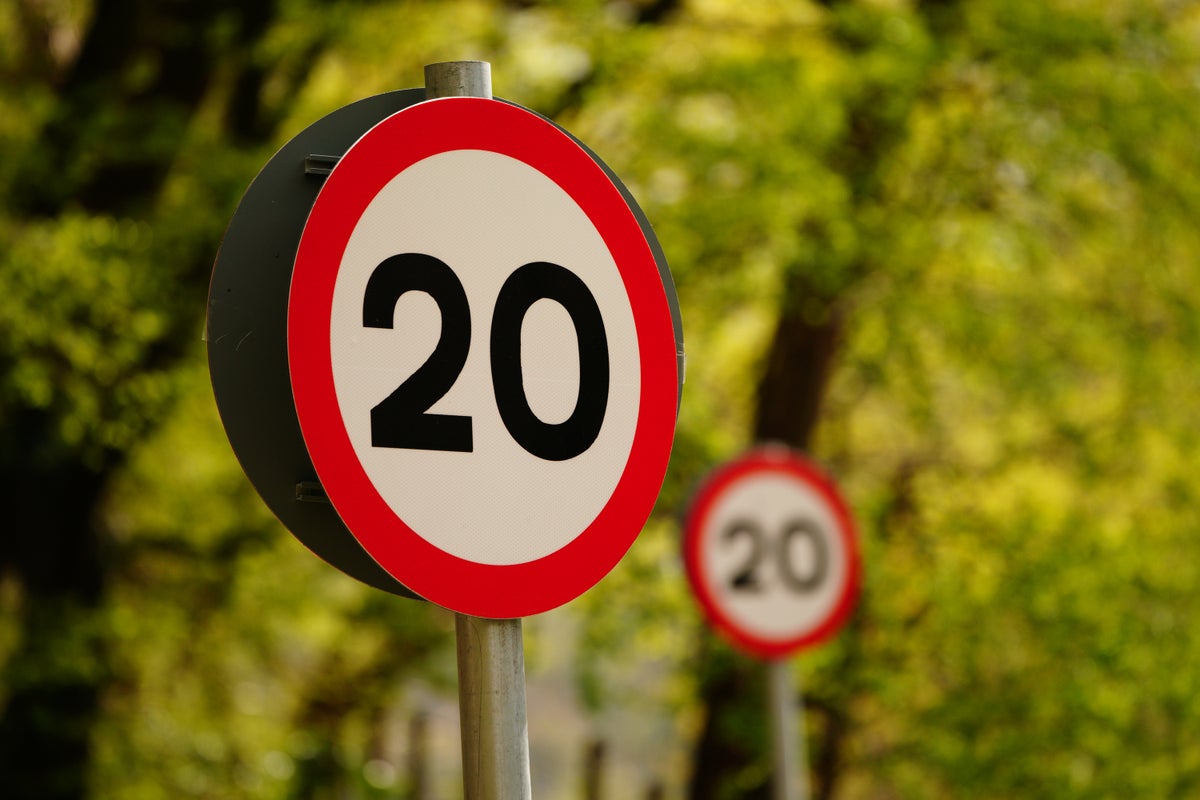
The think-tank circuit has hit a new low. A recent proposal suggests that the UK should slash speed limits to 64mph (100km/h) on motorways to "insulate" the economy from oil price spikes caused by Middle Eastern instability. It is a classic example of spreadsheet logic meeting real-world friction. They see a mathematical reduction in fuel consumption and call it a win. I see a catastrophic misunderstanding of how a modern economy actually breathes.
Energy security is a serious business. But trying to solve a geopolitical energy crisis by forcing white-van drivers and logistics fleets to crawl across the M6 is like trying to fix a leaking dam with a piece of chewing gum. It is short-sighted, mathematically flawed, and ignores the most expensive asset in any economy: time.
The Productivity Tax You Aren't Calculating
The argument for lower speeds relies on the physics of drag. Yes, $F_d = \frac{1}{2} \rho v^2 C_d A$ tells us that as velocity ($v$) increases, the force of air resistance increases quadratically. Driving slower saves fuel. Nobody disputes the physics.
What the "experts" ignore is the Opportunity Cost of Human Capital.
When you mandate a 10% reduction in speed, you aren't just saving a few liters of diesel. You are imposing a 10% time tax on every single person and piece of freight using that road. In a UK economy already struggling with stagnant productivity, telling the workforce to spend an extra 40 minutes a week staring at a tailgate is economic sabotage.
If a heavy goods vehicle (HGV) takes an extra hour to complete a cross-country delivery, that is an hour of driver wages, an hour of vehicle depreciation, and an hour of delayed inventory turnover. When you scale that across the millions of journeys made daily, the "savings" at the pump are obliterated by the losses in the ledger.
The Myth of the Elastic Supply Chain
Think tanks love to treat the UK supply chain as a static entity. It isn't. It is a precision-engineered machine that relies on "Just-in-Time" (JIT) delivery.
Our supermarkets, factories, and hospitals do not keep months of stock sitting in warehouses. They rely on trucks moving at predictable, efficient speeds. Dropping speed limits across the board creates a massive ripple effect:
- Driver Shortages Exacerbated: If every route takes longer, you need more drivers to move the same amount of goods. We already have a chronic shortage.
- Increased Emissions (The Dirty Truth): Constant braking and accelerating caused by increased congestion—a natural byproduct of lower speed limits and the "phantom traffic jam" effect—often wipes out the aerodynamic fuel savings.
- Inflationary Pressure: Who pays for the extra labor hours and the delayed logistics? You do. At the checkout.
I have spent years watching operations managers scramble to shave seconds off a loading dock process. To have a government body suggest we throw away minutes on the open road is an insult to the efficiency of private enterprise.
The Middle East Fallacy
The premise that the UK can "decouple" its economic fate from an Iran-linked oil shock by driving at 64mph is laughable.
Oil is a global fungible commodity. If the Strait of Hormuz closes, the price of Brent Crude doesn't care if you're doing 60mph or 80mph. The price floor rises for everyone. The UK’s vulnerability isn't the speed of its Ford Transits; it’s the lack of strategic storage and a decades-long failure to diversify the energy base.
Slowing down the motorway network is a performative gesture. It’s "safety theater" rebranded as "economic resilience." It gives the illusion of control while doing nothing to address the structural reliance on volatile foreign energy markets.
The Congestion Paradox
Let’s look at the "Stop-Start" reality. Road capacity is a function of throughput.
When you lower the speed limit, you theoretically increase the density of vehicles, but you also increase the time each vehicle spends on the road. Imagine a scenario where a 100-mile stretch of motorway handles 5,000 cars an hour. By slowing them down, you keep those 5,000 cars in the "system" for longer.
This leads to:
- Increased Bottlenecks: Merging speeds become harder to coordinate.
- Frustration-Driven Risk: I’ve seen this in every region that implements "smart" motorways with variable limits. Drivers become agitated, tailgating increases, and the resulting minor shunts cause multi-hour closures.
One single accident caused by a distracted, bored driver doing 60mph in a 70mph zone causes more economic damage in a single afternoon than a week of high-speed fuel consumption.
Better Data, Better Solutions
If the goal is truly to protect the UK economy from oil shocks, we shouldn't be looking at the speedometer. We should be looking at the Energy Intensity of GDP.
Instead of hampering the movement of goods, the focus must be on:
- Weight Reduction Incentives: Every 100kg shaved off a vehicle improves fuel economy far more reliably than speed caps.
- Aerodynamic Retrofitting: Mandating skirts and fairings for the existing HGV fleet.
- Night-Freight Deregulation: Encouraging more movement when the roads are empty and vehicles can maintain a constant, efficient kinetic energy state.
The Human Factor: Boredom is a Killer
We are told slower speeds are safer. The data is more nuanced. High-speed motorways are statistically the safest roads we have. They are designed for 70mph+ travel.
When you force a driver to travel significantly below the "natural" speed of a well-engineered road, you induce cognitive underload. The brain wanders. Mobile phones come out. Distraction levels spike. A driver engaged and focused at 70mph is safer than a driver daydreaming at 60mph.
The Reality of the "Savings"
Let’s run the brutal math. If the average commuter saves £5 a week on petrol by driving slower but loses 2 hours of their life in the process, they are valuing their time at £2.50 an hour.
That isn't a "saving." That is poverty.
If the UK government wants to protect us from a war in the Middle East, they should build nuclear power plants and invest in domestic energy autonomy. Don't ask the British public to pay for geopolitical incompetence by sitting in traffic.
The "lazy consensus" says slow down to save money. The reality is that in a globalized, hyper-competitive world, speed is life. You don't win a race by pulling over to check your tire pressure while the track is on fire.
Stop treating the UK economy like a high school physics experiment and start treating it like the complex, time-sensitive engine it is. Keep the limits where they are. Better yet, raise them.
Get the goods moving. Get the people home. Stop pretending that a slower country is a stronger one.