The metal floor of the bridge vibrates with a low, rhythmic thrum. On a modern VLCC—a Very Large Crude Carrier—you are standing on nearly 300,000 tons of deadweight. To the captain looking out over the bow, the horizon of the Persian Gulf isn't just water; it is a pressurized vein of the global economy. One out of every five barrels of oil consumed on Earth passes through this narrow strip of blue.
Then, a speck appears.
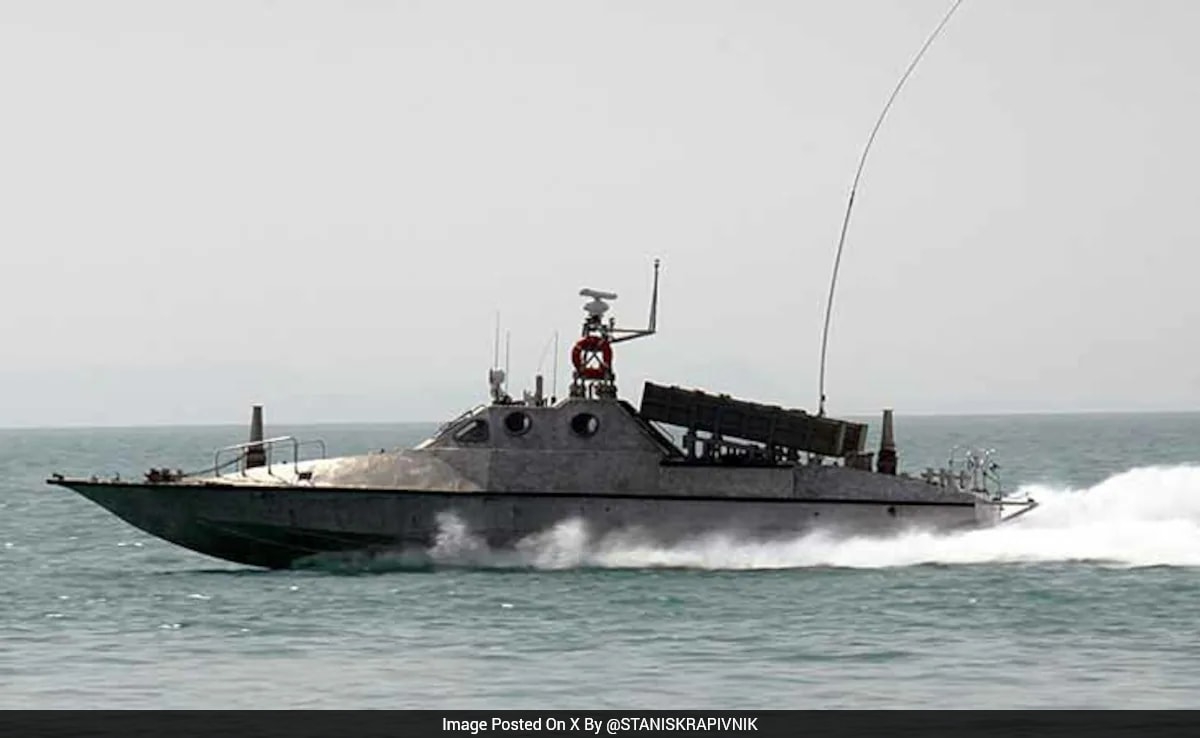
It isn't a destroyer. It isn't a frigate. It is a fiberglass speedboat, no longer than a family’s weekend lake boat, bouncing off the crests of the waves at forty knots. It looks insignificant against the skyscraper-sized hull of the tanker. But as three more appear, fanning out in a pincer movement, the silence on the bridge thickens. These are the teeth of Iran’s "Mosquito Fleet."
The Power of the Swarm
Naval warfare used to be a contest of giants. We still think in terms of carriers and cruisers—billion-dollar assets that project power across oceans. Iran’s Islamic Revolutionary Guard Corps (IRGC) looked at those giants and saw targets. They realized that in the cramped, cluttered waters of the Strait of Hormuz, a massive engine is a liability, not an asset.
They traded the sledgehammer for a thousand needles.
The Mosquito Fleet is built on the philosophy of asymmetric attrition. Instead of one ship that costs a billion dollars, they deploy five hundred boats that cost fifty thousand dollars each. Some carry heavy machine guns. Others are fitted with multiple-launch rocket systems or Chinese-made anti-ship missiles. Some are essentially manned or remote-controlled torpedoes—suicide boats packed with high explosives.
Consider the math. A sophisticated naval defense system like the Aegis can track and engage dozens of targets simultaneously. But what happens when there are a hundred? What happens when those targets are small, made of composite materials that barely reflect radar, and are weaving through the wake of civilian traffic? The defense saturates. The computer screams. The human operators blink.
One boat gets through. That is all it takes.
A Day at the Pump in Ohio
We often treat geopolitical tension as a distant drama, something confined to grainy satellite footage and frantic news tickers. We shouldn't. The "invisible stakes" of a skirmish in the Strait of Hormuz are sitting in your driveway.
If a swarm of IRGC boats successfully disables a tanker or, more likely, creates enough chaos to spike insurance premiums to the moon, the reaction is instantaneous. Oil is the most sensitive commodity on the planet. It doesn't even need to stop flowing for the price to jump; the mere fear that it might stop is enough.
The tanker captain in the Gulf feels the sweat on his palms as the speedboats circle. You feel it three days later at a gas station in the Midwest. The price of bread goes up because the trucks delivering it pay more for diesel. The plastic in your phone becomes more expensive to manufacture. The global supply chain is a single, taut string. The Mosquito Fleet is a pair of scissors held against it.
The Technology of the Cheap
There is a disturbing brilliance in the way these vessels are outfitted. They use off-the-shelf civilian technology modified for lethal intent. You can find the same outboard motors on the back of a fishing boat in Florida. The navigation systems are often commercial-grade GPS.
By using "low" technology, the IRGC bypasses many of the traditional ways Western intelligence tracks military buildups. You can't easily sanction the sale of a Yamaha outboard motor. You can't track the movement of a fiberglass hull the way you track a submarine.
This is the democratization of lethality. Iran has even experimented with "smart" swarms—using AI-driven coordination to allow these boats to communicate with one another without human intervention, moving like a school of piranhas to find the weakest point in a carrier strike group’s perimeter. They aren't trying to win a traditional naval battle. They are trying to make the cost of staying in the Gulf too high for anyone else to pay.
The Psychology of the Narrow
The Strait of Hormuz is only twenty-one miles wide at its narrowest point. Subtract the shipping lanes and the buffer zones, and you are left with a tiny corridor where there is nowhere to hide.
Imagine you are a sailor on a multi-billion dollar American destroyer. You are trained to fight a high-tech adversary. You are prepared for supersonic missiles. But as you transit the Strait, you see a lone IRGC boatman. He isn't attacking. He is just sitting there, three hundred yards away, filming you with a handheld camera. He’s wearing a tracksuit. He looks like a tourist, except for the rocket launcher bolted to the deck behind him.
This is psychological attrition. The Mosquito Fleet exists to remind the world every single day that they are there, they are watching, and they are unpredictable. They play a game of "chicken" with tankers and warships alike, darting across bows and forcing massive vessels to change course. It is a constant, grinding stress that wears down crews and commanders.
The Invisible Blockade
True power doesn't always come from a "Game-Changer" (to use a tired term I’ll avoid) or a grand explosion. Sometimes, it comes from the quiet ability to say "No."
By maintaining this fleet, Iran has created a "soft" blockade. They don't have to sink every ship. They only have to prove that they could. This leverage allows them to negotiate from a position of perceived strength on the global stage, using the world's energy security as a bargaining chip.
While the world watches the sky for nuclear developments, the real danger is bobbing on the surface of the water. It is fast, it is loud, and it is incredibly cheap.
The sun sets over the Gulf, turning the water into a sheet of hammered gold. The VLCC continues its slow, ponderous crawl toward the open sea, carrying the lifeblood of a dozen nations in its belly. Far off in the haze, the hum of a high-performance outboard motor kicks in. A single white wake cuts across the stillness, a tiny line of white foam that represents the most complex security headache of the twenty-first century.
The giants are still there, but the mosquitoes own the night.