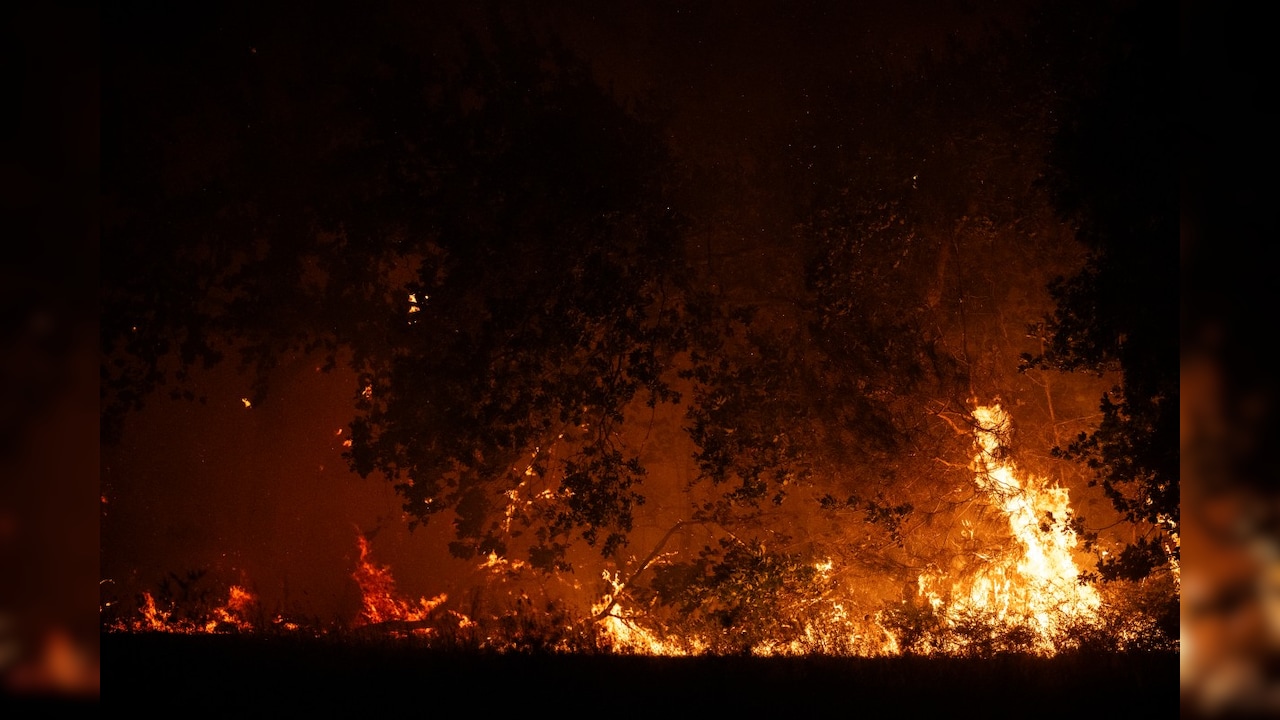
Ash does not fall like snow. Snow is soft, quiet, floating down with a promise of stillness. Ash drops like gray grit, heavy with the memory of something that used to be alive. It settles on the windshields of idling sedans, sticks to sweaty forearms, and turns the July air into a dry, choking haze.
In the summer heat wave, Southwest Europe turned into a furnace. In southwestern France, near the pine-scented expanse of Gironde, and across the border into the scorched valleys of Spain, the forests stopped breathing. They burned.
More than 30,000 people were forced to pack whatever could fit into a trunk and drive away from their lives.
To read the headline on a news site is to hear a dry tally: thousands evacuated, hectares lost, temperatures breaking records. Numbers are safe. They turn a nightmare into arithmetic. But numbers cannot capture the sound of a roaring pine forest—a sound like a freight train running straight through your living room—or the agonizing choice of what to grab when you have precisely seven minutes to abandon your home.
The Anatomy of an Inferno
Consider a hypothetical resident named Elena, living on the outskirts of a village near the Spanish border.
Elena does not hear the sirens first. She smells the fire. It is not the comforting scent of a hearth in winter, but a sharp, chemical sting that burns the back of the throat. Outside, the sky has shifted from brilliant blue to a bruised, apocalyptic orange.
The heat does not build gradually. It slams into the region like an open oven door. Air temperatures hit 40 degrees Celsius—over 104 degrees Fahrenheit—and the wind, dry and relentless, acts like a blowtorch against timber that hasn't seen real rain in months.
Fire needs three things: fuel, oxygen, and heat. In southern Europe, all three met in a perfect storm. Tens of thousands of hectares of pine and oak were bone-dry. The heat wave unlocked the moisture from every leaf, turning vast swaths of land into literal tinderboxes. When a blaze sparks under those conditions, it does not creep. It sprints.
Elena has a car, half a tank of gas, and a dog lying nervous on the tile floor. What goes into the back seat?
Photo albums? The hard drive with ten years of family memories? The extra jug of water?
She grabs the dog, a folder of legal documents, and three changes of clothes. Everything else—the dining table her grandfather built, the garden she spent five years cultivating, the art on the walls—is left behind to face an advancing wall of flame.
Beyond the Borders
This was not a local tragedy; it was a continental crisis.
In France, the Gironde region became the epicenter of the destruction. Two massive fires consumed over 10,000 hectares of forest in a matter of days. Firefighters, exhausted, their faces streaked with black soot, worked 18-hour shifts in temperatures that melted the soles of their boots. Helicopters and water-bomber planes swooped low through thick smoke, dumping thousands of gallons of water, only for the intense heat to evaporate half of it before it hit the canopy.
Across the border in Spain, the narrative was tragically identical. From Castile and León to Galicia, wildfires raged across thousands of acres. Rail lines were suspended. Highways were blocked by police as flames licked the asphalt.
The evacuation orders came in waves. First, the campsites packed with summer tourists who had arrived seeking sunshine and pine needle trails. Then, the ancient villages, where elderly residents who had lived in the same stone houses for eight decades were gently guided into the back of emergency transport vehicles, carrying plastic bags filled with medication and old photographs.
Over 30,000 human beings uprooted in a matter of days.
Imagine a stadium filled to capacity. Now imagine every person in that stadium being told they cannot go home, that their homes might not exist by morning, and that the only thing waiting for them is a cot in a makeshift gym thirty miles away.
The Invisible Cost
When a wildfire passes, the news cameras eventually move on. The smoke clears, reveal a blackened landscape that looks more like the surface of the moon than the lush European countryside.
But the real crisis lies in what happens after the sirens stop.
There is the immediate economic shock. Tourism, the lifeblood of these regions, collapses overnight. Small businesses—the bakeries, the local guides, the family-run inns—face empty streets and canceled reservations. The forests that drew millions of travelers lie charred.
Then there is the ecological toll. It takes decades for a mature pine or oak forest to recover. The wildlife that managed to escape finds its habitat utterly erased. Soil, stripped of roots and organic cover, becomes vulnerable to catastrophic erosion when the autumn rains finally arrive.
Most lingering of all is the psychological weight.
Evacuees speak of a quiet hyper-vigilance that sets in after living through a firestorm. Every warm summer breeze carries a phantom scent of smoke. Every orange sunset brings a momentary spike of adrenaline. The sense of security—that the land beneath your feet is permanent, stable, and safe—is quietly burned away.
The Road Ahead
Wildfires are not a new phenomenon in the Mediterranean basin. For centuries, the ecosystem has lived with seasonal fires. But the scale, frequency, and sheer violence of these blazes have changed.
The conversation can no longer be limited to containment strategies and firebreaks. It pushes into how we manage rural land, how we plan expanding communities, and how we adapt to summer heat waves that stretch infrastructure to its absolute limit.
Firefighters on the ground did not just fight flames; they fought a systemic shift in climate conditions. They threw everything they had at an adversary that moved faster than the wind and consumed everything in its path.
Miles away from the front line, in a crowded gymnasium transformed into an evacuation center, Elena sits on a folding chair. The dog rests its chin on her knees. Outside, the air still smells faint of burnt timber, carrying the weight of a landscape remade in a single, terrifying week.
She does not know if her house is still standing. She knows only the silence of waiting, the shared glances of strangers who have lost the same things, and the long, slow work of rebuilding that lies ahead.


