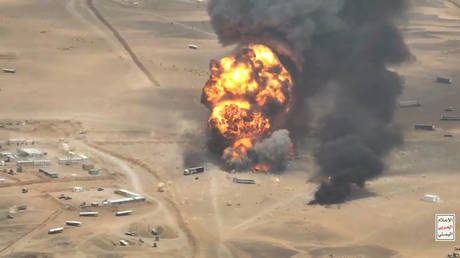
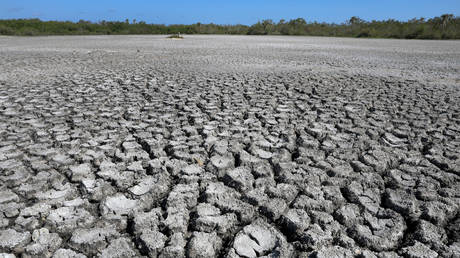
Tokyo is quietly shipping heavy earthmoving machinery and specialized fire-suppression equipment to the Indonesian sector of Borneo. This deployment is a calculated response to the persistent, toxic haze that routinely chokes Southeast Asia. The official narrative frames this as a generous bilateral climate partnership. The operational reality on the ground is far more urgent. Years of aggressive land conversion, unyielding drainage of carbon-dense peatlands, and erratic dry seasons have turned Indonesia's forest frontiers into a slow-burning powder keg. When the dry season peaks, the smoke does not respect national boundaries. It drifts north across the Malacca Strait, choking populations in Singapore and Malaysia, grounding flights, and triggering public health emergencies. Japan’s intervention is an acknowledgment that transboundary smoke is no longer a localized environmental mishap. It is an international security crisis with immediate economic costs.
The Anatomy of a Permanent Crisis
To understand why a Japanese machinery deployment matters, one must look at what happens beneath the surface of a Borneo peatland forest. Healthy peat is a water-logged sponge composed of millennia of decayed organic matter. It naturally traps massive volumes of carbon. Industrial palm oil expansion and pulpwood plantations require dry land. Corporations and smallholders alike dig extensive canal networks to drain the swamps. Once drained, that sponge dries out.
An ordinary wildfire burns the canopy and the underbrush. A peat fire is an entirely different beast. It burns underground, smoldering quietly through subterranean layers of dry organic carbon at temperatures that defy standard suppression tactics. Rain does not easily extinguish it. Surface dousing only creates steam, leaving the deep subterranean embers alive and waiting for the next gust of wind.
"When peat ignites, you are not fighting a forest fire. You are fighting an underground coal seam that can burn for months, completely invisible to standard aerial reconnaissance."
This physical reality explains why local authorities have historically struggled. Traditional fire brigades arrive with hoses and water trucks, spray the visible flames, and declare victory. Within forty-eight hours, the subterranean heat reignites the surface vegetation. The smoke returns. The cycle repeats. Tokyo's contribution of heavy excavators and amphibious machinery is designed to break this specific loop. You cannot spray a peat fire out. You have to dig it out, flood it, and mechanically smother it.
The Geopolitics of Clean Air
Foreign aid in Southeast Asia rarely arrives without strategic calculation. Tokyo’s involvement in Indonesian land management is tied to long-standing economic dependencies and regional stability frameworks. Japan relies heavily on maritime trade routes passing through the Malacca Strait. When regional haze reduces visibility to zero, maritime traffic slows, supply chains fracture, and regional economic output takes a direct hit.
Furthermore, Japanese corporations hold massive financial interests throughout the ASEAN bloc. A regional climate disaster damages corporate reputations, disrupts supply networks for paper and palm oil, and forces uncomfortable questions about environmental compliance under international ESG mandates. By supplying heavy machinery, Japan protects its economic flank while positioning itself as a constructive regional stabilizer.
Yet, local critics point out a fundamental contradiction in this dynamic. Much of the capital financing that initially enabled the commercial clearing of Borneo’s forests over the past three decades originated from international banks, including institutions in East Asia. Pouring hardware into disaster response while continuing to finance the underlying commercial drivers of deforestation is a classic exercise in treating the symptom while ignoring the pathogen.
Logistics on the Ground
Deploying heavy machinery to the interior of Borneo is an administrative and physical nightmare. The island's infrastructure is notoriously fractured. Deep peat domes are virtually inaccessible by standard road transport during the dry season, and coastal ports are often hours away from the primary ignition zones in Central and West Kalimantan.
To make the Japanese equipment effective, logistics teams must barge excavators up winding, shallow rivers, transfer them to tracked lowboys, and navigate logging roads that dissolve into mud at the first unseasonal downpour.
- Amphibious Excavators: These tracked units are essential for navigating soft, unstable peat soils without sinking.
- Deep-Well Drilling Kits: Used to tap subterranean water tables to flood dried peat domes from within.
- Thermal Imaging Drones: Critical for mapping underground hotspots that are invisible to the naked eye.
Without these specific mechanical assets, boots on the ground are functionally useless against deep-seated peat ignition. Hand tools cannot trench fast enough to isolate a subterranean burn front. Heavy iron is the only language a drying peatland understands.
The Human Toll Beneath the Haze
Statistics rarely capture the reality of living beneath a persistent toxic blanket. During peak burn seasons, air quality indices in towns like Palangkaraya routinely eclipse hazardous thresholds by orders of magnitude. Schools close. Hospitals fill up with infants and the elderly suffering from acute respiratory distress syndrome.
The economic burden falls disproportionately on informal workers. Rubber tappers, small-scale farmers, and market vendors cannot afford industrial air purifiers or sealed indoor spaces. They breathe the particulate matter because they have to earn a daily wage. When Japanese equipment arrives at the local district office, it represents a distant, bureaucratic hope for families whose lives are upended every few years by smoke.
Structural Failures in Land Reform
Equipment deployments and foreign aid packages gloss over the uncomfortable political economy of land use permits in Indonesia. Decentralization laws passed in the post-Suharto era gave local regency governments sweeping authority to issue land concessions. Too often, local politicians traded permits for campaign financing, carving up vulnerable peatlands and handing them to agro-industrial conglomerates.
Even when Jakarta mandates moratoriums on new forest clearing, enforcement at the district level remains weak. Regional forestry offices are often underfunded and outgunned by corporate legal teams. If a plantation manager wants to clear land cheaply, controlled burning remains the most cost-effective method, despite heavy legal penalties. The risk of getting caught is factored into the corporate operational budget as a manageable cost of doing business.
Until the legal framework imposes existential financial penalties on corporate parent companies—including asset seizure and mandatory ecosystem restoration—fire suppression remains a tactical bandage on a systemic wound.
Looking Beyond the Dry Season
The current influx of Japanese machinery will undoubtedly suppress acute flare-ups in targeted zones across Borneo over the coming cycles. It is a competent, necessary tactical intervention. However, hardware alone cannot alter the trajectory of a warming, drying regional climate coupled with aggressive land drainage.
As global temperatures climb and El Niño cycles become more erratic, the window for effective peatland restoration narrows. The real test of this new bilateral effort will not be how many hectares of surface fire are extinguished this month. It will be whether the deep canals draining the ancient carbon sinks are successfully blocked, dammed, and allowed to re-wet before the next prolonged drought takes hold of the forest floor.