Stone does not forget.
If you have ever stood in the quiet courtyard of an ancient European synagogue, you know the particular weight of the air. It smells of damp mortar, centuries-old candle wax, and a fragile, hard-won peace. These buildings are more than mortar and stained glass; they are physical testaments to survival, survivors themselves of storms that swept continents clean of communities.
When you strike a match against the wood of a heavy oak door in Hagen, Germany, you are not merely vandalizing property. You are summoning ghosts.
It was a Tuesday night, the kind of autumn evening where the dusk smells of wet asphalt and fallen leaves, when the quiet was broken by the flicker of flames. A twenty-three-year-old Afghan national—a young man who had crossed borders, navigated bureaucratic labyrinths, and sought refuge in a country far from the mountains of his birth—stood before the synagogue. In his hands, authorities later discovered, was the intent to burn. Not just to damage, but to terrify.
And he chose his moment with chilling precision.
Yom Kippur was approaching. For the Jewish community, this is not just a holiday; it is the holiest, most trembling twenty-four hours of the calendar. It is a day of fasting, of inward reflection, of standing before the ledger of one's life and asking for mercy. To strike at the threshold of a synagogue on the eve of Yom Kippur is to strike at the jugular of a people's faith, right at the moment when they are most vulnerable, most exposed, and most focused on the eternal.
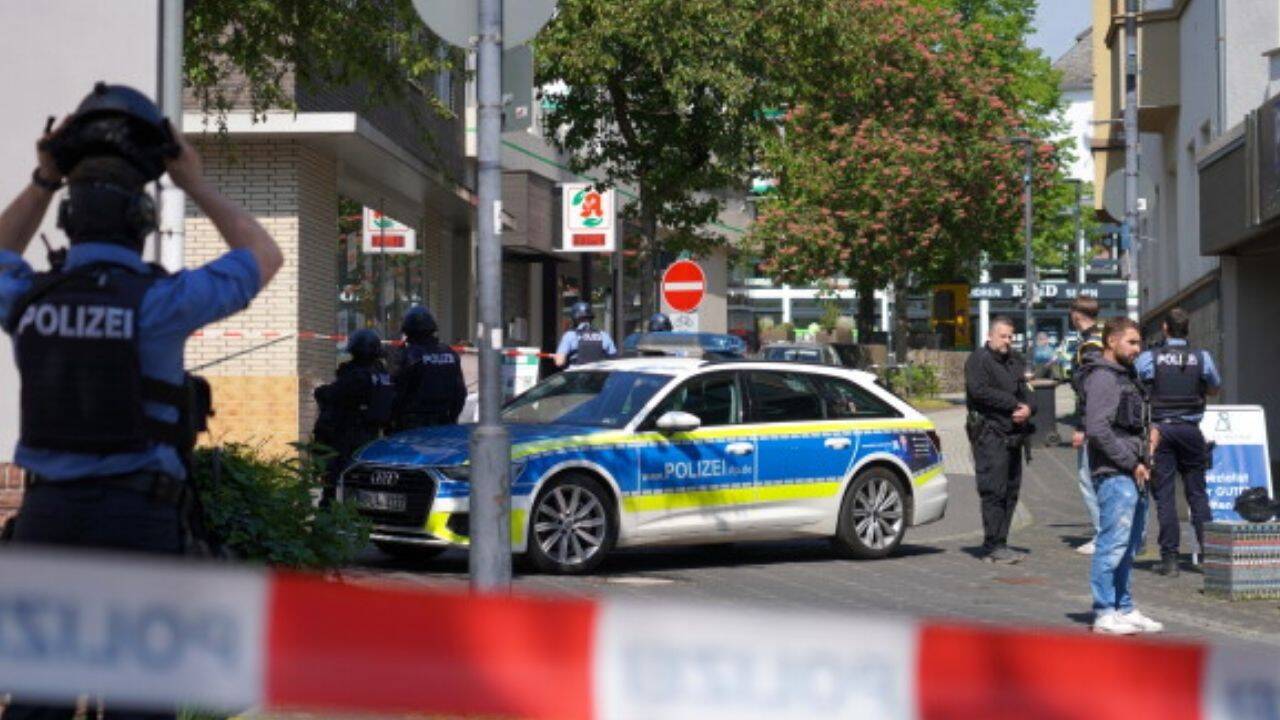
Fortunately, the heavy doors held. The flames were checked before they could devour the sanctuary. The suspect was arrested by German police, whisked away into a holding cell, leaving behind a neighborhood vibrating with an old, familiar terror.
But an arrest is never the end of a story. It is merely the punctuation mark on a sentence that has been writing itself for generations.
Consider what it means to live in the shadow of history. For Jews in contemporary Germany, security is not a political talking point; it is a glass window reinforced with laminate, a heavy steel bollard on the sidewalk to stop a truck, a guard standing quietly by a wrought-iron gate with a submachine gun. It is the constant, low-humming awareness that the safety of the present is an illusion leased from day to day.
Every time a synagogue door is scorched, whether in Hagen, Berlin, or anywhere else across the continent, a silent question echoes down the corridors of memory: Are we safe here? Can we ever truly be safe here?
The suspect is young. He belongs to a generation born long after the ashes of the twentieth century settled, yet he has somehow managed to inhale the ancient, toxic spores of hatred that refuse to die. How does a young man, arriving as a seeker of safety in a democratic nation, pivot so violently toward destruction?
We often talk about radicalization as if it were a sudden lightning strike. It is not. It is a slow leak, a poisonous gas that seeps into lonely rooms through glowing phone screens, through forums where grievances are weaponized, through the seductive promise of belonging to something absolute and cruel. When you have nothing, hate gives you an identity. When you feel powerless, a match gives you the illusion of power.
Yet, looking at this through a purely criminal lens misses the wider, heavier truth.
This incident arrives at a precarious crossroads of European modern life. Germany, like much of Western Europe, has spent decades grappling with the moral imperative of asylum—opening its doors to hundreds of thousands fleeing war, poverty, and persecution. It is a noble impulse, rooted in the hard-earned lessons of its own dark past. Never again, the nation promised the world. Never again turn away the desperate. Never again look the other way when the vulnerable knock.
But the friction of reality is unforgiving. When a refugee—someone given sanctuary under that very banner of humanitarian grace—turns a weapon against another historically persecuted minority, the psychological and political shockwaves are profound. It feeds the darkest narratives of the political extremes. It provides fuel for those who wish to slam the doors shut on everyone, punishing the millions running from terror for the sins of the one holding the match.
This is the trap. The arsonist in Hagen did not just target a building; he targeted the fragile social contract that allows diverse societies to function. He wanted to provoke a reaction. He wanted to prove that integration is a myth, that hatred is the natural state of man, and that fear is the only language left that matters.
If we let him win that argument, we lose everything worth keeping.
Stand outside that Hagen synagogue today. The soot has been scrubbed away. The police cruiser parked at the corner is a mundane fixture of modern European cityscapes. Inside, preparations for the holy day continue. The candles are lit. The prayers, whispered in a language older than the nations surrounding them, rise toward the vaulted ceiling.
Fear is loud, but continuity is stubborn.
The match burned out. The stone remained. And in the quiet space between the sirens and the silence, the congregation gathers, wrapped in their white shawls, whispering the ancient words of return and renewal, refusing to let the dark dictate the terms of their survival.