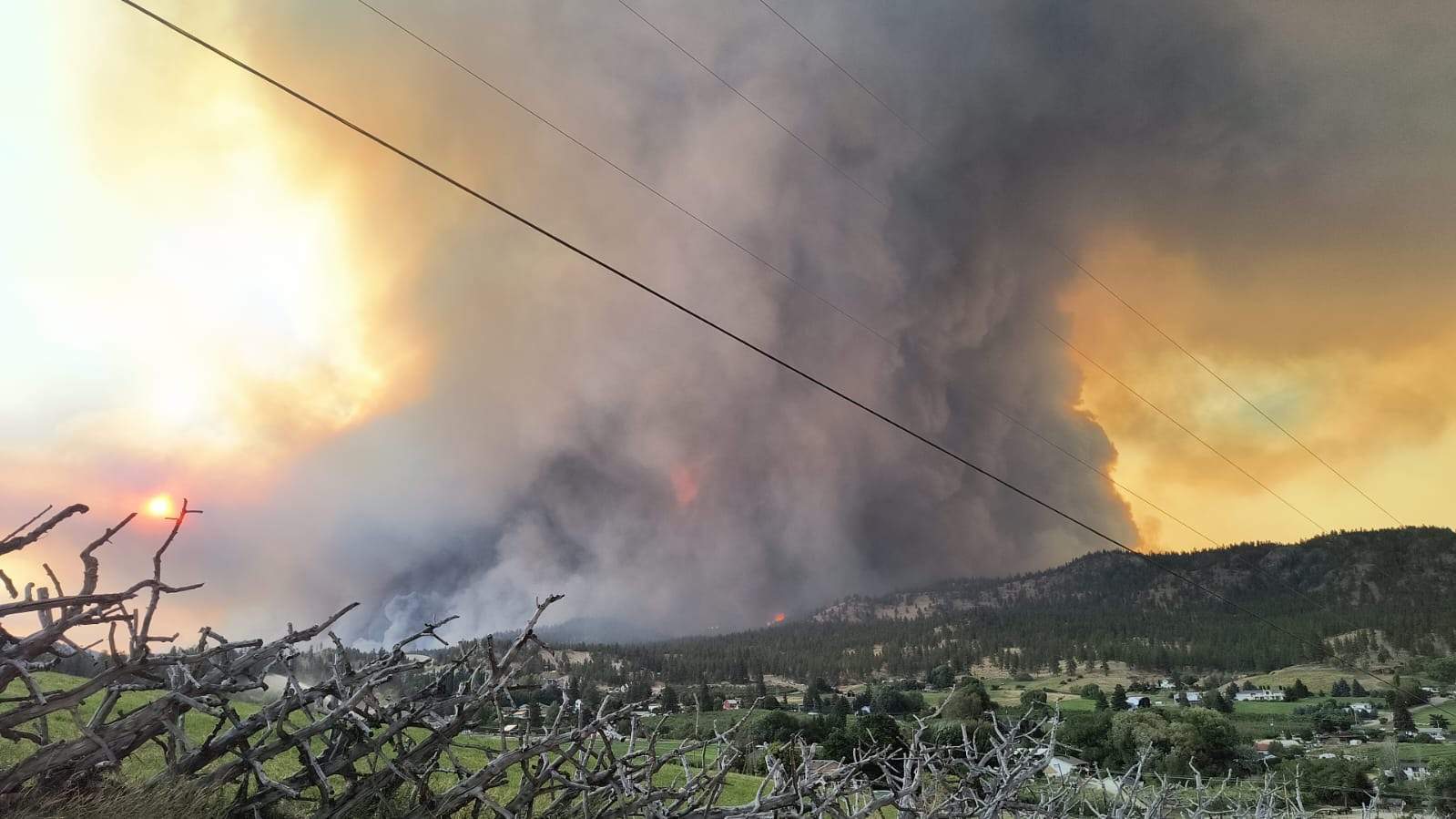
The air tastes like unwashed copper and dead cedar.
I know that taste. Everyone who has lived through a dry August in the southern interior knows it. It is the taste of a mountain drawing its final breath before the heat takes it. Long before the emergency alert screams through the screen of a cell phone, long before the red-and-blue cruiser blocks the upper ridge road, the air changes. It grows heavy. It turns the color of a bruised plum.
Smoke does not arrive all at once. It announces itself in whispers.
Consider a hypothetical homeowner—let us call her Martha, though she could be anyone on the outskirts of Summerland right now. Martha is sixty-four. She has lived on the benchland above Okanagan Lake long enough to watch orchards turn into subdivisions and subdivisions turn into kindling during bad years. At three in the afternoon, she looks out her kitchen window and notices the light is wrong. It is too orange, too flat, casting long, oily shadows across her tomato plants. She thinks it is just haze from a distant fire three valleys over.
She is wrong.
Fast-moving wildfires do not burn like campfires. They do not wait for permission or follow a predictable trail. Driven by erratic winds sweeping down from the plateau, a crown fire can leap a canyon faster than a car can drive down a winding gravel track.
By the time the urgent evacuation order drops for the area north of Summerland, the margin for debate has vanished.
Panic is a strange animal. When the official text message hits—that jarring, high-frequency alarm that makes every phone on the kitchen table vibrate in unison—the first instinct is denial. We check the news. We refresh local feeds. We look for the familiar comfort of a reassurance that never comes. We bargain with the map.
Is it actually close?
Can I just pack the winter coats and leave the photo albums?
Should I let the horses out into the lower pasture?
The evacuation order issued for the fast-moving wildfire near Summerland leaves no room for those questions. The reality on the ground is brutally simple. Wind gusts are pushing the front forward at a speed that outpaces human calculation. When fire officials draw a red circle around a community, they are not guessing. They are reading the math of tragedy.
I remember standing on a similar porch years ago, watching the ridge turn into a wall of living orange. The sound is what stays with you. It is not the crackle of dry twigs. It is a deep, concussive roar, like a freight train idling inside a tunnel, combined with the frantic snap of exploding pine sap. The heat precedes the flames. It hits your skin like an open oven door, drying the inside of your nose instantly, making every breath feel thin and desperate.
Martha doesn't have time to hesitate.
She grabs the metal lockbox from the back of the closet—birth certificates, land titles, her husband’s military medals from forty years ago. She calls her daughter in Kelowna, speaks in a flat, clipped voice to avoid breaking, and tells her she is heading down the hill. She forgets her favorite ceramic teapot. She forgets the extra pair of boots. These are the strange compromises of displacement. You pack your history in a laundry basket and leave your life behind the screen door.
What people forget about these emergencies is the sudden, terrifying loneliness of the highway out.
The evacuation routes fill up with tail-lights. Pickup trucks hauling overloaded horse trailers inch forward. Sedans packed with frightened dogs and terrified teenagers creep down the asphalt. Above them, the sky is no longer blue. It is an apocalyptic slate grey, stabbed through with glowing embers that drift lazily on the thermal updrafts like deadly snow.
Emergency crews—the firefighters, the RCMP, the municipal workers who stay behind when everyone else is running—are already swallowed by the grit. They are the ones standing between a wall of heat and the valley floor. Their radios crackle with static and wind speeds. They direct traffic with sweeping arm gestures through clouds of ash that sting their eyes. They know the statistics better than anyone. They know that defensible space, cleared brush, and metal roofs buy precious minutes, but they also know the brute force of a wind-driven wildfire can overwhelm even the best preparations.
Down in Summerland, the community centers open their gymnasium doors. Cots are unfolded. Cases of bottled water are stacked against the gym walls. Volunteers in high-visibility vests organize registration tables with the quiet, practiced efficiency of people who have done this too many times before.
This is the cycle of our summers now. We have traded the predictable rhythms of the seasons for a high-stakes gamble with the wind.
As darkness falls over the Okanagan, the fire does not stop just because the sun goes down. In many ways, night is worse. The daylight hideously masks the true scale of the front, but at night, the ridge glows like an active volcano. Every crest is outlined in searing crimson.
Martha sits in the folding chair at the evacuation reception center, clutching a styrofoam cup of lukewarm coffee that someone handed her. Her phone is clutched in her hand, screen glowing in her lap, waiting for an update from the emergency dashboard, waiting to hear if the sprinkler system held, waiting to know if the house she built with her own hands is still standing in the dark.
Out on the highway, the sirens are still wailing, cutting through the smoke.