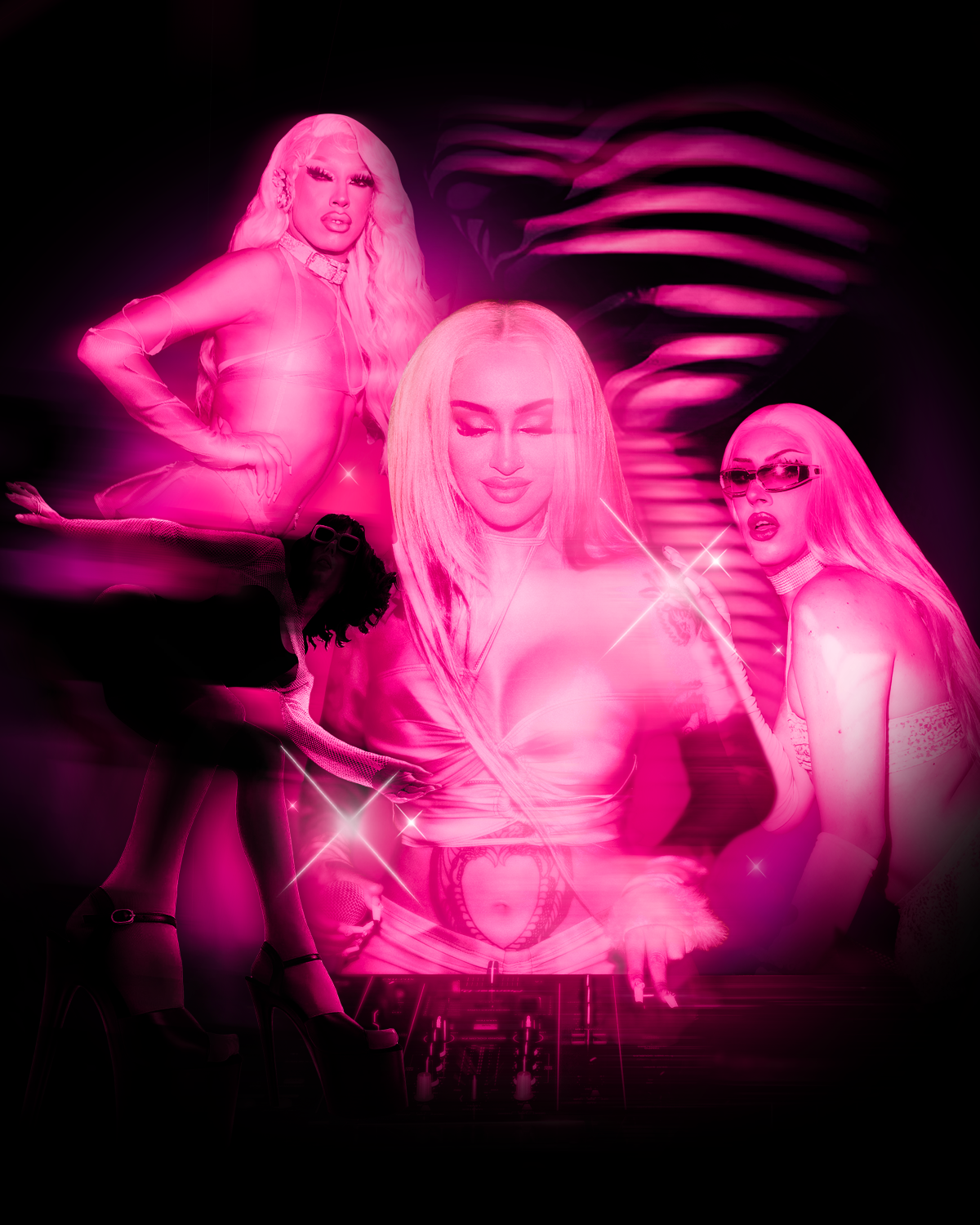
Neon.
That is the first thing you notice when a room full of strangers suddenly remembers how to spell out a word with their arms over their heads, sweating in cheap glitter while bass rattles the fillings in their teeth.
Most pop songs have the shelf life of cut peonies. You buy them on a Friday, admire their bright, noisy bloom over the weekend, and by the following Wednesday you are sweeping curled petals off the kitchen counter, wondering why they ever felt so urgent. They are built for algorithms, short-form clips, and thirty-second dopamine spikes. Once the novelty wears off, the song starts sounding like a commercial for a product you already bought.
Chappell Roan does not write cut peonies. She writes roots.
When people say Chappell Roan might just go on singing these songs forever, they are usually talking about catalog longevity, festival crowd sizes, or the way The Rise and Fall of a Midwest Princess turned a slow-burning campaign into a cultural earthquake. Those things are real. A song like "HOT TO GO!" or "Pink Pony Club" or "Good Luck, Babe!" does not behave like a disposable viral trend; it behaves like a standard. It has the theatrical campy spine of a cabaret number, the aching confession of a diary page torn out at two in the morning, and the sheer, defiant joy of someone who waited years just to be heard in the back row.
Still, catalog math is cold. Numbers tell you how many streams cleared or how many tickets sold; they do not tell you what happens inside a twenty-two-year-old chest when a chorus hits that feels like oxygen after holding your breath for a decade. To understand why these songs could outlive their era—and why they might become a permanent fixture of pop history—we have to look past chart positions and ask a harder question. What makes a song eternal in an age built on forgetfulness?
The Slow Burn Nobody Expected
Pop music has trained us to expect overnight miracles. A track drops at midnight, spikes on a playlist by noon, sparks a dance challenge by Sunday, and gets declared "the song of the summer" before the weather has even warmed up.
Chappell Roan's rise took the opposite shape. Born Kayleigh Rose Amstutz in Willard, Missouri, she spent years building a body of work that did not immediately fit the neat boxes of mainstream radio. She moved to Los Angeles, got dropped by a label, worked jobs to survive, and kept writing songs with big hooks, theatrical costuming, and emotional stakes that refused to shrink to fit a thirty-second clip. The Rise and Fall of a Midwest Princess arrived in September 2023 not as an instant fireworks display, but as a slow, steady tide that kept rising month after month until it flooded festival fields and arena setlists alike.
I remember standing near the soundboard at a crowded club show a couple of years ago, watching the air shift before she even hit the second verse. There is a distinct sound a room makes when a crowd isn't just watching a performer, but recognizing themselves in the mirror. You can feel it in your sternum—that collective intake of breath when thousands of people scream lyrics about longing, small-town suffocation, queer desire, and wanting more out of life than the script handed to you.
That kind of connection doesn't evaporate when next year's playlist refreshes. When a listener attaches a song to the exact summer they came out, moved away from home, survived a heartbreak, or finally felt safe dancing in public, the song stops belonging solely to the charts. It becomes a timestamp on their skin.
A Hypothetical Night in Ohio
To see why these songs carry so much staying power, consider a hypothetical scenario. Picture Maya, a twenty-four-year-old line cook in a mid-sized Ohio city who works closing shifts and drives home past dark strip malls with the windows cracked against the cool autumn air.
Maya is not a music critic. She does not track chart points or dissect chord progressions on her lunch break. What she knows is that after four hours of grease traps, ticket printers, and aching arches, she needs something that feels bigger than the fluorescent lights above the prep table. When "Pink Pony Club" comes through her car speakers, she isn't thinking about marketing rollouts. She is thinking about what it means to imagine a place where you are celebrated for being exactly who you are, even if you haven't reached that place yet.
Now fast-forward ten years in that same hypothetical story. Maya is thirty-four. Her knees hurt a little more after a shift, her friendships have shifted into quieter rhythms, and the world has thrown three or four unexpected turns at her. One evening, she hears that same synth line drifting out of a neighborhood bar or through headphones on a train. She doesn't hear a novelty. She hears her twenty-four-year-old self—hopeful, loud, slightly reckless, trying to figure out who she gets to be.
That is the invisible stake in every conversation about whether an artist's songs will last. Longevity isn't decided by a record executive in a glass conference room. It is decided when a song keeps showing up for the listener at different stages of growing up.
And I'll be honest: watching an artist blow up this fast can be dizzying, even a little scary if you care about the craft. When culture grabs hold of something fiercely, the pressure to repeat the trick—or shrink into a caricature of yourself—can crush smaller artists. I have seen plenty of promising songwriters get swallowed whole by their own viral moments because the machine demanded instant sequels before the original wound had even healed.
Why Camp and Vulnerability Make a Rare Armor
Consider what happens next when a song combines high camp with raw vulnerability. Usually, pop pushes those two impulses into separate corners. Seriousness gets dressed in acoustic guitars and whispered vocals; camp gets dressed in bright wigs, wink-and-nod punchlines, and disposable party beats.
Chappell Roan smashes them together. A song can feel like a drag revue and a confession booth at the exact same time. You are laughing at the theatricality one second and feeling a lump in your throat the next because the lyric names a loneliness you thought was private.
Think of it like stained glass in an old building. Plain glass lets light through, sure, and it's practical. Stained glass takes the same sunlight and turns it into deep reds, golds, and blues that cast patterns across the floor for centuries. The color doesn't hide the light; it refracts it so you see something richer. (That stained-glass comparison is a metaphor, of course—songs aren't architecture—but it captures how theatricality can sharpen emotional truth rather than soften it.)
When listeners sing along to lines full of specific detail and melodrama, they aren't pretending to be someone else. They are borrowing bigger armor for feelings that feel too heavy to carry quietly.
The Cost of Singing Forever
If there is tension in the idea that Chappell Roan might go on singing these songs forever, it lives right inside the word forever.
Forever sounds romantic from the cheap seats. In real life, singing the same emotional peaks night after night, year after year, takes a toll that doesn't show up on a highlight reel. Songs written from real ache and real ambition don't stay frozen in amber; the person singing them changes. What felt like a battle cry at twenty-two can feel like an old scar—or a sacred duty—at thirty-two or forty-two.
There is also the paradox of becoming a symbol. The more a song means to thousands of people, the heavier it becomes to carry on stage. Every show asks the artist to reopen doors that took real courage to walk through the first time. That is why boundaries, pacing, and honest conversations around fame matter so much in modern pop. An artist isn't a jukebox programmed to play nostalgia on command. She is a human being whose voice, energy, and life evolve.
Yet even with that tension, certain songs have a way of outgrowing their moment because their central conflict is timeless. Wanting freedom. Feeling out of place where you started. Craving joy without apologizing for taking up space. Falling for someone when the timing or the fear makes everything complicated. Those aren't 2020s problems or 2030s problems. They are human problems.
What Keeps a Setlist Alive Decades Later
History gives us plenty of clues about which songs survive the calendar. Look at the tracks that still stop a room fifty years after release. They rarely win on cleverness alone. They win on recognition and release.
Recognition happens in the first few seconds—a drum fill, a vocal run, a piano chord, a title that already feels like a dare. Release happens in the chorus, when tension breaks and the room exhales together.
Chappell Roan's biggest songs are engineered around both. They build pressure verse by verse, piling up detail, yearning, and theatrical momentum until the chorus lands like a release valve. Whether you are twenty, thirty, or fifty, your nervous system knows what to do with a chorus that lifts the roof off a room.
Maybe she will keep singing these exact songs in twenty years with a silver streak in her hair, leaning into the bridge with a knowing grin while a whole new generation yells the words back at her. Maybe she will rearrange them into slower, bruised piano versions when she's older, letting the lyrics sound wiser without losing their bite.
Either way, the reason people keep coming back isn't mystery or magic dust. It's that when a song gives voice to something true—loudly, unashamedly, with sweat and heart—it stops being just a track on an album. It becomes a place people return to whenever they need to remember who they are.
Underneath the glitter, the strobe lights, and the roar of a crowd spelling letters into the dark, there is a quiet promise humming in the speakers: you don't have to shrink to fit the room.